

Finasteride for Hair Loss
Finasteride is a prescription medication used to treat male pattern baldness (androgenetic alopecia) by blocking DHT, the male hormone responsible for follicle miniaturisation and hair loss.
It works well, too, as evidenced by the fact that over 69% of hair loss surgeons prescribe Finasteride 1mg to treat male pattern baldness, and it is the most commonly prescribed non-surgical hair loss treatment globally.
As a man with male pattern baldness, getting hold of the medication requires a private prescription (it’s not available on the NHS for hair loss). It comes either as an oral tablet or as a topical solution under the brand name Propecia, and you must take it every single day to maintain results.
Experiencing male androgenetic alopecia? Check out your options by booking a free consultation.
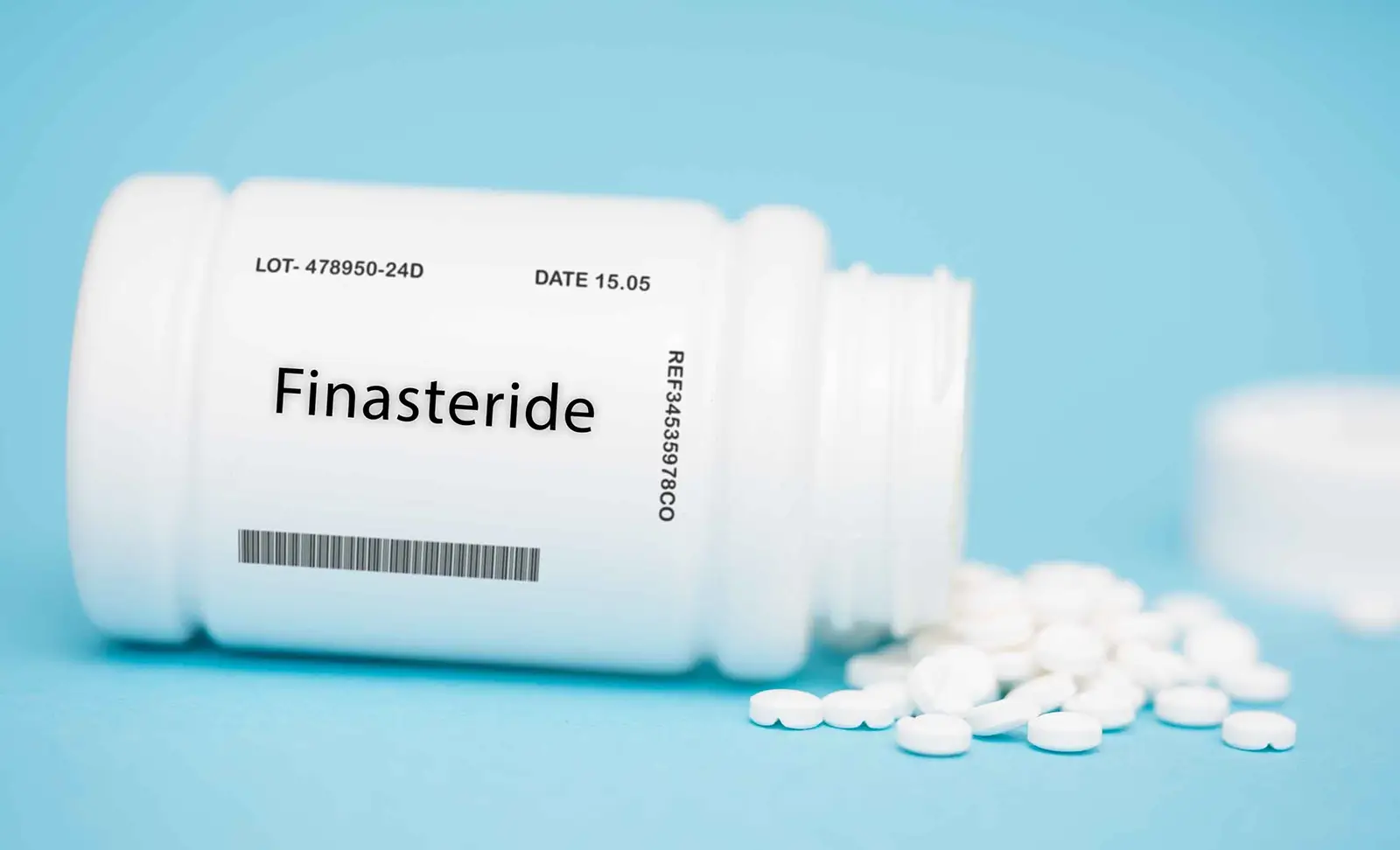
What Is Finasteride and How Does It Work?
Finasteride is a commonly prescribed medication originally used to treat enlarged prostates. However, it became more commonly privately prescribed to treat male hair loss due to its effectiveness.
Finasteride belongs to a class of drugs known as 5-alpha-reductase inhibitors, or 5-ARIs. These medications essentially block the enzyme 5-alpha-reductase from converting testosterone to dihydrotestosterone (DHT). The reason it helps reduce hair loss is because DHT is the primary driver of androgenetic alopecia.
1mg vs 5mg: What’s the Right Finasteride Dosage for Hair Loss?
Finasteride dosage is important. Finasteride 1mg is sold under the brand name Propecia and reduces scalp DHT levels by 70%.
Finasteride 5% is, of course, stronger, and is sold under the brand name Proscar – however, this one is not used for hair loss, only enlarged prostates. A doctor will never prescribe Proscar for treating male pattern baldness.
Does Finasteride Work?
Yes. There have been several clinical studies over the years that have shown just how effective it is, particularly in blocking DHT production and treating male pattern baldness.
- In one study, two clinical 1-year trials looked at the effectiveness of Finasteride 1mg compared to a placebo, with results showing that Finasteride significantly slowed the progression of hair loss.
- Another study showed that DHT levels decreased by 64% and 69% after 42 days of 1mg and 5mg Finasteride, respectively.
- A study examining the effectiveness of Finasteride and Dutasteride in women found that 81.7% experienced an increase in hair thickness after taking 1.25 mg of Finasteride.
These results show that the medication genuinely does improve hair density.
Finasteride Results: What to Expect
Finasteride results take time to appear, with most patients waiting at least 3 months to see improvement. Also, Finasteride must be taken continuously for results to stick – stopping causes the DHT levels to return to normal, which means hair loss resumes within 6 to 12 months.
How Long Does Finasteride Take to Work?
You cannot expect Finasteride to work instantly, as it takes several months for the medication to have a real impact on hair growth. Here are the results to expect at each stage.
- 1-3 Months: DHT reduction occurs almost immediately after the first Finasteride dose. However, the hair growth cycle takes time to respond, so in the first few months, there is typically no visible increase in density. In fact, many patients experience shedding at this stage, which is a completely normal, temporary transitional response.
- 3-6 Months: After month 3, hair loss slows noticeably. There are early signs of regrowth, particularly at the crown of the head.
- 6-9 Months: Hair loss completely stops, and there is more visible regrowth and increased hair density – again, especially on the crown.
- 9-12 Months: After month 9, the final results of taking the medicaion take shape. Patients will likely experience significant improvement in scalp density, and the hairline may be measurably lower.
If you want an idea of what hair restoration treatments like Finasteride can do, check out our before & after gallery.
Topical vs Oral Finasteride
When most patients receive a Finasteride prescription, they are given an oral tablet to take once daily. However, there are two options here: oral tablets and topical solutions.
Oral Finasteride: Finasteride tablets for hair loss is the gold standard and the most studied in clinical trials. Oral Finasteride is taken as a tablet once per day, with the effects reducing DHT all throughout the body, including on the scalp.
Topical Finasteride: Topical Finasteride is a less commonly prescribed medication. The topical solution is applied directly to the scalp using a pipette or dropper. It includes 1ml of Finasteride and can be applied up to two times per day. One of the benefits of topical Finasteride is that it is applied locally, so the risk of systemic side effects like sexual dysfunction may be lowered (although more evidence is necessary).
Keep in mind that topical Finasteride has a smaller body of research compared to the oral version of the medication. While some studies show that topical Finasteride can produce hair improvements, oral Finasteride remains better supported by evidence. Plus, it’s easier to track dosage with oral tablets.
Who Can Take Finasteride for Hair Loss?
A Finasteride prescription is only given to individuals who meet specific criteria.
Who is suitable: Finasteride is suitable for adult men with androgenetic alopecia (male pattern baldness) at any stage. It’s for any man wanting to slow the progression of male hair loss. Men may also use it after a hair transplant to protect the surrounding native hairs from hair loss.
Who isn’t Suitable?
Women: Finasteride generally isn’t suitable for women. In particular, women who are pregnant or planning on becoming pregnant should avoid the medication, as it poses a risk of birth defects in male foetuses. Plus, Finasteride is generally less effective for female-pattern hair loss and is rarely prescribed to women.
Children/Teens: Children and teens are still developing, so blocking DHT can be harmful.
Transgender Patients: Suitability varies when it comes to transgender patients, which is why seeking a specialist consultation before starting a course is so important.
Finasteride for Hair Loss Side Effects
Many patients understandably wonder: Is Finasteride safe?
Generally, Finasteride is well-tolerated and safe for long-term daily use. However, some side effects occur in a minority of users.
Sexual Side Effects: This is the most worried-about side effect of Finasteride. Sexual side effects are rare but do occur. 1.3% of users experience erectile dysfunction; 1.8% of users experience decreased sex drive; and about 1.2% of users experience ejaculation disorder.
Other Side Effects:
- Temporary hair shedding in the first few weeks
- Skin rashes
- Gynaecomastia (swollen breast tissue in men)
- Breast lumps
- Breast pain
- These symptoms should resolve when Finasteride treatment is stopped.
Finasteride in Semen
Be aware that Finasteride can pass into the semen. So, it is best to avoid using Finasteride if trying to conceive – speak to a specialist first for advice.
Post-Finasteride Syndrome
Post-Finasteride syndrome is a very rare syndrome in which the side effects felt during taking Finasteride continue even after the patient has stopped taking the medication. As mentioned, it’s very rare, affecting only about 1,000 people worldwide. Plus, there is a scientific debate about whether the syndrome is a genuine physiological condition or partially driven by a nocebo effect.
Specialists will assure you that post-finasteride syndrome is typically not something to worry about, but if you have concerns, speak to a consultant.
Finasteride and Cancer: What the Research Shows
There is a small link between Finasteride and cancer that patients should be aware of before starting a course. One link is between 1mg of Finasteride and breast cancer, with three cases recorded up to 2009. It is very rare, but worth considering, especially for individuals who are at a higher risk of breast cancer.
In the past, it was believed that there was a link between prostate cancer and Finasteride – however, more recent evidence suggests no correlation. Previous studies have largely been superseded, as it’s thought that Finasteride alters PSA readings, making screenings more sensitive.
If you have any concerns about the link between cancer and Finasteride, speak to your GP.
Finasteride Cost and How to Get a Prescription
Can you get finasteride on the NHS?
The answer is only if it’s used for benign prostatic hyperplasia, as it is not available on the NHS when treating hair loss. For hair loss, you will need a private prescription. To get this, you’ll need to book a private consultation, which we offer here at HS Hair Clinic.
Pricing is around £14+ per month for Finasteride 1mg. Keep in mind that these costs vary by source and pack size. Once patients have a valid diagnosis, they can access Finasteride through private online prescribers. However, for safety and assurance, sticking to a supervised specialist is key. At HS Hair Clinic, we offer safe, patient-focused consultations with hair specialists.
Using Finasteride Alongside Minoxidil
It is very common for patients experiencing androgenetic alopecia to use Finasteride and Minoxidil at the same time.
There are some key differences between Finasteride vs Minoxidil, as they work through entirely different mechanisms. On one hand, Finasteride works by reducing DHT production. Minoxidil, however, works by increasing blood flow to the scalp and delivering more nutrients to the follicles. Combining Minoxidil with Finasteride or Dutasteride is becoming the most effective treatment for hair loss, with minimal potential side effects compared to tablets. Taken together, these two mechanisms work well to reduce hair loss and boost hair density.
If you’re interested in combining hair loss medications, our expert team can devise a treatment plan during consultation.
Finasteride After a Hair Transplant
A hair transplant is one of the most effective hair restoration solutions, offering a permanent solution to hair loss, and these patients can also benefit from Finasteride results.
Often, Finasteride is recommended to patients both before and after getting a FUE hair transplant. This is because Finasteride protects the surrounding native hair (hair that hasn’t been transplanted) from continued DHT-driven miniaturisation. So, the transplant restores what has been lost, while Finasteride preserves what remains.
Wondering if a hair transplant is a good option for your hair loss? To see how many grafts you might need, use our hair graft calculator.
Alternatives to Finasteride
Unsure if Finasteride is right for you? There are excellent Finasteride alternatives available, especially if you experience Finasteride hair loss.
- Minoxidil: Looking at Finasteride vs Minoxidil, you can see that both work via different mechanisms. Minoxidil boosts blood flow to the scalp, which is why it works well in conjunction with Finasteride (or alone).
- Dutasteride: This is a more potent DHT blocker that requires a private prescription and often has similar side effects to Finasteride.
- Natural DHT Blockers: Some natural DHT blockers include caffeine, rosemary oil, and pumpkin seed oil. These are best used as adjuncts rather than as primary hair-loss therapies.
- Adjunct Therapies: Treatments like platelet-rich plasma therapy (PRP), low-level laser therapy (LLLT), and microneedling can all help boost hair growth, especially when combined with hair loss medications.
- FUE Hair Transplant: A FUE hair transplant is a surgical option for more advanced loss. It transplants hair follicles to the thinning/balding area, and the new follicles continue producing hair for the rest of the patient’s life.
Frequently Asked Questions About Finasteride
General FAQs
Finasteride is a prescription medication prescribed for either enlarged prostates or hair loss. It treats male pattern baldness, in particular, by reducing DHT production.
Finasteride is a 5α-reductase inhibitor, which means it blocks the enzyme responsible for converting testosterone into dihydrotestosterone (DHT). DHT causes hair follicle miniaturisation, so when DHT levels are reduced, it improves hair density.
Finasteride is considered a safe medication. However, there are some uncommon side effects to be aware of, such as sexual dysfunction, breast tissue enlargement, and a decrease in sex drive. Generally, though, Finasteride is well tolerated by most people.
The average cost of 1mg Finasteride is £14+ per month. Keep in mind that prices vary depending on the source.
You can only get Finasteride on the NHS if it is prescribed specifically for an enlarged prostate. If you want Finasteride for hair loss, it is only available via a prescription. You can book a consultation with our HS Hair Clinic team for diagnosis and prescription.
Usage FAQs
The average Finasteride dose for treating male pattern baldness is 1%. Finasteride 5% is available, but it is only prescribed to treat enlarged prostates.
You can take Finasteride once per day at any time, with or without food. There is no exact recommended time to take Finasteride; it can be taken in the morning, at midday, or at night. What matters is that you take it consistently, so choose an exact time and stick to it. For example, taking it after breakfast.
Any hair restoration improvements will reverse within a matter of months as DHT levels return to their previous levels. If you experienced Finasteride side effects, these should also go away. However, there is a very rare condition called post-Finasteride syndrome that sees symptoms stick around even after stopping taking the medication. This only affects about 1,000 worldwide.
Women do not generally use finasteride for hair restoration. However, there are some occasions in which doctors prescribe it off-label. Usually, this is when a woman experiences severe hormonal hair loss during or post menopause. The only time a woman should definitely not use finasteride is when she is pregnant or breastfeeding.
Yes. Not only can you use finasteride after a hair transplant, but many hair specialists also recommend it for men. Using finasteride after a hair transplant will help you maintain results. In particular, it will protect the surrounding hairs (those not transplanted) from DHT-associated hair loss.

Start your transformation today
Book your consultation online with one of the world’s leading hair replacement specialists and take the first step towards your new look.