

What Is a Crown Hair Transplant?
A crown hair transplant is a popular hair restoration surgery that uses micro-surgical techniques to restore hair density across the top and back of the scalp, which is the area most commonly affected by male pattern baldness.
Noticing you have crown hair loss is never easy on your confidence, and this crown hair restoration procedure is a way to grow hair back using a natural, permanent method. It’s a minimally invasive surgery with a high success rate.
Why Crown Hair Loss Matters
Any changes to appearance, especially one as noticeable as crown hair loss, is difficult to manage. Crown hair loss is one of the most psychologically impactful forms of hair loss, especially because, due to its location (the top of the head), it’s often noticed by others before the individual. It can affect confidence and self-image, which runs into other areas of life, often making people feel more insecure in social and professional environments.
This all makes access to a hair transplant on the crown area all the more important, as a solution can help restore, not only a person’s locks, but also their self-image.
Common Causes of Crown Hair Loss
Crown hair loss is very common in both men and women, and these are the most likely causes.
- Male Pattern Baldness: Also known as male androgenetic alopecia. This is the most common cause of hair loss in men and is genetic, with over half of men experiencing it at some point in their lives. The Norwood Scale shows the level of progression, ranging from crown thinning to full vertex baldness.
- Female Pattern Baldness: Female androgenetic alopecia. It’s very common but presents differently than male pattern baldness, with women instead experiencing diffuse thinning across the crown and top of the scalp.
- Alopecia Areata: Alopecia areata is an immune system disorder that causes patchy hair loss all across the scalp and the rest of the body. Unfortunately, a crown or vertex hair transplant is not always suitable for this hair loss cause – other treatments are available to target the root cause.
- Stress: Stress-related hair loss, also known as telogen effluvium, can affect anyone. In many cases, it affects the crown disproportionally. While it’s typically temporary, there are some cases in which stress-related hair loss requires treatment.
- Scarring: Scarring from injuries, surgery, or previous procedures can cause hair loss on the scalp.
There is a Solution: A Hair Transplant for the Crown Area
A hair transplant for a crown is a popular option for individuals who have lost hair at the top of the head, particularly for those with hereditary hair loss (androgenetic alopecia).
By choosing a reputable clinic with experienced surgeons, you gain access to a minimally invasive, tailored procedure that allows you to regrow hair for the rest of your life. Our clinicians will work with your particular hair loss case, using the Norwood (if you’re a man) or Ludwig (if you’re a woman) scale to diagnose the level of hair loss and devise a treatment plan suited to your hair goals.
How Does a Crown Hair Transplant Work? The Step-by-Step Process
The crown is one of the most technically demanding scalp areas for hair restoration. Unlike the hairline, which covers a relatively small and well-defined area, the crown is a circular zone that can expand as hair loss progresses.
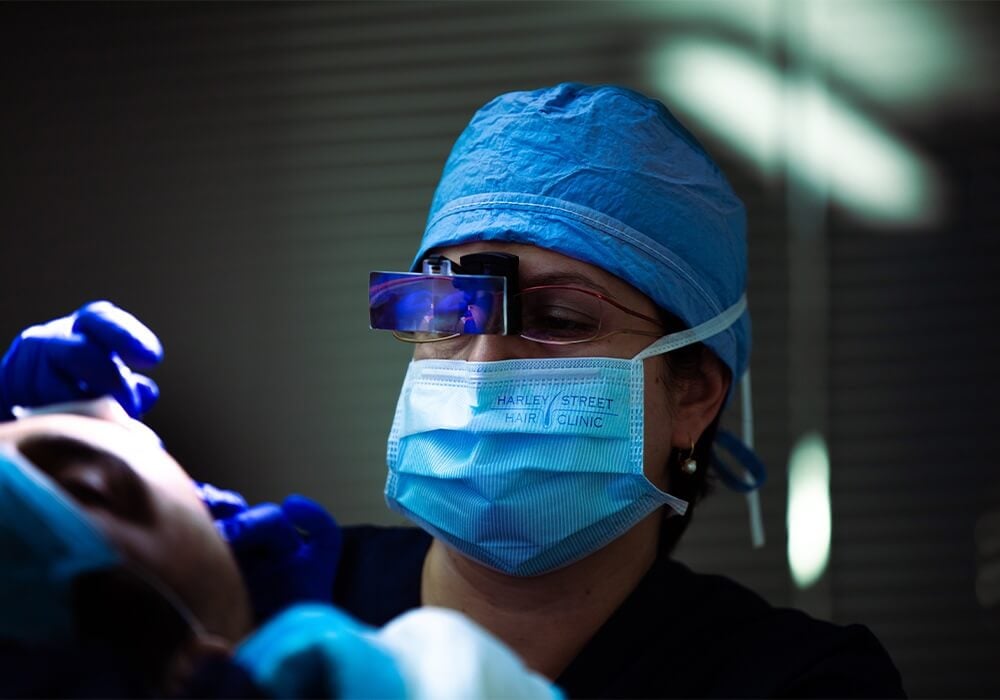
HS Hair Clinic has talented, world-renowned surgeons with experience delivering stellar results. Find out how our crown hair loss treatment in the UK works at each step.
Step 1: Consultation & Hair Loss Assessment
First comes a thorough consultation. The surgeon uses the Norwood or Ludwig scale to determine the current stage of hair loss, the expected progression, and whether the donor area (usually the back or sides of the scalp) has sufficient density to support the number of grafts required for full crown coverage. All of this is essential for long-term planning, as transplanting too aggressively too early can deplete the donor area and limit future options. An experienced surgeon will know what to look for and only perform the surgery if it’s the best option.
Step 2: Choosing the Technique (FUE or FUT)
There are two main hair transplants for crown thinning hair restoration: FUE (follicular unit extraction) and FUT (follicular unit transplantation), of which we only offer FUE.
FUE: This method involves harvesting individual follicle clusters using a micro-punch device. It’s generally the preferred method, as it results in minimal scarring (only dot-like marks), making it good for patients who keep their hair short. It’s a slightly more expensive, lengthy, and methodical process.
FUT: FUT involves the surgeon removing a strip of scalp from the donor area, then dissecting it into individual grafts. It’s a faster and more efficient process, making it preferable for high-volume transplants. It does leave a linear scar, which can be easily hidden under longer hair.
Step 3: Local Anaesthetic & Preparation
For patient comfort, the scalp is numbed using a local anaesthetic before the procedure begins. In some cases, a sedative is also offered, especially if the patient is particularly nervous. Following that, the donor area is prepared for graft extraction, which is usually taken from the back or sides of the scalp, where hair is densest.
Step 4: Graft Extraction
The surgeon harvests follicular units, each containing 1 to 4 hairs, from the donor area. The exact number of grafts required depends on the size of the crown-thinning area – the larger the area, the more grafts are needed. A crown area hair transplant specifically typically requires more grafts compared to hairlines due to the surface area involved.
Step 5: Graft Preparation
After extraction, the grafts are prepared under magnification, sorted, and kept in a preservation solution to maintain viability while the recipient area is prepared.
Step 6: Crown Implantation
The implant the follicles into the recipient area, small incisions are made across the crown. Then, the grafts are implanted individually, with the surgeon carefully following the correct direction and angle to replicate the natural swirl pattern of crown hair growth – a crucial technical detail that distinguishes a skilled crown transplant surgeon from general practitioners. With the right technique, the hair will grow through exactly the same as natural hair.
Step 7: Recovery and Results
The healing process following a hair transplant for the crown area takes 1 to 2 weeks. Patients are given aftercare instructions and a pack containing essential products, such as a specialist shampoo and saline spray, to help keep the area healthy. Regarding results, crown hair takes longer to show full results than hairline transplants because of the larger surface area. Most patients see good coverage at 10–12 months, with full results at up to 18 months.
Who is a Good Candidate?
A FUE hair transplant on the crown is a suitable option for both men and women experiencing hair loss in the crown area. Good candidates typically include:
- Men with advancing male pattern baldness (Norwood scale 3 to 6), where the crown is thinning or significantly balding
- Women with female pattern hair loss, causing diffuse thinning across the crown
- Patients with a stable or predictable pattern of hair loss: ideally using medication (Finasteride or Minoxidil) to stabilise further loss
- Individuals with a sufficient donor area: the back and sides of the scalp must have adequate hair density to provide the grafts needed for crown coverage
- Those who have realistic expectations about the timeline and graft requirements for crown restoration
Important Candidacy Considerations Specific to the Crown
Of course, not everyone is suitable for this hair loss procedure.
For example, younger patients under 30 should approach crown transplants cautiously, as hair loss may still be progressing at this stage. So, getting a crown hair transplant at this stage could mean depleting the donor area and affecting future procedures needed. Plus, there’s a higher chance of needing top-ups.
Patients with very advanced hair loss may not be suitable, too – for example, those at Norwood Scale 6 or 7. This is because they likely do not have enough donor hair to fully cover the crown. Generally, a Norwood 4 to 5 hair transplant makes the most sense, as patients will still have sufficient donor hair.
Certain causes of crown hair may mean a hair transplant is not the right choice, too. For example, alopecia areata patients are generally not suitable for transplant surgery, and other, non-surgical options are recommended. This might involve medications to treat the autoimmune system disorder or targeted hair restoration options like low-level laser therapy.
If you want to know whether a hair transplant is right for you, take the first step by sending photos for a personalised assessment.
Benefits of Crown Hair Transplant
Crown hair transplants have helped men and women alike restore hair at the top of their scalps and boost their confidence. There are several reasons it’s such a popular choice:
- Permanent: Hair transplants involve implanting follicles that naturally grow for the rest of the patient’s life.
- Natural results: A qualified hair surgeon will implant the follicles to mimic the natural whorl pattern for a completely seamless result.
- Performed by experts: This surgery is performed by experienced micro-surgical specialists who understand the ins and outs of crown hair loss and restoration techniques.
- Can be combined with hairline restoration: For patients experiencing hairline and crown hair loss, the procedure can be combined to restore hair in all locations.
- Minimal downtime: Most patients return to desk-based work within 7 to 10 days.
- Cost efficiency: While the cost of a crown hair transplant in the UK is higher compared to other treatments, it lasts forever. So, it has greater long-term cost efficiency than ongoing medication or camouflage products.
- A one-day procedure: In the majority of cases, a crown hair transplant can be completed in a single day.
What to Expect On the Day
Before any type of surgery, it helps to know exactly what happens on the day of the surgery so you can feel mentally prepared.
When you arrive, you will meet with the surgeon, who will perform a preoperative assessment during which the hairline and crown pattern will be marked. You, the patient, will always be a part of the conversation and will give the go-ahead.
Before the procedure, a local anaesthetic is administered to numb the scalp, making the whole process pain-free. The procedure itself lasts 6 to 8 hours, depending on the graft volume, and you will receive refreshments and short breaks throughout for your comfort.
Once the procedure is complete, there is a thorough post-procedure review. You’ll also receive an aftercare pack, including instructions, a saline spray, and a specialist shampoo, before leaving.
Recovery Timeline
- Days 1-3: The first days often involve mild swelling, redness, and tenderness. Patients should not touch the area or wash their hair.
- Days 5-14: Scabbing forms and begins to shed naturally. Shock shedding of the transplanted hairs also occurs – this is expected and normal.
- Months 1-3: This is the resting phase of the newly implanted hairs, so there is minimal growth.
- Months 4-6: From month 4, patients begin to notice new hairs emerging. They may be fine and barely visible at first, but they will grow denser and thicker over time.
- Months 10-12: There is significant coverage across the crown with density continuing to improve.
- Month 18: Full results are visible.
Crown Transplant Aftercare
- A full aftercare is provided. This includes:
- Specialist shampoo
- Saline spray
- Written post-operative care notes
- Pain relief
- Anti-swelling medication
- Access to a dedicated aftercare support line
Patients should be advised to avoid strenuous exercise for at least one week and to protect the scalp from sun exposure during the healing phase. Also, patients using Minoxidil or Finasteride should be advised to continue these during and after recovery to manage ongoing natural hair loss around the transplanted crown area.
UK Crown Hair Transplant Cost
Crown hair transplants in the UK typically range from £3,000 to £10,000, with the exact cost depending on the extent of hair loss, the number of grafts required, and the technique used. Be aware that crown transplants fall on the higher end of the cost range due to their larger surface area.
To get an idea of how much a crown transplant will cost you, try the graft calculator.
Finance Options
HS Hair Clinic offers financing options to patients, opening the door for individuals who cannot pay the full cost of the procedure upfront. The team understands that the crown transplant is a significant investment, so you have the option to spread the cost of the surgery out. Learn more about our finance options.
Results of a Crown Hair Transplant
A crown hair transplant doesn’t give results straight away. After the grafts are implanted, the new hairs take time to emerge. Typically, it takes around 4 to 6 months after the procedure for patients to notice new hair across the crown, but it’s only after month 12 to 18 when full results show through. At this stage, the hair will be thick and dense, covering the whole area.
Results are permanent. The transplanted hairs will continue to grow for life, as it is taken from genetically resistant donor follicles. To protect the remaining native hair, patients can use Finasteride or Minoxidil.
For a clear idea of what a hair transplant can do, take a look at our before & after gallery.
General FAQs
A crown hair transplant is a micro-surgical procedure that restores hair density to the top and back of the scalp using FUE or FUT techniques. The surgeon takes donor hair from the back and sides and then implants the follicles into thinning or bald areas of the crown.
Yes. Transplanted follicles are taken from donor areas that are genetically resistant to hair loss, ensuring permanent results. To preserve surrounding native hair and delay further natural hair loss, ongoing use of Minoxidil or Finasteride is recommended.
Good candidates have a stable or predictable pattern of hair loss, sufficient donor hair at the back and sides of the scalp, and realistic expectations about the coverage achievable. Younger patients (for example, those under 30) should consider that further hair loss may require additional procedures, and that a hair transplant performed too early may deplete the donor hair zone. A consultation is required to assess individual suitability.
Crown hair transplants typically range from £3,000 to £10,000, depending on the number of grafts required and the technique used. Crown procedures generally cost more than hairline transplants as they involve a greater surface area. Use our graft calculator for a preliminary estimate or book a consultation for a personalised quote.
In many cases, yes. Where the donor area has sufficient hair density, both areas can be addressed in a single session. Your surgeon will advise during the consultation whether combined treatment is appropriate or whether a staged approach is preferable. If there’s a lot of hair to cover, the surgery may take place over two consecutive days.
Most patients begin to see new growth across the crown from 4 to 6 months post-procedure. Significant coverage is typically visible at 10 to 12 months, with full results by 18 months. Crown transplants take longer to achieve final results than hairline transplants because of the larger surface area involved.
Hair transplants are not generally recommended for alopecia areata, as the autoimmune condition can cause transplanted hair to be rejected. Non-surgical treatments such as low-level laser therapy or platelet-rich plasma (PRP) therapy may be more appropriate. This will be assessed during consultation.
Procedure FAQs
Both techniques produce equally effective results on the crown. FUT may be preferable for patients requiring a high number of grafts, as it is a more efficient extraction method. FUE is often preferred by patients who wear their hair short, as it leaves minimal scarring. Your surgeon will recommend the most appropriate technique for your hair loss pattern, donor area, and lifestyle.
The number of grafts depends on the size of the thinning or bald area. Crown transplants typically require more grafts than hairline procedures: often between 1,500 and 3,500 grafts. Patients with advanced hair loss (Norwood 5 – 6) may require more than one session. Use our graft calculator or book a consultation for an accurate assessment.
Most crown transplants are completed in a single day. Procedure time typically ranges from 6 to 8 hours, depending on the number of grafts required. FUT is generally faster for high graft counts than FUE.
The procedure is carried out under local anaesthetic, so you should not feel pain during the transplant. Mild discomfort during the initial numbing is normal. After the procedure, any soreness is manageable with standard over-the-counter pain relief, which is included in your aftercare pack.
Common temporary side effects include swelling, redness, itching, and some numbness in the scalp. These typically resolve within a few days, and anti-swelling medication is provided. ‘Shock shedding’ of transplanted hairs in the weeks following the procedure is normal and does not indicate failure – don’t worry, new growth will follow.
Most patients achieve satisfactory coverage from a single session. However, patients with very advanced hair loss or those who continue to experience natural hair loss over time may benefit from a follow-up procedure. Using Minoxidil or Finasteride helps preserve surrounding hair and reduce the likelihood of needing further treatment.
FUE patients typically return to normal activities within 5 to 7 days. FUT patients may need 7 to 14 days due to the donor area wound. Strenuous exercise should be avoided for at least one week. Full post-operative instructions and an aftercare kit are provided, and your consultant will check in regularly throughout your recovery.
Book a Consultation for a Crown Hair Transplant
If you have experienced hair loss on the crown, a hair transplant can restore both the hair and your confidence. To see whether the procedure is suitable for you, book a free consultation with our expert team.
Start your transformation today
Book your consultation online with one of the world’s leading hair replacement specialists and take the first step towards your new look.