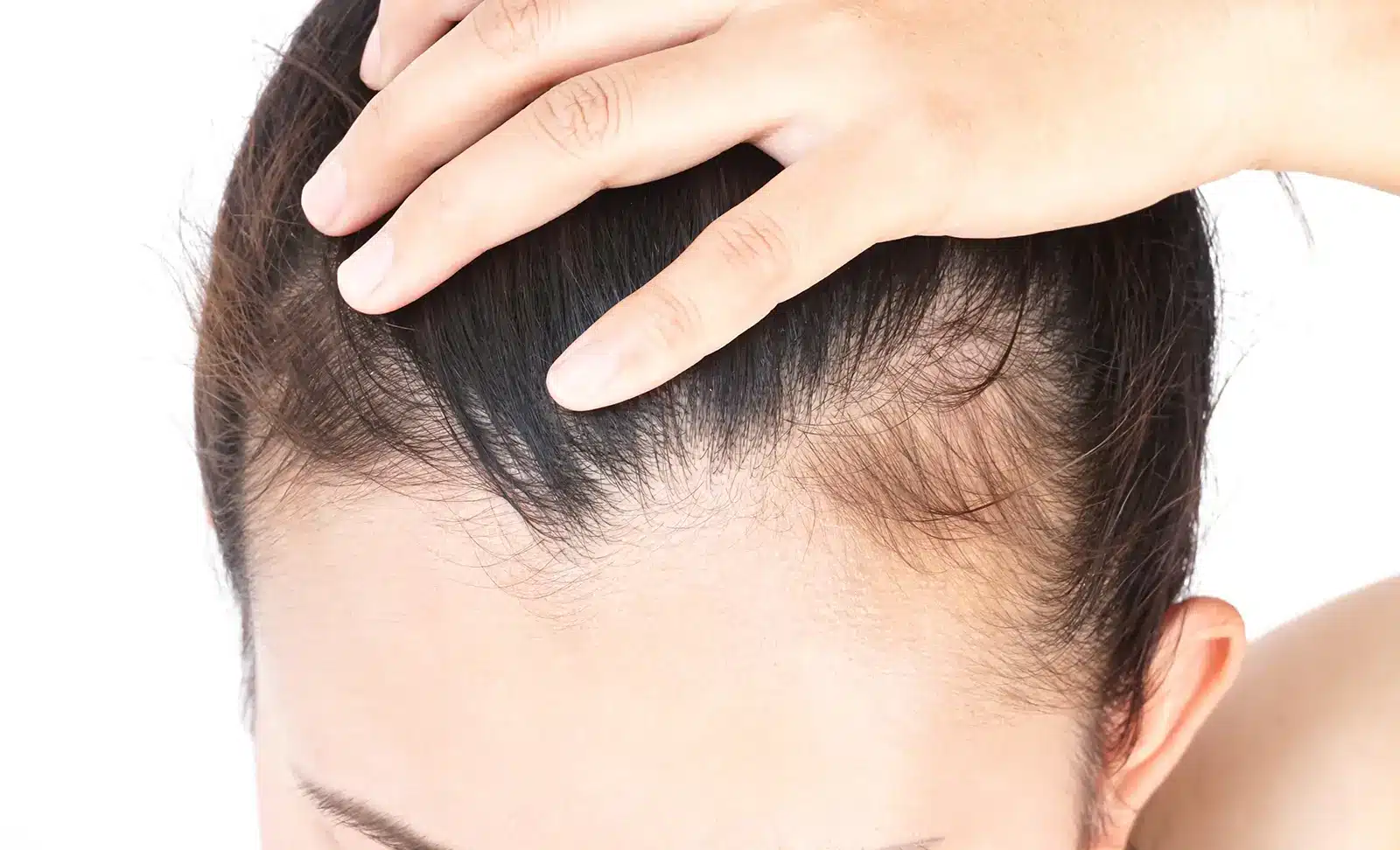

Most forms of hair loss creep up on you for reasons outside your control, written into your genes or your hormones. Traction alopecia is different, and that difference is good news. It is hair loss caused by one thing, sustained pulling on the hair, and because the cause is something you do rather than something you are, it is one of the few types of hair loss you can often stop in its tracks, and in the early stages, reverse completely.
That is the message worth leading with, because the single most important factor in how traction alopecia turns out is how early you notice it and act. Caught early, hair usually grows back. Left to run for years, the follicles can be lost for good. This article explains what causes it, the everyday habits behind it, and what can be done at every stage, from a simple change of routine to treatment with a specialist.
What Traction Alopecia Is
Traction alopecia is hair loss caused by repeated or prolonged tension on the hair follicles. When hair is pulled tight, day after day, the constant strain damages the follicle and the small structure at its base that drives new growth. At first the follicle responds by producing finer, weaker hairs. If the pulling continues, it can eventually stop producing hair at all.
The key thing to understand is that this happens in two stages. In the early phase the damage is not permanent, the follicles are stressed but intact, and relieving the tension lets them recover. Clinical reviews describe this early stage as nonscarring and reversible, with complete regrowth possible once the hairstyle causing it is stopped. The later phase is different. Years of unrelieved tension cause the follicles to scar over and miniaturise, and once that scarring sets in, the loss behaves like any other scarring alopecia and no longer responds to medical treatment. The whole point of acting early is to stay in the first phase, where recovery is still on the table.
The Everyday Habits That Cause It
What makes traction alopecia easy to miss is that the causes rarely feel harmful. They are ordinary grooming choices, often ones worn for years without a second thought, and the damage builds so gradually that the connection is easy to overlook.
The common culprits all share one feature, they keep the hair under steady tension for hours at a time:
- Tight ponytails and buns, especially worn high and worn daily, which is why the style is sometimes linked to professions that require it.
- Braids, cornrows, and weaves, particularly when they feel tight enough to pull at the skin or cause soreness when first put in.
- Hair extensions, which add weight and pull on the roots they are attached to.
- Dreadlocks and twists, where the weight of the hair itself creates ongoing tension.
- Tight headwear, including turbans and tightly wrapped scarves worn in the same position every day.
- Chemical relaxers and heat straightening, which do not cause the condition on their own but weaken the hair shaft and make the follicle far more vulnerable when a tight style is added on top.
A useful rule of thumb is that if a hairstyle hurts, or leaves your scalp feeling tender, it is too tight. Pain is not the price of a neat style, it is a warning. The styles themselves are not the enemy, the sustained tension is, and the same looks worn more loosely, or varied so the strain falls in different places, carry far less risk.
Who Is Most Susceptible, And Why
Traction alopecia can affect anyone who wears their hair under tension, but some people are far more exposed than others, and understanding why helps make sense of the risk.
The strongest factor is simply how the hair is styled over time, which is why the condition is most common in women, and most common of all in women of African descent, whose hair is often styled in tight braids, cornrows, weaves, and extensions from a young age. A dermatology review of the condition estimates it affects around one-third of women of African descent who wear tight styles over a long period, a figure that tracks styling habits rather than any difference in the hair itself. Children and adolescents are a particular concern, because tight styling that begins early gives the tension many more years to do its work.
Certain groups are exposed through routine rather than fashion. Ballet dancers who wear a tight bun for every class and performance, military personnel held to severe hairstyle standards, and anyone whose daily headwear sits in exactly the same position are all at raised risk for the same underlying reason, the tension is constant and it never moves. The common thread across every susceptible group is not a weakness in the hair but a pattern of relentless, repeated pulling, which is precisely why the risk is something that can be managed.

The Early Signs To Watch For
Because traction alopecia is so treatable when caught early, knowing what to look for is well worth your attention. The signs tend to appear exactly where the tension is greatest, most often along the front and sides of the hairline and above the ears.
Watch for thinning or a receding edge at the hairline, small bumps, redness, or tenderness around the follicles where the hair is pulled, and short broken hairs scattered through the stressed area. One of the most recognised early clues is the fringe sign, a telltale band of fine, short hairs left behind along the frontal or temporal hairline while the hair just behind it thins. The Australasian College of Dermatologists notes that small, sore pimples on the scalp are an early feature, one that can progress to patches of hair loss around the temples if the cause is not addressed. None of these signs mean the hair is lost. They mean the follicles are under strain and asking you to ease off, which is exactly the moment to act.
What Can Be Done, At Every Stage
Here is the encouraging part, and it is worth being clear about. At almost every stage there is something useful to be done, and the earlier you start, the less you have to do.
The first and most important step costs nothing. Relieve the tension. Loosen or change the styles that are pulling, vary how you wear your hair so the strain does not always fall in the same place, and give the scalp a proper break. In the early phase, for a lot of people, this alone is enough for the hair to recover over the following months. Where there is inflammation, redness, or soreness, a professional may add topical treatments to calm the follicles, and supportive options such as the minoxidil covered on our hair loss medication page can help encourage regrowth while the tension is kept off. This is also where it helps to understand how traction alopecia sits alongside the other forms of hair loss, since the right response depends on correctly identifying which one you are dealing with.
This is the heart of the matter. Do not wait to see if it sorts itself out, and do not let it get out of hand. Speak to a doctor or a hair specialist as soon as you notice the signs, because a professional can confirm what is happening, tell you which phase you are in, and start the right steps while recovery is still likely. The difference between a good outcome and a permanent one is very often just time.
Where traction alopecia has been left for years and the loss has become established and scarred, medical treatment can no longer regrow the hair, but even then the situation is not hopeless. A hair transplant can restore hair to the areas that have scarred over, provided the tension has been stopped and the donor hair is healthy, which is a judgement for a surgeon to make after assessing your scalp. If you are concerned about hair loss along your hairline and want to know where you stand, visit our hair transplant page for more information or to get started.
Frequently Asked Questions
What is traction alopecia?
It is hair loss caused by repeated or prolonged pulling on the hair follicles, usually from tight hairstyles. Unlike most hair loss, it has a clear external cause, which is why it can often be stopped and, in the early stages, reversed.
Is traction alopecia reversible?
In its early stage, yes. While the follicles are stressed but not yet scarred, relieving the tension usually lets the hair grow back over several months. Once years of pulling have caused permanent scarring, medical treatment can no longer regrow it.
What are the early signs of traction alopecia?
Thinning or a receding edge along the hairline and above the ears, small bumps, redness or tenderness around the follicles, short broken hairs, and the fringe sign, a band of fine short hairs left along the front hairline.
Which hairstyles cause traction alopecia?
Tight ponytails and buns, braids, cornrows, weaves, extensions, dreadlocks, and tightly worn headwear. Chemical relaxers and heat styling add to the risk by weakening the hair. The problem is the tension, not any one style.
Who is most at risk of traction alopecia?
Anyone who wears their hair under constant tension, most commonly women, and especially women of African descent whose hair is styled tightly from a young age. Ballet dancers, military personnel, and people who wear the same tight headwear daily are also at raised risk.
How soon should I see someone about it?
As soon as you notice the signs. Early action is the single biggest factor in a good outcome, so it is far better to have it checked while recovery is still likely than to wait and risk the loss becoming permanent.
Can a hair transplant fix traction alopecia?
In established cases where the hair will not regrow, a transplant can restore the lost areas, as long as the tension has stopped and the donor hair is healthy. A specialist assessment is needed to confirm if it is suitable.
Related Posts
Androgenetic Alopecia: Causes, Diagnosis & Treatment
Learn what androgenetic alopecia is, why DHT and genetics drive pattern hair loss, how it is diagnosed, and which treatments work at each stage.

Questions to Ask at Your Hair Transplant Consultation
Who will do your surgery? Is your donor enough? Bring these hair transplant consultation questions and learn what a good answer sounds like.