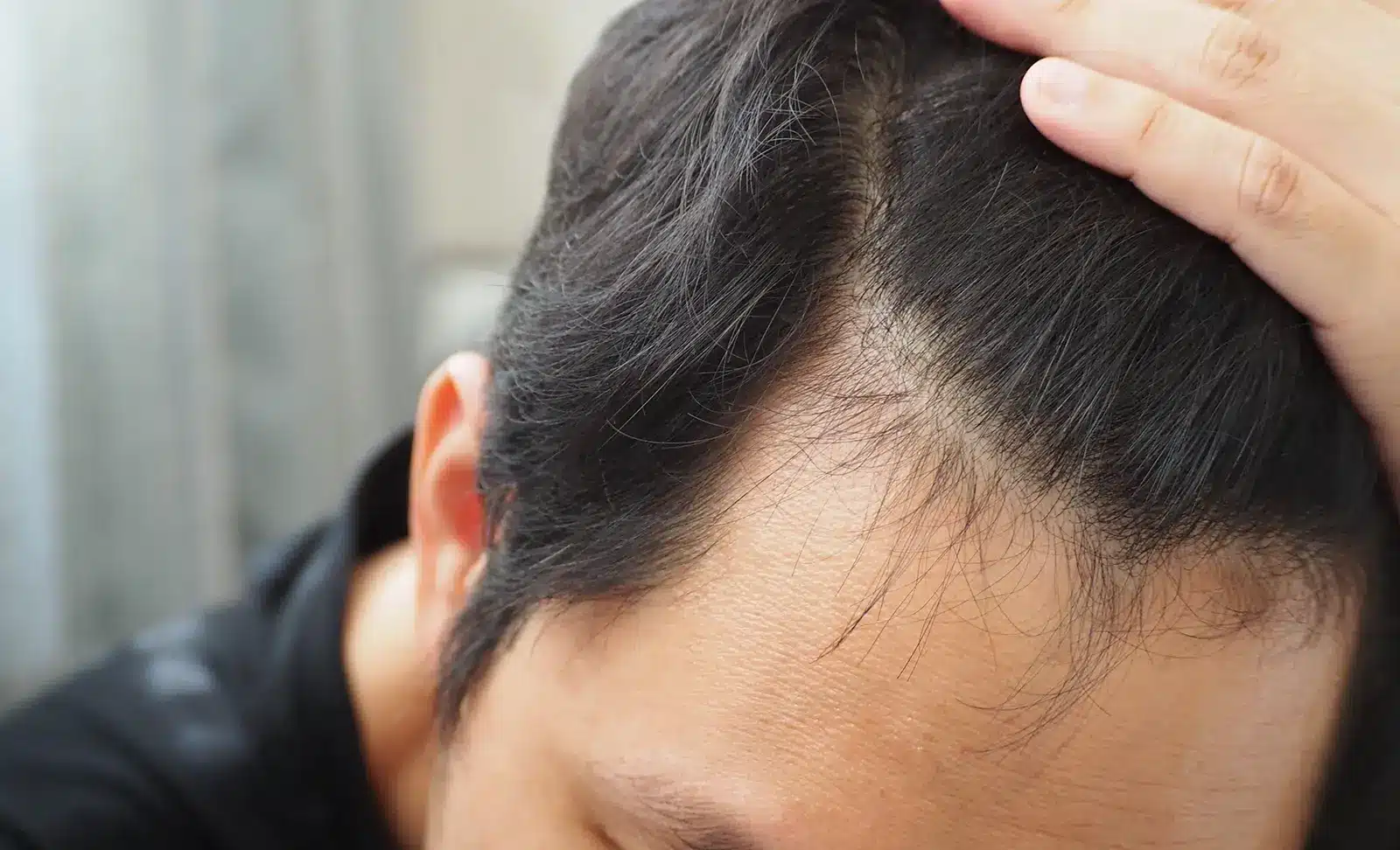
Alopecia simply means hair loss, but it is not one condition. It is an umbrella term covering a whole family of disorders, each with its own cause, its own pattern, and, importantly, its own outlook. Some are temporary and reverse on their own. Others are permanent. And only some can be helped by a hair transplant, which is a distinction that matters enormously and is too often blurred. Understanding which of the types of alopecia you are dealing with is the first and most important step toward doing something about it.
This guide walks through the main types of alopecia, what causes each, how to recognise them, and what can realistically be done, including a straight answer to a question we are asked constantly, which is if a transplant is an option. We will treat that question the way we would in a consultation, because the wrong answer can do real harm.
The One Distinction That Changes Everything
Before the individual types, there is a single dividing line that determines almost everything about treatment. Hair loss disorders split into two broad groups, and telling them apart is the foundation of any sensible plan.
Non-scarring (non-cicatricial) alopecia spares the hair follicle. The follicle is switched off, miniaturised, or shedding, but it is still alive beneath the skin, which means regrowth is possible, either on its own or with treatment. Most hair loss falls into this group.
Scarring (cicatricial) alopecia destroys the follicle and replaces it with scar tissue. Because the follicle and its stem cells are gone, the loss is permanent and irreversible, and no treatment can regrow hair from a follicle that no longer exists. Here the goal shifts to halting the disease before it spreads further.
Keep that distinction in mind as we go, because it is what decides if hair can come back, and if a transplant could ever work.
The Main Types Of Alopecia
Androgenetic Alopecia (Male and Female Pattern Hair Loss)
By far the most common form, androgenetic alopecia accounts for the large majority of all hair loss. It is driven by a genetic sensitivity to the hormone DHT, which gradually miniaturises affected follicles until they stop producing visible hair. In men it shows as a receding hairline and crown thinning, and in women as diffuse thinning across the top of the scalp with the hairline usually preserved. It is progressive, non-scarring, and the follicles are not destroyed, which is exactly why it responds so well to treatment.
Alopecia Areata
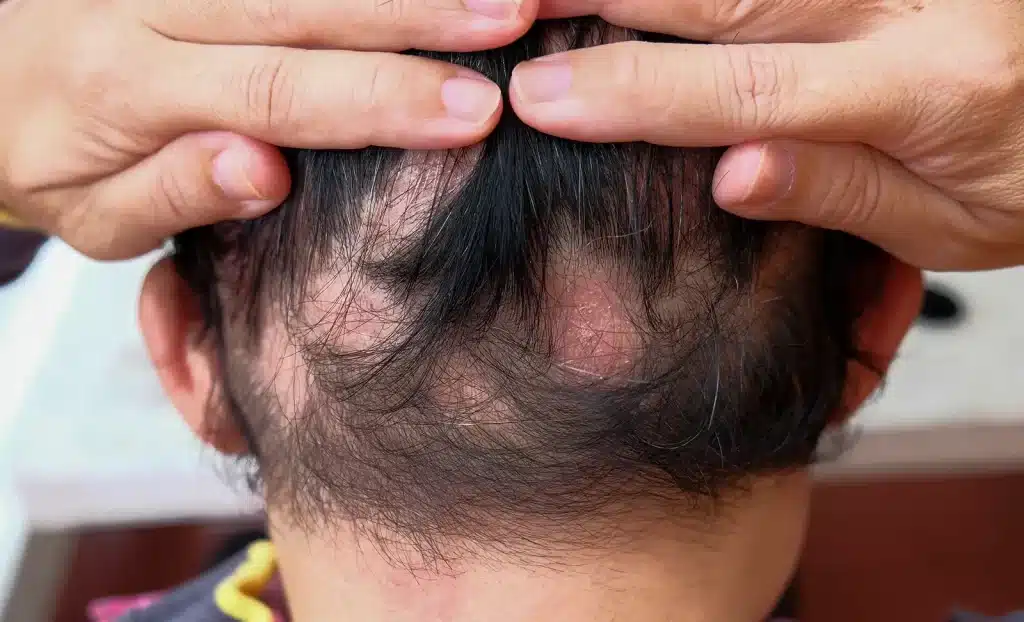
An autoimmune condition in which the immune system mistakenly attacks the hair follicles, causing sudden, sharply defined round patches of hair loss on the scalp or elsewhere. In more severe forms it can progress to complete scalp hair loss – alopecia totalis, or loss of all body hair – alopecia universalis. Its course is unpredictable, with many people experiencing regrowth and relapse in cycles. Crucially, the follicles are not destroyed, so regrowth is possible, but the condition itself is active and erratic.
Telogen Effluvium
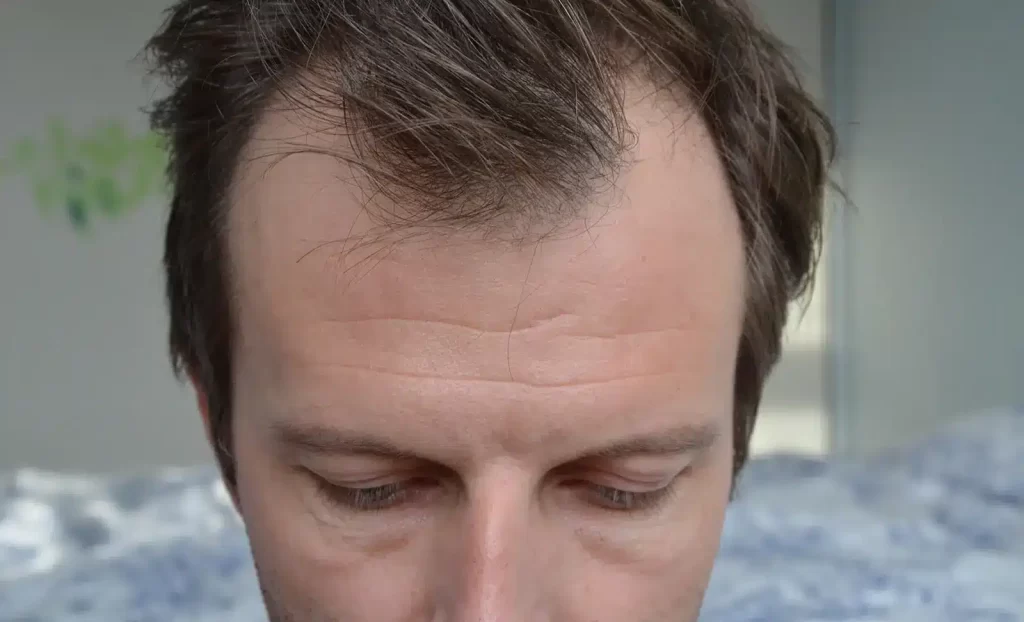
A temporary, diffuse shedding across the whole scalp, triggered when a physical or emotional stressor pushes large numbers of follicles into their resting phase at once. Common triggers include childbirth, severe illness or fever, major surgery, crash dieting, and acute stress. It is one of the most reassuring diagnoses, because it is non-scarring and self-limiting. Once the underlying trigger passes, hair typically recovers over several months without any surgical intervention.
Anagen Effluvium
Rapid, widespread hair loss caused by something interrupting follicles while they are actively growing, most classically chemotherapy or radiotherapy. It is dramatic and distressing, but in most cases it is also reversible, with hair regrowing once the treatment that caused it ends.
Traction Alopecia
Hair loss caused by chronic tension on the hair, from tight ponytails, braids, buns, or extensions worn repeatedly over time. It typically affects the hairline and temples. Caught early, it is reversible simply by relieving the tension. Left too long, however, the repeated pulling can scar the follicles permanently, at which point it behaves like a scarring alopecia.
Scarring (Cicatricial) Alopecia
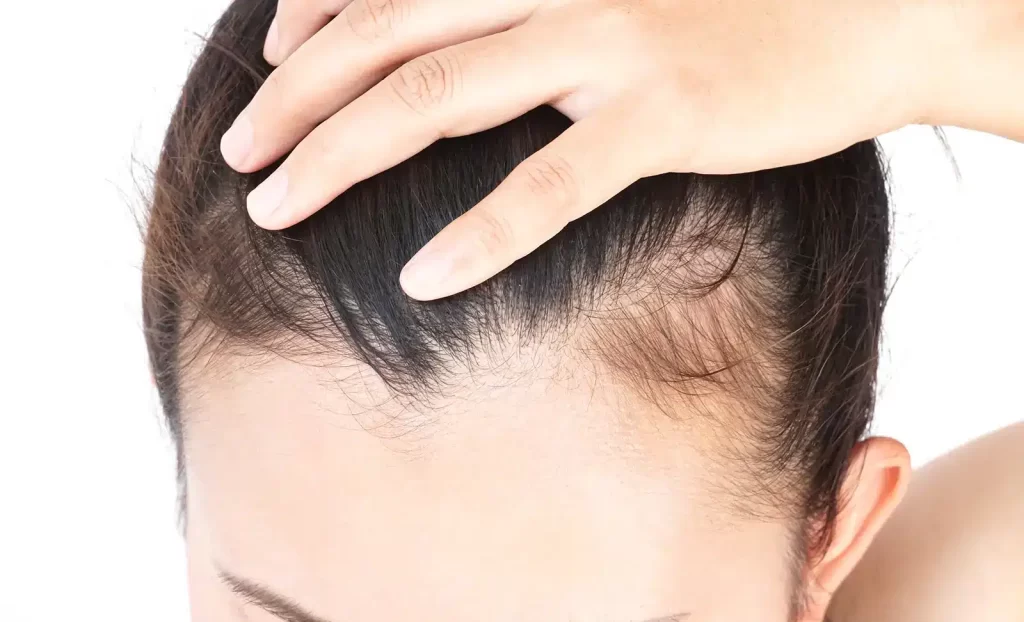
A group of less common but more serious conditions, including lichen planopilaris, frontal fibrosing alopecia, discoid lupus of the scalp, and central centrifugal cicatricial alopecia. In all of them, inflammation permanently destroys the follicle and replaces it with scar tissue. These are the types where early diagnosis matters most, because treatment cannot bring back what is lost, only protect what remains.
Why Does Alopecia Happen?
There is no single cause, which is precisely why the types differ so much. Depending on the condition, hair loss can stem from genetics and hormones, as in pattern baldness, from the immune system turning on the follicles, as in alopecia areata and the scarring alopecias, from physical or emotional stress, as in telogen effluvium, from medical treatments, as in anagen effluvium, or from mechanical damage, as in traction alopecia. This is also why self-diagnosis is risky. Two people with visibly similar thinning can have entirely different underlying causes, and a clinical case study has documented a single patient carrying three different types of alopecia at once, which shows just how easily the picture can be misread without a proper examination.
Is Alopecia Reversible?
This is the question everyone wants answered, and the honest response is that it depends entirely on the type, which brings us back to that first distinction.
The non-scarring types carry the better outlook. Telogen and anagen effluvium usually reverse completely once the trigger is removed. Alopecia areata can regrow, though unpredictably. Androgenetic alopecia does not reverse on its own and is progressive, but it responds well to treatment that slows the loss and can regrow hair. Early traction alopecia reverses once the tension stops.
The scarring alopecias are the exception, and here we have to be straight. Once a follicle has been destroyed and replaced by scar tissue, that hair cannot be brought back by any means. The aim of treatment is to control the inflammation and stop the condition spreading, preserving the healthy hair that remains.
Can You Have A Hair Transplant For Alopecia?
This is where we have to be most careful, because a transplant is right for some types of alopecia and plainly wrong for others. We would rather turn a patient away than perform a procedure destined to fail, so here is how we approach it in practice.
Androgenetic alopecia is the condition hair transplants were designed for. Because the loss is patterned and the donor hair at the back and sides is resistant to it, graft survival rates are typically around 90%. If you have pattern hair loss and a healthy donor area, you are very likely a strong candidate.
Scarring alopecias are a different matter entirely. A transplant into an actively inflamed, scarred scalp is likely to fail, with graft survival often below half, and surgery can even provoke the condition. It is only ever considered when the disease has been confirmed burnt out and stable for a long period, and even then only after specialist assessment. Active scarring alopecia is a reason not to operate.
Alopecia areata is generally not treated with transplantation. Because it is an unpredictable autoimmune condition, the immune system can attack transplanted follicles just as it did the originals, and a flare can undo the work. It is managed medically rather than surgically.
Telogen and anagen effluvium are not transplanted at all, and should not be, because they recover on their own once the cause is addressed. Operating on hair that would have grown back anyway is needless.
Traction alopecia can sometimes be transplanted, but only once the pulling has stopped and if the follicles have scarred permanently. If caught early, it does not need surgery.
The thread through all of this is that the type and the stability of your condition decide everything. A responsible clinic will not touch an unstable or actively inflamed scalp, and a proper diagnosis always comes before any talk of surgery. The right way to find out where you stand is to book a consultation, so your hair loss can be properly assessed before any decision is made.
What Are The Alternatives To Surgery?
For the many people who are not transplant candidates, or who want to try other routes first, there is a real and growing set of options, and for several types they are the correct first-line choice.
- Medication. Minoxidil and finasteride are the mainstays for androgenetic alopecia, slowing loss and encouraging regrowth. Minoxidil is also used more broadly to support regrowth in some other conditions.
- Immune-targeted treatment. For alopecia areata, corticosteroids calm the immune attack, and a newer class of drugs called JAK inhibitors has become an important, approved option for more extensive disease.
- Anti-inflammatory treatment. For scarring alopecias, the priority is controlling inflammation with prescribed medication to halt progression and protect the hair that remains.
- Addressing the trigger. For telogen effluvium, the treatment is often simply identifying and resolving the underlying cause, be it stress, a nutritional gap, or an illness, and giving it time.
- Stopping the cause. For traction alopecia, relieving the tension on the hair is the single most effective step.
- Supportive therapies. Low-level laser therapy and other adjuncts can play a supporting role in some cases.
The right choice depends entirely on the diagnosis, which is the recurring theme of this whole subject. If you want a fuller primer on the condition and its management, our overview covering alopecia and what you need to know is a useful companion to this guide.
The Bottom Line
Alopecia is not one problem with one answer. It is a family of conditions ranging from the temporary and self-correcting to the permanent and progressive, and the single most valuable thing you can do is find out exactly which type you have. That diagnosis determines if your hair will return on its own, if medication is the answer, and if a transplant is a sensible option or a mistake.
If you are losing hair and are not sure why, the right first step is a proper assessment rather than a guess from a chart. Our team can diagnose the type, explain your realistic options, and tell you plainly what will and will not help, including when the answer is not surgery at all.
Frequently Asked Questions
What are the main types of alopecia?
The most common are androgenetic alopecia (pattern baldness), alopecia areata (patchy autoimmune loss), telogen effluvium (temporary stress-related shedding), anagen effluvium (from treatments like chemotherapy), traction alopecia (from tension on the hair), and the scarring alopecias, which cause permanent loss.
Which types of alopecia are permanent?
The scarring (cicatricial) alopecias are permanent, because the follicle is destroyed and replaced by scar tissue. Advanced traction alopecia can also become permanent. Most other types, including telogen effluvium and androgenetic alopecia, do not destroy the follicle.
Can alopecia grow back on its own?
Some types do. Telogen and anagen effluvium usually recover once the trigger is resolved, and alopecia areata can regrow unpredictably. Androgenetic alopecia does not reverse on its own but responds to treatment, and scarring types cannot regrow.
Can you have a hair transplant with alopecia areata?
Generally no. Because alopecia areata is an unpredictable autoimmune condition, the immune system can attack transplanted follicles as well, and a flare can undo the results. It is usually managed with medication rather than surgery.
Can scarring alopecia be transplanted?
Only in specific circumstances, and never while the condition is active. A transplant is considered only once the disease has been stable and inactive for a long period, confirmed by specialist assessment, as active scarring alopecia leads to poor graft survival and can worsen.
What is the difference between telogen effluvium and pattern baldness?
Telogen effluvium is a temporary, diffuse shedding across the whole scalp triggered by stress or illness, and it recovers. Pattern baldness is a progressive, genetic, hormone-driven thinning in a defined pattern that does not resolve on its own.
Do I need a diagnosis before treatment?
Yes, and it is the most important step. Different types of alopecia look similar but have completely different causes, outlooks, and treatments, so an accurate diagnosis is what determines if medication, surgery, or simply time is the right answer.
Related Posts
Alopecia Areata: Causes, Diagnosis & Treatment
Sudden round bald patches? Learn what causes alopecia areata, how it is diagnosed with trichoscopy, and which treatments help hair grow back.
Minoxidil Side Effects & How to Manage Them
Most people tolerate it well. Learn the common minoxidil side effects, from scalp irritation to shedding, and how to manage each without stopping.