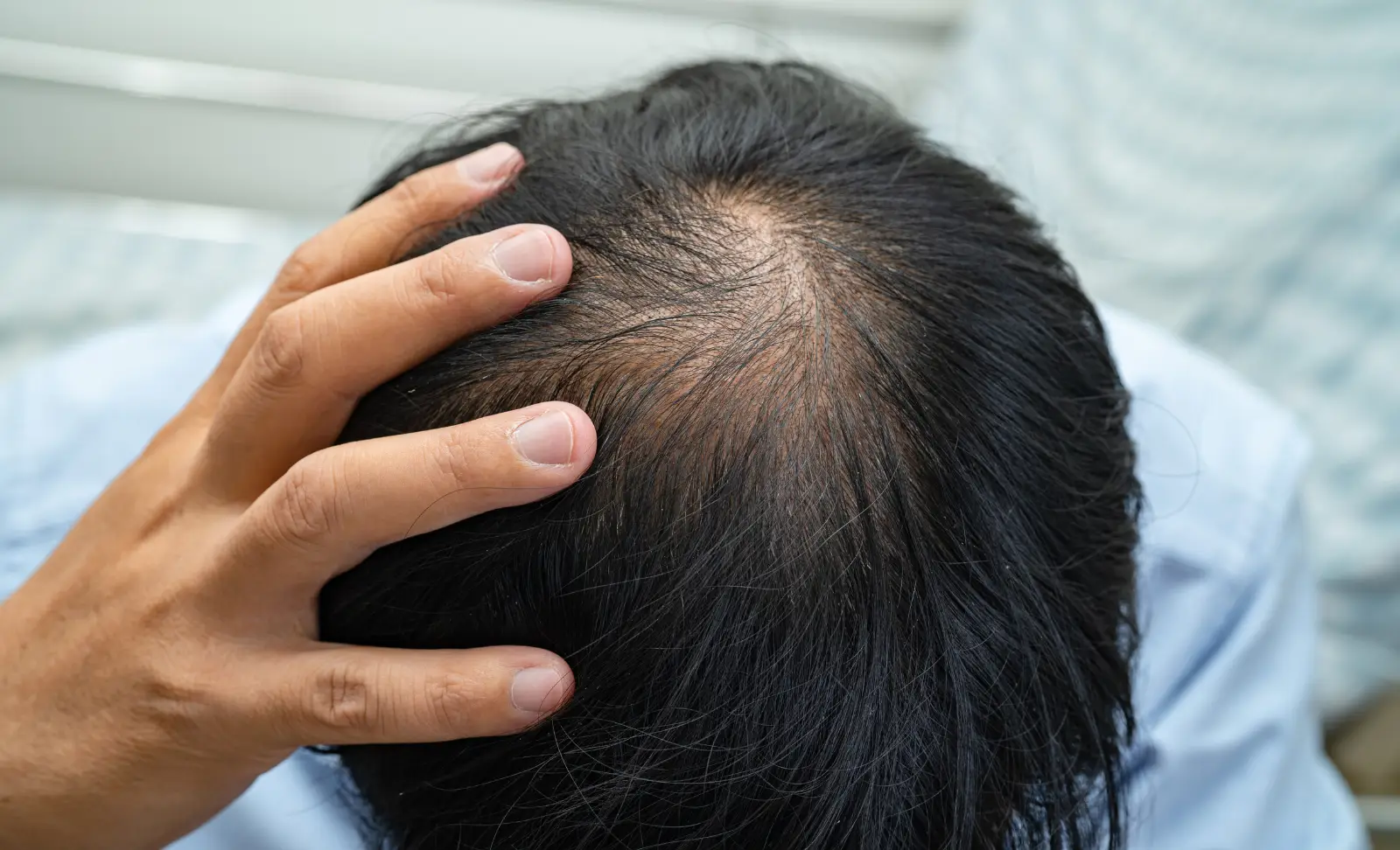

We tend to talk about hair loss in plain terms. Male pattern baldness, a receding hairline, thinning on top. But somewhere along the way, in a leaflet at the clinic or a line on a forum, you may have come across androgenetic alopecia and not been entirely sure what it meant, or if it was something different from the thing you were already worried about.
It is not something different. Androgenetic alopecia is the medical name for the most common form of hair loss there is, the pattern thinning that affects a large share of men, and many women, over the course of a lifetime. This article explains what the term describes, why the process starts and when, how a proper diagnosis is reached, and what the real options are once you have one.
What Androgenetic Alopecia Is
Androgenetic alopecia is progressive, patterned hair loss driven by a combination of genetics and hormones, which is exactly what the name tells you if you break it apart. Andro points to androgens, the hormones involved. Genetic points to inheritance. Alopecia simply means hair loss. Put together, it is hormone-related hair loss that runs in families.
In men it follows the familiar pattern, a receding hairline and thinning at the crown that can, over years, meet in the middle. The Norwood scale charts those stages from the first temple recession through to extensive loss across the top of the scalp. In women it usually looks different, a diffuse thinning across the top and a widening parting, while the frontal hairline is often kept. This is why the same underlying condition is called male pattern baldness in one case and female pattern hair loss in the other. It is also only one of many forms hair loss can take, and our guide to the types of alopecia sets out how it differs from the others.
What Causes It, And When It Starts
The mechanism behind androgenetic alopecia is well understood, and understanding it takes some of the mystery out of a process that can otherwise feel random.
At the centre of it is a hormone called dihydrotestosterone, or DHT, which the body produces from testosterone through an enzyme called 5-alpha-reductase. In people who are genetically susceptible, the hair follicles on the top of the scalp are sensitive to DHT. Over repeated growth cycles, that sensitivity causes the follicles to shrink in a process called miniaturisation. Each cycle produces a finer, shorter, lighter hair than the one before, until the follicle eventually stops producing a visible hair at all. The follicles at the back and sides of the head do not carry the same sensitivity, which is why that hair tends to stay put, and why it is the hair used in a transplant. The StatPearls review hosted by the National Center for Biotechnology Information sets out this miniaturisation process in clinical detail.
The genetic side is inherited from both parents, not, as the old myth goes, from your mother’s father alone. If pattern loss runs in your family on either side, your own risk is higher.
As for when it starts, the honest answer is often earlier than people expect. Androgenetic alopecia can begin any time after puberty. A meaningful number of men see the first signs in their twenties, and the proportion affected rises with each decade of life. The pace varies enormously from one person to the next. For some it is a slow drift over decades, for others a faster change over a few years. What stays constant is the direction of travel, because left untreated, the process continues.
How It Is Diagnosed
For a condition this common, diagnosis is usually more straightforward than people fear, though it is worth having it done properly rather than guessing.
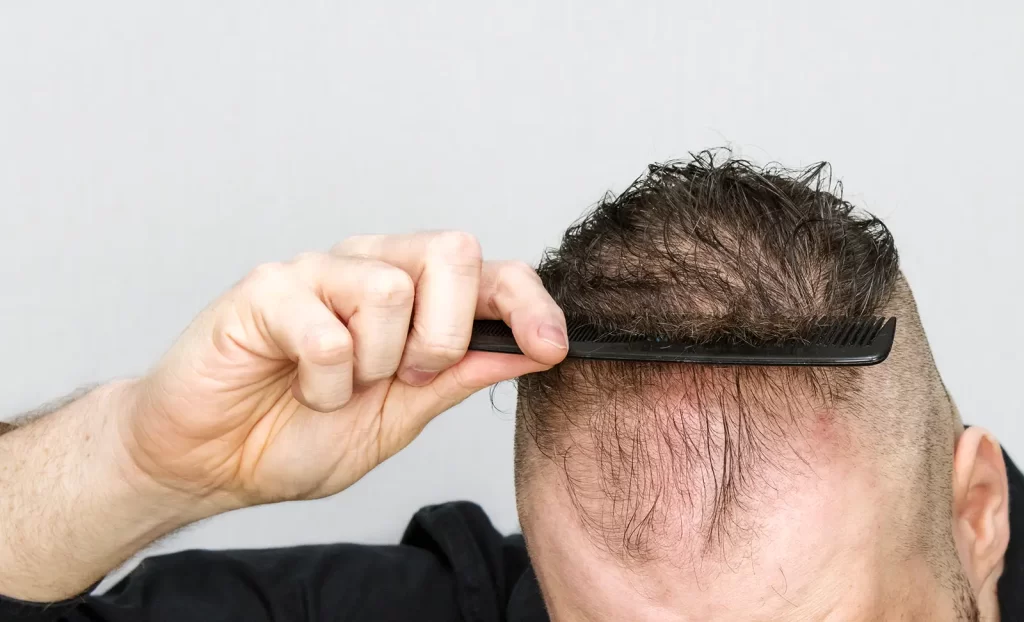
In most cases a doctor or hair specialist can recognise androgenetic alopecia from the pattern alone, the position of the thinning, its gradual onset, and a family history of the same. A closer look often involves trichoscopy, a magnified examination of the scalp that shows the variation in hair shaft thickness that miniaturisation produces, one of the clearest signs that pattern loss is underway. Where the picture is less clear, blood tests may be used to rule out other causes, since thyroid problems, iron deficiency, and other conditions can all cause hair loss that looks different once you know what you are looking at. Occasionally a scalp biopsy is used to settle a difficult case.
The reason a diagnosis matters is practical. Several conditions can thin hair, and they are not all treated the same way. Pattern loss, a telogen effluvium brought on by stress or illness, an autoimmune alopecia, each calls for a different response. Treating the wrong one wastes time that, with progressive loss, you do not really have to spare.
If you want a clear read on your own situation, you can get in touch to arrange an assessment with our clinical team.
The Diagnosis Matters, And So Does Talking About It
There is a part of this that the clinical description leaves out, and it would be a poor article that skipped it. Hair loss is rarely just about hair.
For a lot of men, the appearance in the mirror and the way it lands on their sense of themselves are closely tied, and losing hair can be truly difficult in a way that is easy to dismiss from the outside. This is not vanity, and the research bears that out. A systematic review and meta-analysis published in the dermatology literature, pooling data from dozens of studies and thousands of patients, found that androgenetic alopecia is associated with a measurable reduction in quality of life and higher rates of psychological distress, with the impact on day-to-day wellbeing comparable to, and in places greater than, that seen in other long-term skin conditions. The effect is measured rather than dramatic, and it is not the same for everyone, but it is real, and the people who study this suggest that patients may benefit from acknowledgement and support rather than being told it is only hair.
So if the thinning bothers you, that is a reasonable thing to feel, and it is a reasonable thing to act on. Getting a clear diagnosis early does two things at once. It tells you what you are dealing with, which settles a good deal of the background anxiety that comes from not knowing. And it opens the door to treatment at the stage where treatment works best, because every option below is more effective at holding on to hair you still have than at recovering hair that is already gone.
What Your Options Are
Here is where it helps to be both fair and realistic. There is no cure for androgenetic alopecia, and anyone who tells you otherwise is selling something. What there is, is a set of options that really do work to different degrees, and the right one depends on how far the loss has progressed and what you want from it.
Here is where it helps to be both fair and realistic. There is no cure for androgenetic alopecia, and anyone who tells you otherwise is selling something. What there is, is a set of options that really do work to different degrees. Broadly they fall into two camps, medication to defend the hair you have and a transplant to restore what is gone, with the honest fourth choice of leaving it alone. The table below sets them side by side before we look at each.
| Option | How it works | Best suited to | What to expect |
| Finasteride | Lowers DHT to slow or halt loss | Men with early to moderate loss | Holds existing hair; works while taken |
| Minoxidil | Prolongs the growth phase of the follicle | Men and women, early to moderate loss | Thickens existing hair; works while used |
| Hair transplant | Moves loss-resistant donor hair to thinned areas | Established, stable loss with a good donor | Permanent regrowth in treated areas |
| Informed acceptance | No treatment, with a clear understanding of the condition | Those not troubled enough to treat it | No change, but no cost or upkeep |
Medication
The two medical treatments with the strongest evidence behind them are finasteride and minoxidil, and they work in different ways. Finasteride, a daily tablet for men, lowers DHT levels and so slows or halts the process driving the loss. Minoxidil, a topical solution or foam used by both men and women, prolongs the growth phase of the follicle and can thicken the hair that is still there. The two are often used together, since one defends against the cause and the other supports what remains.
What they share matters as much as how they differ. Both hold on to hair more reliably than they regrow it, both take months rather than weeks to show an effect, and both work only for as long as you keep using them. Stop, and the loss resumes from where it would have been. For many people, especially those who start early while there is plenty to protect, medication alone is enough. If you want the detail, our guides on how well finasteride works and how well minoxidil works walk through the evidence and the timelines for each.
Hair Transplant
When medication is not enough, or when the loss is already established, a transplant is the option that restores hair rather than defends it. It moves follicles from the donor area at the back and sides, which keep their resistance to DHT, into the areas that have thinned, and because that resistance travels with them, the transplanted hair is permanent.
The size of a procedure is measured in grafts, the follicular units moved in a session, and the number depends on how far the pattern has advanced, from a few hundred to refine a hairline up to several thousand for broad coverage. Our graft calculator gives a rough idea of the range your own pattern might need. A transplant does not switch off the underlying condition, though, which is why it is usually paired with medication to protect the native hair around the transplanted area. It also depends on a stable, well-assessed pattern and a healthy donor supply, a judgement for a surgeon rather than a self-assessment, and you can read how pattern loss is assessed and managed on our male hair loss section.
Choosing To Leave It
The fourth option deserves naming too, which is to do nothing. Some people, once they understand what is happening and that it is neither dangerous nor their fault, decide they would rather let it run its course than treat it. That is a legitimate choice, and a clear diagnosis is what turns it into an informed decision rather than a resignation.
Whichever direction suits you, the common thread is that the decision is easier and the results are better when you understand the condition and act while you still have options. If you would like a professional assessment of your own pattern and the treatments that fit it, visit our hair transplant page for more information or to get started.
Frequently Asked Questions
What is androgenetic alopecia in simple terms?
It is the medical name for pattern hair loss, the common hormone-driven, inherited thinning known as male pattern baldness in men and female pattern hair loss in women.
What causes androgenetic alopecia?
A genetic sensitivity to the hormone DHT, which gradually shrinks affected hair follicles over successive growth cycles until they stop producing visible hair. The tendency is inherited from both sides of the family.
At what age does androgenetic alopecia start?
It can begin any time after puberty. Many men notice the first signs in their twenties, and the proportion affected rises with age. The pace of progression varies widely from person to person.
How is androgenetic alopecia diagnosed?
Usually from the pattern of loss, its gradual onset, and family history, often confirmed with trichoscopy, a magnified scalp examination. Blood tests or, rarely, a biopsy may be used to rule out other causes.
Can androgenetic alopecia be cured?
No. There is no cure, but it can be slowed or stabilised with medical treatment, and lost coverage can be restored with a transplant. Treatment works best started early.
Does androgenetic alopecia affect women?
Yes. In women it usually shows as diffuse thinning across the top of the scalp and a widening parting, often keeping the frontal hairline, and it is called female pattern hair loss.
Is it normal to feel low about hair loss?
Yes. Research links androgenetic alopecia to a measurable reduction in quality of life and higher psychological distress for many people. It is a common and understandable response, not vanity, and worth talking about.
Related Posts

Questions to Ask at Your Hair Transplant Consultation
Who will do your surgery? Is your donor enough? Bring these hair transplant consultation questions and learn what a good answer sounds like.

Scarring Alopecia: Causes & Treatment Options
Hair loss with redness or scaling? Learn what causes scarring alopecia, how treatment protects the hair you have, and when a transplant can work.