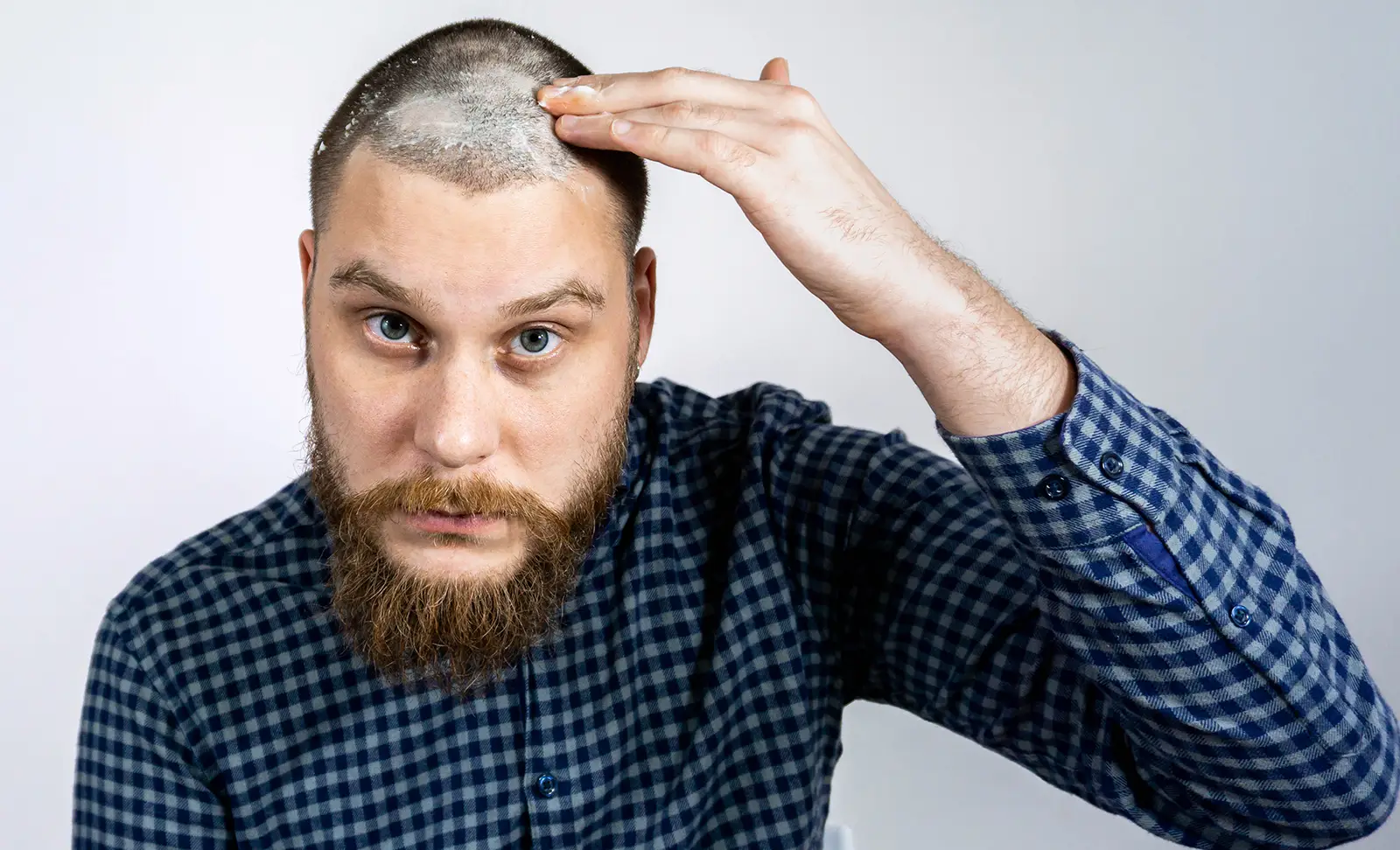
Of all the forms of hair loss we see, alopecia areata is one of the most frightening for the person living through it, because it arrives without warning. One day there is a smooth, round bald patch where there was none before, and it is impossible not to fear what it means and how far it will go. We have sat with many patients at exactly that moment, and we have also had the privilege of seeing plenty of them through it to full regrowth, so we say this with real conviction. There is good news in this condition, and understanding it changes everything about how you cope with it.
That is why this guide matters. Answering what is alopecia areata, why it happens, and what can be done is what turns fear into a clear sense of your options, and there are more of those than most people arrive expecting. We will walk through all of it the way we would with a patient in the clinic.
What Is Alopecia Areata?
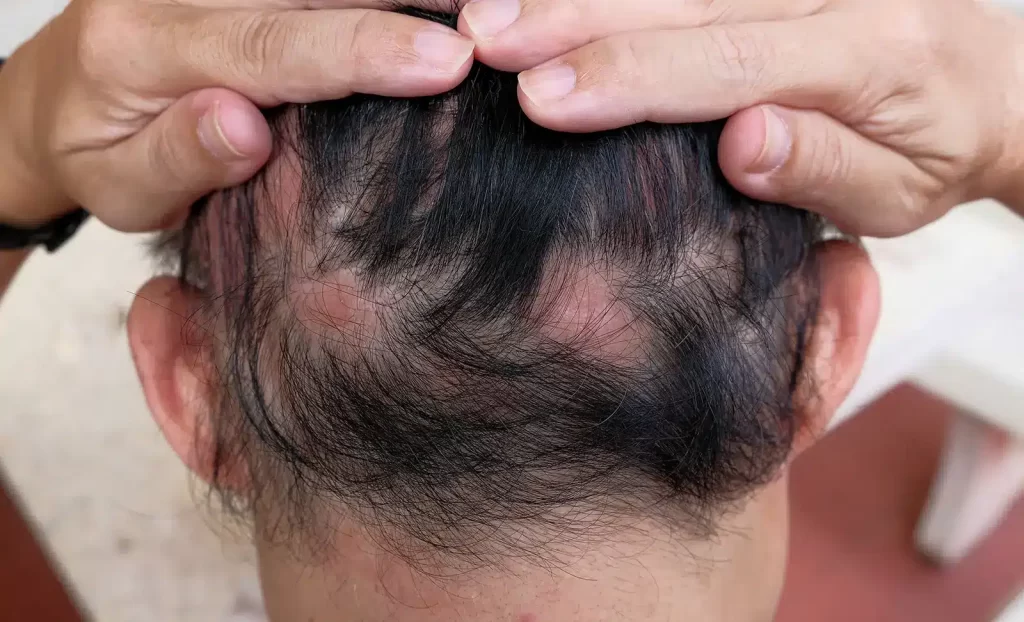
To answer plainly, alopecia areata is an autoimmune condition in which the body’s own immune system mistakenly attacks the hair follicles, causing hair to fall out in small, well-defined, usually circular patches. It is one of several distinct forms of hair loss, and it most often affects the scalp, though it can appear anywhere hair grows, including the beard, eyebrows, and eyelashes. It affects roughly two in every hundred people at some point in their lives, and it can begin at any age, though it frequently starts before thirty.
The condition varies enormously in how far it goes. For many people it stays as one or two coin-sized patches that recover. For others it is more extensive, and in its more severe forms it has specific names. When it progresses to complete loss of scalp hair, it is called alopecia totalis, and when it extends to loss of all body hair, alopecia universalis. Its course is famously unpredictable, with periods of loss, regrowth, and sometimes relapse.
The single most important thing to understand is that in alopecia areata the follicle itself is not destroyed. It is switched off by the immune attack, not killed. That is what separates it from the scarring alopecias and it is precisely why regrowth remains possible, even after long periods of loss. We pay particular attention to explaining this to our patients, because many arrive truly devastated, convinced their hair is gone for good. Watching that reassurance land, seeing someone realise the follicles are alive and waiting, makes all the difference to how they cope with what comes next.
Why Does Alopecia Areata Happen?
At its core, alopecia areata is a case of mistaken identity by the immune system. Normally the hair follicle enjoys a special protected status that shields it from immune attack, something researchers call immune privilege. In alopecia areata, that protection breaks down, and the immune system begins to see the follicle as a threat.
When this happens, a particular type of white blood cell, the cytotoxic T-cell, gathers around the base of the hair follicle and attacks it. Under the microscope this cluster of immune cells is so characteristic that pathologists describe it as a swarm of bees. The attack forces the follicle out of its growth phase and the hair sheds, but the follicle survives in a dormant state, ready to grow again if the attack settles.
There is a genetic element too. Alopecia areata tends to run in families, and it is more common in people who have other autoimmune conditions, such as thyroid disease, vitiligo, or type 1 diabetes. On top of that genetic susceptibility, a trigger often seems to set it off, and severe stress, illness, or another physical shock are commonly reported before an episode begins. It is worth being clear that this is not caused by anything the person did, and it is not contagious. One curious and telling detail is that the immune attack preferentially targets pigmented hairs and tends to spare white ones, which is why some people find their remaining hair appears to turn grey rapidly as the darker hairs fall.
How Is Alopecia Areata Diagnosed?
Diagnosis usually begins and often ends with a careful clinical examination, because the pattern of alopecia areata is quite distinctive. A doctor will look at the shape and edges of the bald patches, which are typically smooth, round, and lacking the redness, scaling, or scarring that would point to a different condition.
The key diagnostic tool is trichoscopy, a painless examination of the scalp using a handheld magnifying device called a dermatoscope. It reveals features invisible to the naked eye that, taken together, confirm the diagnosis. The classic trichoscopic signs of alopecia areata include exclamation-mark hairs, short broken hairs that are narrower at the base than the tip, along with black dots where hairs have snapped at the scalp surface, yellow dots, and short regrowing vellus hairs. No single one of these confirms the condition on its own, so the diagnosis rests on seeing several of them together.
A doctor may also gently check for a few supporting signs. Nail changes, such as fine pitting or roughening of the nail surface, appear in a proportion of patients and can support the diagnosis, particularly in more severe disease. A gentle pull test at the edge of a patch can show if hairs are actively shedding, indicating the condition is still spreading. It is rarely necessary, but in uncertain cases a small scalp biopsy can settle the diagnosis by revealing that telltale swarm of immune cells around the follicles.
Can Alopecia Areata Be Treated?
Yes, and this is where the outlook has improved dramatically in recent years. Because the follicle survives, the goal of treatment is to calm the immune attack so the follicle can return to normal growth. Which treatment fits depends on how old the patient is, how much hair is affected, and how long it has been going on.
It is worth saying first that mild alopecia areata often recovers on its own. A large proportion of people with a few small patches see them regrow within a year without any treatment at all. Where treatment is warranted, there is a clear ladder of options.
For limited patches, the mainstays are corticosteroids, which suppress the local immune attack. These are given either as injections directly into the patches, which is often the most effective approach for small areas, or as a strong topical cream. Minoxidil is frequently used alongside them to encourage regrowth.
If you want to understand how well it performs and what the evidence says, our guide on how minoxidil works covers it in detail.
For more extensive or stubborn cases, dermatologists turn to other approaches. Topical immunotherapy, which deliberately provokes a mild, controlled skin reaction to divert the immune system away from the follicles, can be effective for widespread patchy loss. Phototherapy and short courses of systemic immunosuppressants are also used in some cases.
For severe alopecia areata, the landscape has truly changed. A class of drugs called JAK inhibitors has transformed the treatment of severe disease, with baricitinib approved for this use in 2022 and ritlecitinib following in 2023. These medications work by blocking the specific immune signals that drive the follicle attack, and they have produced meaningful hair regrowth in many people who previously had no good options. They are prescribed and monitored specialist medications rather than a casual first step, but they represent a real breakthrough for those most severely affected.
The honest caveat across all of this is that alopecia areata is unpredictable and can relapse even after successful regrowth, so treatment is often about managing an ongoing condition rather than delivering a one-off cure. It is also why proper medical guidance matters so much.
What About Hair Transplants?
People sometimes ask if a hair transplant can solve alopecia areata, and here we have to be straight, as we always are. A transplant is generally not appropriate for alopecia areata. Because it is an active, unpredictable autoimmune condition, the immune system can attack transplanted follicles just as readily as the originals, and a flare can undo the result. This is a condition to manage medically, by calming the immune response, not surgically. A surgeon who offers a transplant for active alopecia areata is not one to trust.
We have this conversation openly with our patients, because being a hair transplant clinic does not mean surgery is always the answer, and we would rather tell you the truth than sell you a procedure that will not work. Our stance is simple. We assess each person properly and point them toward the option that truly fits their condition, even when that option is not a transplant and not with us at all.
Living With Alopecia Areata
It would be wrong to treat this as a purely physical matter. Sudden, visible hair loss can be truly hard to live with, and the emotional impact of alopecia areata is real and well recognised. Support, be it medical, psychological, or through patient communities, is a legitimate and important part of managing the condition, not an afterthought.
If you have noticed patchy hair loss and are not sure what it is, the most useful step is a proper assessment rather than worry and guesswork. Our team can examine your scalp, confirm the diagnosis, and talk you through the options that truly fit your situation. You are welcome to book a consultation with us whenever you are ready.
Frequently Asked Questions
What is alopecia areata?
It is an autoimmune condition in which the immune system attacks the hair follicles, causing hair to fall out in small, smooth, usually round patches. It can affect the scalp or any hair-bearing area, and because the follicle is not destroyed, the hair can grow back.
What causes alopecia areata?
It is caused by the immune system mistakenly attacking the hair follicles, driven by a combination of genetic susceptibility and often a trigger such as stress or illness. It is more common in people with other autoimmune conditions, and it is neither contagious nor the person’s fault.
Can alopecia areata be cured?
There is no permanent cure, but it is very treatable, and hair often regrows either on its own or with treatment. Because the follicle survives, regrowth remains possible even after extensive loss, though the condition can relapse.
Does alopecia areata grow back?
Often, yes. Mild cases frequently regrow within a year without treatment, and treatment can prompt regrowth in more extensive cases. The course is unpredictable, so regrowth is not guaranteed, and relapse can occur.
How is alopecia areata diagnosed?
Usually through a clinical examination and trichoscopy, a magnified look at the scalp that reveals characteristic signs such as exclamation-mark hairs and black dots. Nail changes and, rarely, a small biopsy can support the diagnosis in uncertain cases.
What is the newest treatment for alopecia areata?
JAK inhibitors, a class of drugs including baricitinib and ritlecitinib, are the most significant recent advance, approved for severe alopecia areata in 2022 and 2023. They block the immune signals driving the follicle attack and have helped many people with severe disease.
Can you have a hair transplant for alopecia areata?
Generally no. Because it is an active autoimmune condition, transplanted follicles can be attacked just like the originals, and a flare can undo the result. It is managed with medical treatment rather than surgery.
Is alopecia areata a sign of something more serious?
It is not usually a sign of serious underlying illness, but because it is autoimmune, it is associated with other autoimmune conditions such as thyroid disease. A doctor may check for these, but for most people it is an isolated condition.
Related Posts
Types of Alopecia: Causes, Symptoms & Treatments
Pattern baldness, alopecia areata or telogen effluvium? Learn the main types of alopecia, which ones regrow, and when a hair transplant can help.
Minoxidil Side Effects & How to Manage Them
Most people tolerate it well. Learn the common minoxidil side effects, from scalp irritation to shedding, and how to manage each without stopping.