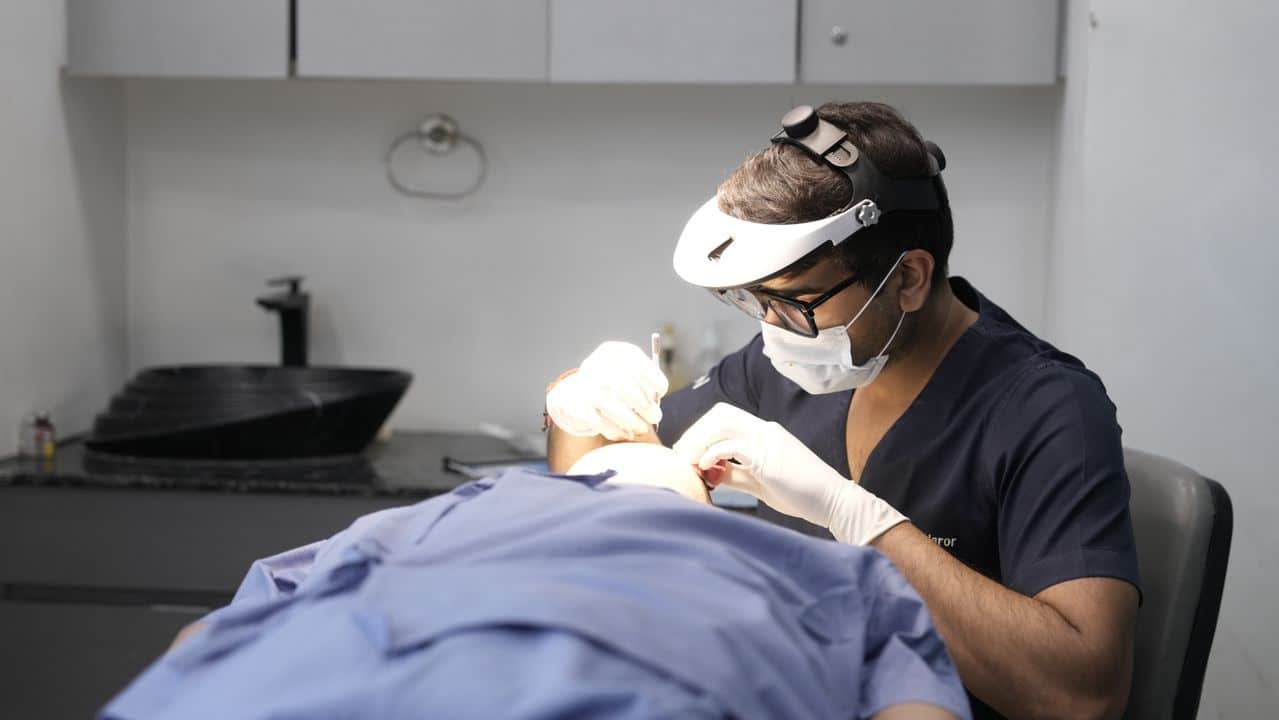
Almost every patient who sits down with us has already looked at Turkey. The prices are extraordinary, the before-and-after photos are everywhere, and the pull is completely understandable. Choosing between a uk vs turkey hair transplant is one of the most common decisions we help people think through, and it deserves a straight answer, without the scaremongering you sometimes see and without pretending the price gap is not real, because it plainly is.
So here is our starting position, which we will explain properly as we go. There are some superb surgeons in Turkey, and we have seen their work, but the flood of cheap, high-volume outlets has done real damage, both to patients and to the country’s reputation. What follows is how we would talk it through with someone sitting across the desk, what Turkey really offers and at what true cost, what the UK gives you for the higher price, and how to decide which is right for you.
What Turkey Really Offers
Let us be fair to Turkey first, because the appeal is real and it is not only marketing. Istanbul has become the hair transplant capital of the world by sheer volume, and at the top of the market there are accredited, doctor-led clinics using the newest techniques and producing results that stand comparison with anywhere. Good work is done in Turkey, and we would not pretend otherwise.
The draw most people feel, though, is the price and the convenience wrapped around it. A typical Turkish package runs somewhere between £1,600 and £3,500, and for that you generally get more than the surgery. Most packages bundle in three to five nights in a good hotel, VIP airport transfers, your blood tests, PRP treatment, aftercare medications and products, and a period of follow-up. Presented as a single tidy figure, it looks like a complete trip for less than the surgery alone would cost in Britain, and that is a real draw.
The catch is that the price is doing a lot of the persuading. A polished package and a low number are easy to say yes to, and many people book on that basis without digging into the part that truly determines their result, who is operating, what their credentials are, and how the clinic runs. That is the research the headline figure quietly discourages, and it is where the trouble tends to start.
What The Price Does Not Include
The word to watch is “all-inclusive,” because it is not a regulated term and it means different things at different price points. Before you are seduced by a headline figure, it is worth knowing what typically sits outside the package. Your international flights are almost never included, though from the UK they are usually modest. Travel insurance that truly covers a medical procedure abroad is on you, and it matters, because your standard GHIC card does not apply in Turkey. Meals beyond hotel breakfast, extra hotel nights if your healing is slow, and any long-term medication are also generally extra.
None of those are dealbreakers on their own. The bigger and quieter question is what the very cheapest packages leave out of the medicine itself, and that is where our honest concerns begin.
The Real Cost, And The Real Risk
Here is the part the glossy packages do not advertise. At the budget end of the Turkish market, the smiling surgeon whose photo sold you the clinic may never touch your head. The industry even has a name for it, ghost surgery, where a named doctor signs off the marketing while unlicensed technicians carry out the extraction and implantation that decide your entire result. Add to that clinics processing many patients a day with little individual attention, graft numbers inflated well past what a donor can safely give, which is how you end up with an overharvested donor area that cannot be undone, and aftercare that becomes a few messages on an app the moment you land back home, thousands of miles from whoever really operated.
This is not us talking down a competitor country. It is what the data shows. The International Society of Hair Restoration Surgery has issued a consumer warning about black-market hair transplant clinics, and its members report that a meaningful share of the repair work they now do traces back to procedures at unqualified, high-volume clinics. In the UK the picture is just as clear, with a BAAPS audit recording a 44 percent rise in patients treated for serious complications after surgery abroad, and Turkey named as the origin in the large majority of hair transplant cases. The crucial nuance, and the one we insist on being fair about, is that this is the unaccredited, cheap end of the market. It is not the accredited, doctor-led Turkish clinics, which are a different proposition entirely.
The trouble is that from a laptop in Britain, the excellent clinic and the dangerous one can look almost identical. Both have slick websites, glowing reviews, and dramatic before-and-afters. Telling them apart takes knowledge most patients do not have when they are comparing a £2,000 quote against a £7,000 one, and that information gap is exactly where things go wrong. In our experience, the patients who come to us for repair work are almost never the ones who researched carefully and paid for an accredited surgeon. They are the ones who chased the lowest number.
What The UK Offers For The Money
The UK is undeniably more expensive. A hair transplant here typically runs from around £5,000 to £15,000 or more, depending on the extent of the work, and there is no getting around the fact that you are paying several times the Turkish package price. The fair question is what that money really buys, because it is not nothing.
First, who does the surgery. In a reputable UK clinic your procedure is performed by a GMC-registered surgeon, working to the standards set by the British Association of Hair Restoration Surgery, not delegated wholesale to technicians. That single fact is the biggest driver of a safe, natural result, and it is the thing most often missing at the budget end abroad. London in particular has a concentration of excellent, long-established clinics, though good work is done across the country, and our own surgeon-led FUE procedure is built around exactly this principle.
Second, and this is underrated, is everything around the surgery. You have a proper in-person consultation before you commit, where your scalp is examined in the flesh and your expectations are managed candidly. If something feels off in the weeks after, you can drive in and be seen, not send a photo to a coordinator abroad and hope. Your follow-ups are real appointments. And in the rare event that something needs correcting, the people responsible are a short journey away and accountable to a UK regulator. When you are recovering from surgery on your own head, that proximity is worth a great deal more than it sounds on a price list.
So Is The Turkey Saving Real?
This is where a patient has to be honest with themselves. If you go to an accredited, doctor-led Turkish clinic, do your homework properly, and get a good result, then yes, you can save a significant sum and be delighted. Plenty of people have. We would never tell you that is impossible, because it is not.
But the saving has to be weighed against the full picture. Add your flights, your time off work, travel insurance, and the small but real chance that you are the one who needs corrective surgery later, and the gap narrows. A botched transplant that needs repairing can end up costing more than getting it right the first time, in money and in the far higher price of a wasted donor area that can never be fully recovered. The cheapest option is only cheap if it works. Our honest view is that for many people the UK premium is not just the cost of the surgery, it is the cost of the safety net around it, and that net is worth paying for.
| UK | Turkey | |
| Typical cost | £5,000 to £15,000+ | £1,600 to £3,500 package |
| Who performs the surgery | GMC-registered surgeon, held to BAHRS standards | Surgeon-led at accredited clinics, but often technician-led at the budget end |
| Consultation | In person, scalp examined before you commit | Usually remote, by photos and messages, before you travel |
| What the price covers | The procedure and local aftercare | Procedure plus hotel, transfers, PRP, medications and follow-up, but not flights or insurance |
| Travel and time off | Minimal, treated close to home | Flights, several days abroad, and recovery away from home |
| Follow-up and aftercare | Real appointments, seen in person if needed | Remote once you fly home, an app rather than a clinic visit |
| If something goes wrong | Surgeon nearby and accountable to a UK regulator | Revision is harder to arrange from another country |
| Risk of complications | Lower at a reputable clinic, with regulated oversight | Low at accredited clinics, higher at cheap, high-volume outlets |
| Best suited to | Anyone valuing in-person care, follow-up, and accountability | Those on a tighter budget who can vet an accredited clinic thoroughly |
How To Decide
Rather than tell you what to do, here is how we would think it through if you were a friend asking. The technique itself, FUE or DHI, is available in both countries and is not really the deciding factor, since a skilled surgeon matters far more than the acronym. What separates a good outcome from a bad one comes down to a few questions you should be able to answer clearly whichever route you choose.
- Who, by name and qualification, will perform my surgery? If the answer is vague, or turns out to be technicians, walk away, wherever the clinic is based.
- Is the clinic properly accredited, and can they prove it? Accreditation is the line between the two very different halves of the Turkish market.
- What is the realistic graft number for my case? Be deeply suspicious of anyone promising huge numbers to justify a price, because that is how donors get destroyed.
- What happens if something goes wrong? Work out, before you pay, how you would get seen, by whom, and at what cost, especially if you are abroad.
- Can I comfortably afford the good version rather than the cheapest version? If the honest answer in either country is no, that is worth sitting with before you book.
If you can get clear, confident answers to all of those, a good clinic in either country can serve you well. If you cannot, no price is low enough to make it worth the risk.

The Bottom Line
The uk vs turkey hair transplant question does not have a single winner, and anyone claiming it does is not being straight with you. Turkey offers extraordinary value and, at its best, world-class work. The UK offers higher prices but a GMC-registered surgeon, a real consultation, and the reassurance of aftercare and accountability on your doorstep. The stigma around Turkey is not imaginary, it was earned by the cheap, technician-led outlets, but it should not be allowed to tar the excellent clinics there either.
What matters in the end is not the country on the itinerary but the hands doing the work and the care wrapped around it. If you would like a straight, no-pressure assessment of your hair loss and a clear idea of what your options realistically cost, our team is here to talk it through.
Frequently Asked Questions
Is a hair transplant in Turkey safe?
It can be, at an accredited, doctor-led clinic with proper consultation and aftercare. The risk sits at the cheap, high-volume end of the market, where technicians rather than surgeons often perform the work, so the safety of a Turkey transplant depends almost entirely on choosing the right clinic rather than the cheapest.
Why is a hair transplant so much cheaper in Turkey?
Lower operating costs, a favourable exchange rate, and enormous volume let Turkish clinics offer packages from around £1,600 to £3,500, often including hotel and transfers. At the budget end, costs are also cut by using technicians instead of surgeons and treating many patients a day, which is where quality can suffer.
How much does a hair transplant cost in the UK?
UK hair transplants typically range from around £5,000 to £15,000 or more, depending on the number of grafts and the extent of the work. The higher price reflects surgeon-led care, in-person consultation and follow-up, and regulatory accountability.
What is included in a Turkey hair transplant package?
Most packages include the procedure, three to five nights in a hotel, airport transfers, blood tests, PRP, aftercare products, and follow-up. They usually exclude international flights, travel insurance, most meals, and any long-term medication, so always ask for inclusions and exclusions in writing.
Are Turkish hair transplant surgeons good?
Many are excellent. Turkey has some of the most experienced and skilled hair transplant surgeons in the world at its accredited, doctor-led clinics. The problem is the large budget segment where procedures are technician-led and volume-driven, which produces most of the poor results.
What happens if my Turkey hair transplant goes wrong?
Corrective options exist but can be complex, and getting seen is harder from another country. This is a major reason UK patients value local care, since follow-up and any revision are close by and accountable to a UK regulator, rather than handled remotely after you fly home.
Should I get a hair transplant in the UK or Turkey?
It depends on your budget and how confidently you can vet a clinic. An accredited, doctor-led clinic in either country can give a good result. The UK costs more but offers in-person consultation, local follow-up, and accountability, while Turkey offers big savings if you choose a truly reputable clinic carefully.
Related Posts

FUE vs FUT vs DHI: Which Hair Transplant Is Right?
Three methods, three sets of trade-offs. See how FUE vs FUT vs DHI differ in how grafts are taken and placed, the scars they leave, and the cost.
Gender-Affirming Hair Restoration: An Integrated Surgical Approach
Rounding a masculine hairline takes careful design. Learn how gender-affirming hair restoration uses fine FUE grafts for a soft, natural result.