

The surgery is the part everyone focuses on, but the result is made in the weeks that follow it. How you care for your scalp in the first days, what you do and do not do in the first fortnight, and how well you understand the long quiet months before growth arrives all shape the outcome as much as the procedure itself. This is where good aftercare earns its keep.
What follows is the recovery timeline as we talk our own patients through it, stage by stage. For each phase you will find what to expect, what to do, and, just as importantly, what is normal and what is a reason to pick up the phone. Timings are typical for an FUE procedure, which is the method we use, and your own recovery may run a little faster or slower.
A Quick Overview Of The Timeline
Recovery falls into two halves that feel very different. The first two weeks are the visible healing phase, when the scalp does its repairing and your daily care matters most. Then comes a longer, quieter stretch of several months where little seems to happen on the surface while the follicles work underneath, before growth comes through and matures across the first year.
| Stage | What is happening |
| Days 1 to 2 | Grafts most vulnerable, initial swelling and tenderness |
| Days 3 to 7 | Healing begins, first gentle washing, scabs form |
| Week 2 | Scabs shed, redness fades, scalp starts to look normal |
| Weeks 2 to 8 | Shock loss, transplanted hairs shed before regrowth |
| Months 1 to 3 | The quiet phase, no visible growth |
| Months 3 to 6 | New growth appears and thickens |
| Months 6 to 12 | Density builds to the final, mature result |
The First 48 Hours: Protecting The Grafts
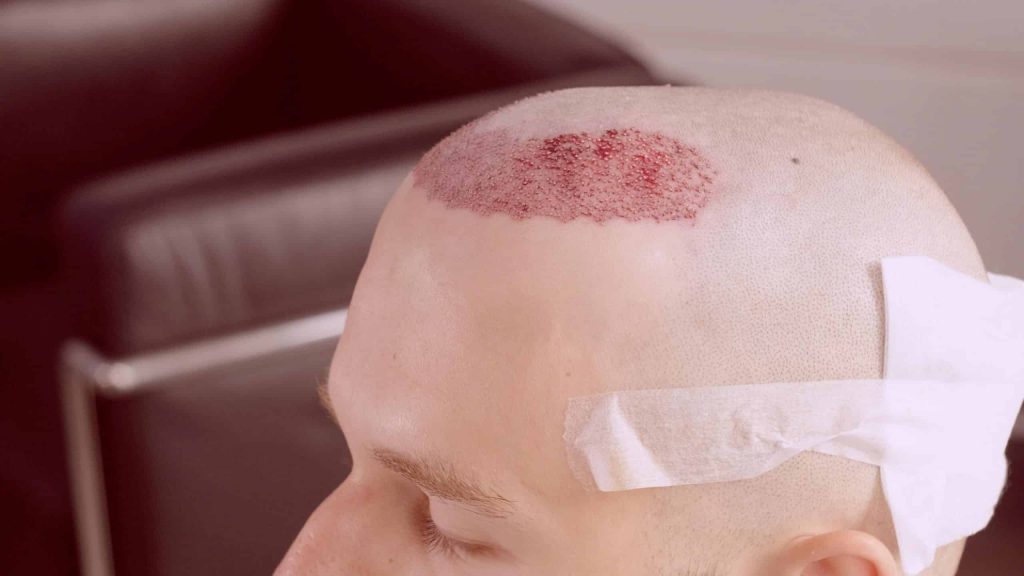
The two days straight after surgery are the most important of the whole recovery. The newly placed grafts are not yet secure, and everything in this window is about protecting them while the healing begins.
You can expect the recipient area to feel tender and tight, with some redness around each graft. Mild swelling is common and can move down towards the forehead over the first few days. A degree of aching is normal, and it is easily managed with paracetamol once your prescribed course of antibiotics is complete.
What to do in this window:
- Sleep with your head raised, propped on a couple of pillows, to keep swelling down. This is the single most overlooked piece of early aftercare, and it makes a real difference to how puffy the forehead gets.
- Do not touch, scratch, or rub the scalp, however tempting it becomes.
- Avoid alcohol, smoking, and anything that raises your blood pressure or brings on a sweat.
- Keep to gentle, light activity. No bending, lifting, or exercise.
Days 3 to 7: The First Week
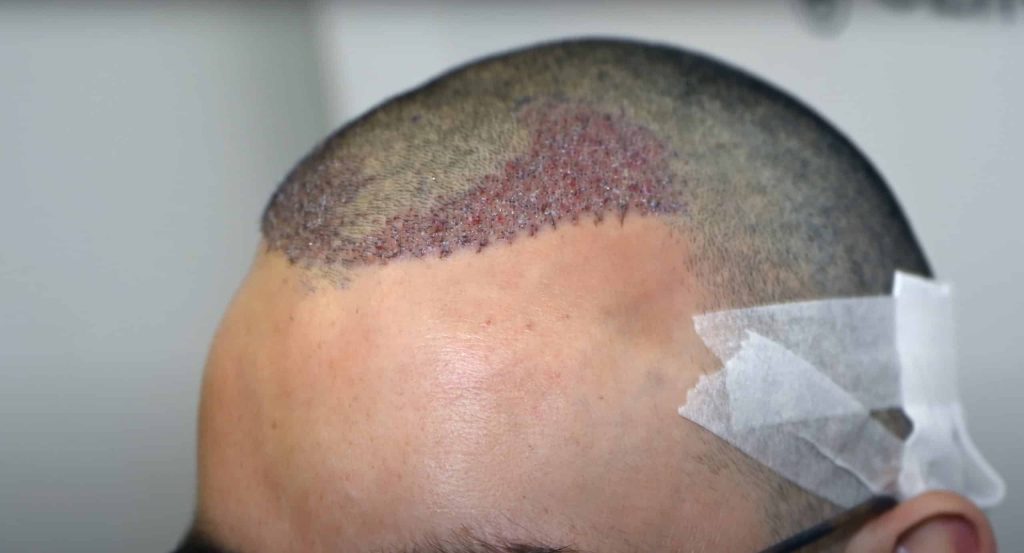
By the third or fourth day the scalp settles into active healing. Small scabs form around each graft as the tiny wounds close, and the donor area at the back or sides may feel tight or slightly numb. This is all part of the process.
This is usually when gentle washing begins, following the specific method your clinic gives you, which means carefully cupping water and a mild shampoo over the scalp rather than rubbing or using a direct, high-pressure stream. The aim is to keep the area clean and the scabs soft without disturbing the grafts beneath them. Whatever you do, do not pick at the scabs. They protect the graft while it secures itself, and lifting them early risks the follicle with it. If scabbing is stubborn or looks unsightly, the clinic can advise on how to soften and wash it away safely rather than you working at it yourself.
Most people are back at a desk job within seven days, which is also our general recovery guide. The scalp is healing but still visibly pink, so plan around that if you would rather not field questions.
Week 2: Scabs Shed And The Scalp Calms
The second week is when things start looking better. The scabs begin to fall away on their own, the redness fades noticeably, and the scalp starts to resemble its normal self. Losing the scabs naturally is exactly what you want, so let them go at their own pace rather than helping them.
You may also notice some of the transplanted hairs shedding around now. This is not a setback, it is the beginning of a normal and expected phase we cover next. By the end of week two, most people feel comfortable returning to their full social and working life. Light walking is fine, but hold off on anything that rubs the scalp, and keep clear of strenuous exercise and heavy sweating a little longer.
Weeks 2 to 8: Shock Loss
This is the stage that unsettles people most, and the one worth understanding before it happens. The transplanted hairs, and sometimes some of the surrounding native hairs, shed. The scalp can look thinner than it did before surgery, which feels alarming after everything you have been through.
It is not graft failure. Medically this is a temporary shedding, and the follicle stays alive under the skin while only the hair shaft falls, with new hairs typically appearing at three to six months. The follicles have simply entered a resting phase after the stress of surgery, and they will grow again. Knowing this in advance is what stops it becoming a panic, and it is the thing patients thank us most for preparing them for.
By around week four the scalp has largely healed on the surface, and you can return to normal washing and light exercise, still avoiding hair dyes, heat styling, and products until your clinic clears them.
Months 1 to 3: The Quiet Phase
These are the patient months. There is little to see on the surface, any last shed hairs finish falling, and the scalp looks essentially normal. It is easy to worry that nothing is happening, but the work is going on underneath as the follicles prepare to grow.
There is nothing demanding to do here, which is its own kind of test. You can return to all your usual activities, exercise, and routines. Eating well, staying hydrated, and not smoking all support the groundwork being laid. If your clinic asks for progress photos, this is a good time to keep them in the loop.
Months 3 to 6: Growth Begins
This is the turn everyone waits for. From around three to four months, the first fine new hairs push through, often thin and light to start with. Through months five and six they thicken and gain colour, and a meaningful share of the final density starts to show.
The new growth can be a little uneven at first, coming through at slightly different rates across the treated area. That evens out. You can style gently now, and if medication such as minoxidil is part of your plan, it is usually introduced around this stage, always on your surgeon’s guidance rather than off your own bat.
Months 6 to 12: The Result Matures
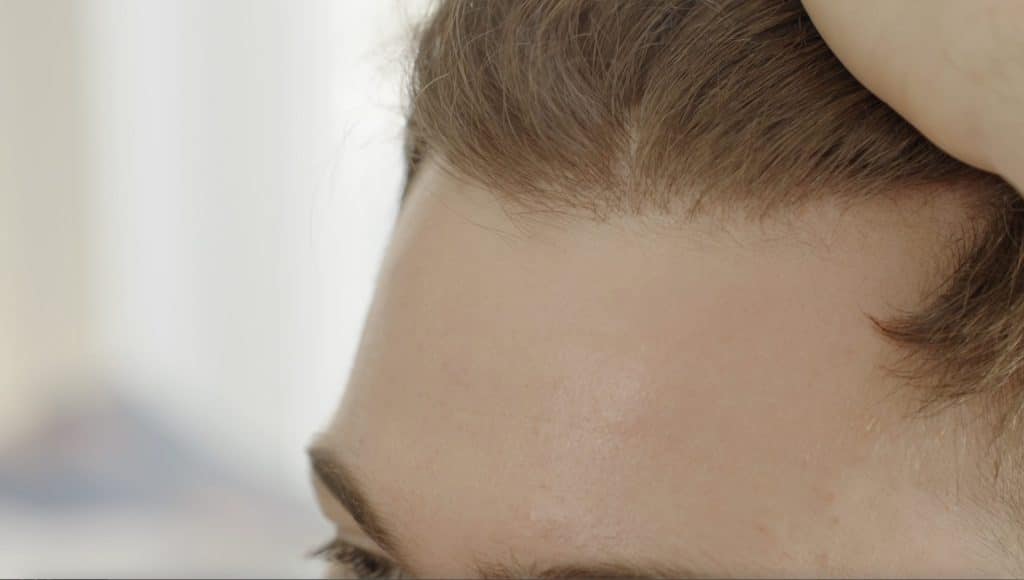
Through the second half of the year the transformation becomes clear. The hair grows thicker and stronger and starts to blend naturally with the hair around it, and you can cut, style, and treat it as your own. If the crown was treated, it often lags a little behind the hairline, so do not read that as a problem.
By around twelve months the result has largely arrived, matured in both texture and density. This is the point at which the full outcome can be properly judged, and it is why we ask patients to wait the full year before evaluating their transplant. Some refinement, particularly at the crown, can continue a while beyond that.

Our advice on how to maintain an FUE transplant covers the longer-term care once you are healed.
What Is Normal, And What Is Not
Almost everything in the first fortnight that looks dramatic is, in fact, expected. It helps to hold the two lists side by side so you know which is which.
Normal, and no cause for concern:
- Swelling across the forehead in the first few days, sometimes reaching the eyes.
- Redness in the recipient area, fading over one to two weeks.
- Scabbing and crusting around the grafts, clearing within about a week.
- Itching as the skin heals.
- Tightness or numbness in the donor area.
- Shedding of the transplanted hairs from around week two.
Worth contacting your clinic about:
- Redness, warmth, or swelling that increases rather than settles after the first few days.
- Pus, discharge, or a foul smell from the grafts or donor area.
- Pain that is severe or not eased by the recommended pain relief.
- Bleeding that does not stop with gentle pressure.
- A high temperature or feeling unwell in yourself.
The distinction that matters most is direction. Normal effects ease day by day. The signs that warrant a call are the ones that worsen instead of improving, which can point to infection, something that stays under one percent in accredited clinics but is worth catching early.
What To Do If Something Feels Wrong
If you notice any of the warning signs above, contact your clinic first, and promptly. Catching a possible infection early usually means a simple course of antibiotics, whereas leaving it can put grafts at risk, so there is no such thing as a wasted phone call in the first fortnight.
For anything that feels urgent, severe unrelieved pain, heavy bleeding that will not stop, rapidly spreading swelling, or feeling unwell in yourself, do not wait for clinic hours. Seek medical care straight away, through NHS 111 or your GP, or A&E if it is serious. Surgery is surgery, and while complications are uncommon with a properly performed FUE procedure and good aftercare, knowing the plan removes the fear of the unlikely.
This is also the real argument for having your procedure somewhere you can reach afterwards. Aftercare that is a phone call away, rather than a flight, is worth a great deal when a question comes up in week one.
How To Give Your Result The Best Chance
Beyond avoiding problems, a few habits make a real difference to how well the grafts take and how good the result looks. Most of it is common sense applied consistently.
- Follow your clinic’s washing routine exactly, gently and without high-pressure water, until the scabs have gone.
- Sleep elevated for the first few nights.
- Keep off nicotine and alcohol through the early healing period, since both work against the blood supply the grafts depend on.
- Stay out of strong sun, saunas, swimming pools, and heavy sweat for the first few weeks.
- Skip hats that press or rub until your clinic says otherwise.
- Attend your follow-up appointments, which exist to catch anything early and to track your progress properly.
Our detailed hair restoration aftercare and recovery guide goes further on each of these.
A Final Word
Recovery from a hair transplant is predictable, and that predictability is your friend. The visible healing is done inside two weeks, the long middle stretch asks only for patience, and the result rewards it across the first year. The patients who do best are simply the ones who understand the timeline, follow the aftercare, and resist the urge to interfere with a process that is working exactly as it should.
If you are considering a transplant and want to see how these stages play out in practice, our patient gallery shows real recoveries and results. To talk through the procedure and what your own recovery would involve, our team is here to help.
Frequently Asked Questions
How long does hair transplant recovery take?
The visible healing takes about one to two weeks, and most people return to work and normal routines within seven days. The full result, though, takes around twelve months to grow in and mature.
When can I go back to work after a hair transplant?
Most people with a desk-based job return within about seven days, once the initial healing has settled. Physically demanding jobs may need a little longer.
Is shock loss normal after a hair transplant?
Yes. The transplanted hairs, and sometimes nearby native hairs, shed from around week two to eight. The follicles stay alive and regrow, with new hair typically appearing from three to six months.
When can I wash my hair after a hair transplant?
Gentle washing usually begins a few days after surgery, using the specific method and products your clinic provides. Avoid rubbing or high-pressure water until the scabs have gone.
When will I see the final results?
New growth begins around three to four months, roughly half is visible by six months, and the full, mature result arrives at about twelve months, sometimes a little longer for the crown.
When can I exercise again?
Light walking is fine within a few days. Hold off on strenuous exercise, heavy sweating, and anything that rubs the scalp for the first two to four weeks, following your clinic’s guidance.
How do I know if my scalp is infected?
Normal healing effects ease day by day. Infection tends to worsen, with increasing redness, warmth, swelling, pus, or pain. If effects are getting worse rather than better, contact your clinic promptly.
Can I wear a hat during recovery?
Not straight away, as pressure and rubbing can disturb the grafts. A loose cap is sometimes allowed after the first week or two, but check with your surgeon first.
When can I cut or style my hair again?
You can style gently once the scalp has healed and growth is coming through, usually from a few months. Your transplanted hair can then be cut and treated like your own.
Related Posts

Hair Transplant After 1 Month: Shock Loss Explained
Shedding at its peak? Here is why hair transplant after 1 month looks thinner than before, what shock loss means, and when new growth truly begins.
Hair Transplant After 2 Weeks: Healing, Shedding & Care
Scabs gone, grafts secure, shedding starting. Here’s what a hair transplant after 2 weeks looks like, plus what you can and cannot do just yet.