
A 2,000 graft hair transplant is the one most people picture when they imagine getting their hairline back. It is the most commonly performed session size, big enough to restore a full front and frame the face again in a single day, yet measured enough that it does not exhaust the hair you have in reserve. For a lot of men with an established receding pattern, 2,000 grafts is simply the number that fits.
This article is here to answer the questions people ask most before committing to a session this size. What the procedure actually involves, what it can and cannot do for your pattern of loss, and whether 2,000 grafts is the right number for the result you are after.
Areas 2,000 Grafts Can Cover
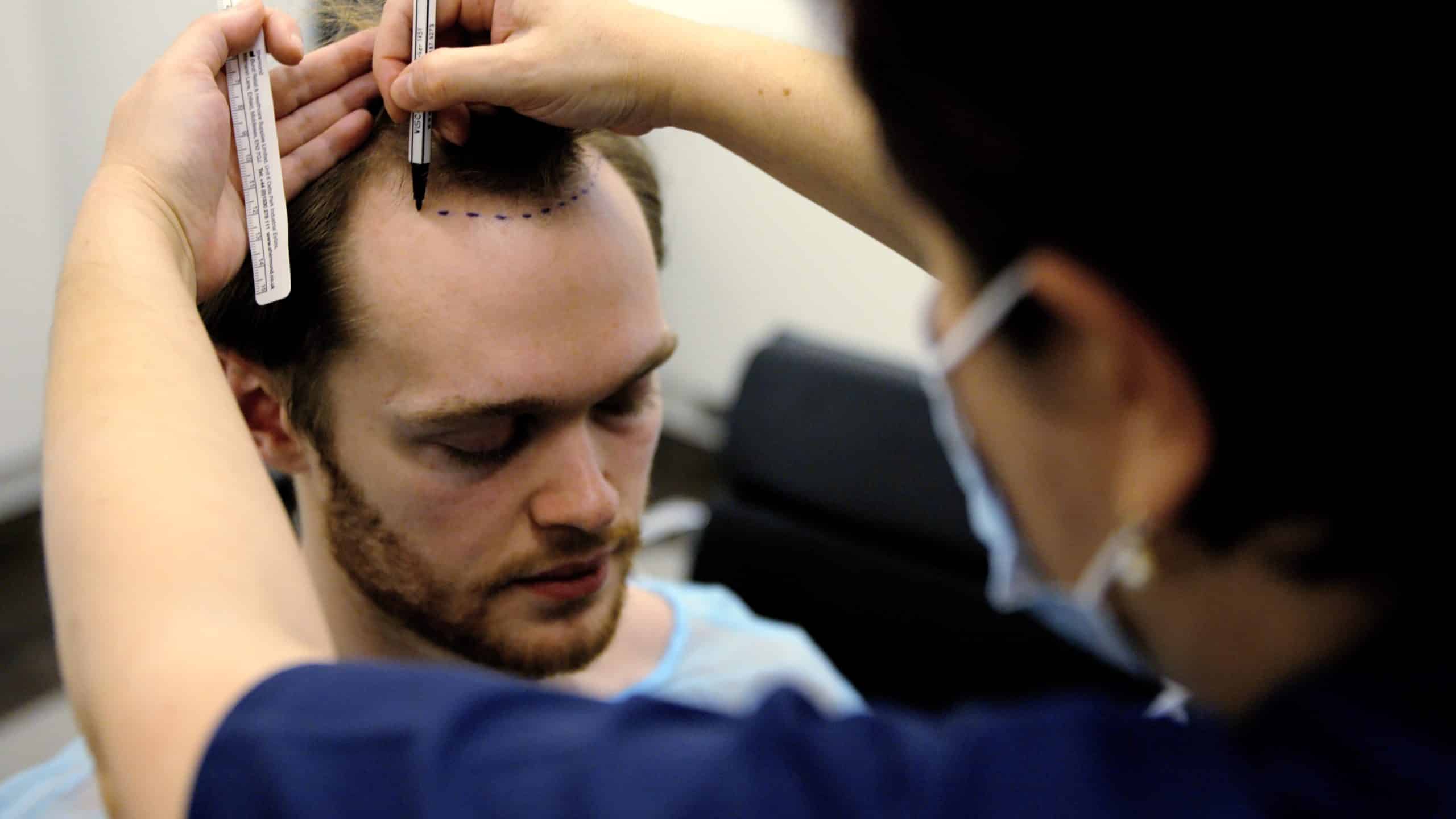
A 2,000 graft session is enough to rebuild a receding frontal hairline to a natural density and carry that coverage back into the mid-scalp behind it. On a moderate pattern of loss, it can treat the whole front third of the scalp as one connected area, which is why it reads as a genuine restoration rather than a patch.
At an average of two to three hairs in each follicular unit, 2,000 grafts place somewhere in the order of 4,000 to 6,000 hairs. That is a substantial amount of hair, but the visible effect depends less on the raw count and more on how evenly it is spread and how well the grafts survive. A natural head of hair carries far more density than any single session can replace, so the art of the procedure is creating the impression of fullness.
Where 2,000 grafts genuinely deliver:
- A full frontal hairline rebuilt at natural density, with the irregular, soft front edge that looks real rather than drawn on.
- The hairline and mid-scalp treated together as a single zone, giving even coverage across the front of the head.
- A moderate crown on its own, where the whorl pattern lets a lower density still read as full.
What it will not do is cover the hairline, mid-scalp, and a bald crown all at once. Asked to stretch across the entire top of an advanced pattern, 2,000 grafts spreads too thin to convince, and the honest plan in that case is either a larger count or a staged approach.
The Donor Question Behind The Number
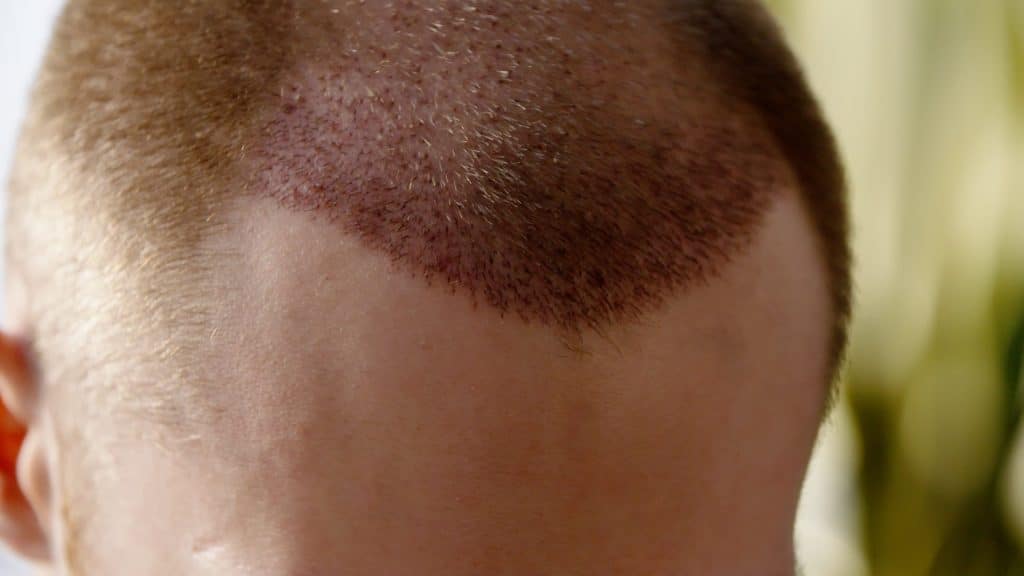
What does using this many grafts mean for the years ahead? It is the concern many of our clients raise first and it is a fair question. Your donor area, the permanent hair at the back and sides of your head, is finite. It is the only hair that resists pattern loss, and once it is used, it does not grow back elsewhere. Every session spends from that same fixed account.
A 2,000 graft procedure draws a meaningful share of that reserve, so the question is not only can this cover my hair loss now, but does it leave me enough for later. Pattern hair loss tends to keep progressing, and a front restored today can sit above a crown that thins in ten years. A good surgeon plans the first session with that future in mind, extracting evenly and conservatively so the donor stays dense and natural-looking and grafts remain available if you need them again.
This is also why overharvesting is a real risk with the wrong operator. Taking too much from the donor too fast leaves a thin, patchy back and sides that is difficult to repair, a recognised complication that specialists have written safe extraction limits to prevent. A careful 2,000 graft plan respects those limits. A rushed, high-volume mill often does not.
Who The Procedure Is Built For
On the Norwood scale, 2,000 grafts is the standard choice for men at stage 3 to 4, where the hairline has receded into a clear M shape and the loss is starting to open up the mid-scalp, but the crown is not yet extensively bald. For women, it usually maps to Ludwig stage 2, where diffuse thinning has widened the parting enough that a single-zone rebuild makes a visible difference.
The candidates who do best share a few things beyond the pattern itself: hair loss that has slowed or stabilised rather than falling rapidly, a donor area with enough density to supply the grafts without being stripped, and realistic expectations about density. Age matters too, since operating on a very young, fast-progressing pattern risks chasing loss that has not finished.
The surgeon assessing you should be candid about all of this, and our guide to the best hair transplant surgeons in the world explains what sets the leading practitioners apart.
Why 2,000 And Not 1,500
| Factor | 1,500 grafts | 2,000 grafts |
| Best for | A single defined zone | The whole front third as one region |
| Typical Norwood | Stage 3 | Stage 3 to 4 |
| Coverage | Hairline and light mid-scalp, or a moderate crown | Full hairline plus mid-scalp at natural density |
| Hairs placed | Around 3,000 to 3,750 | Around 4,000 to 6,000 |
| Result | Reads as improved | Reads as fully restored |
| Indicative UK cost | £3,300 to £6,000 | £4,500 to £8,000 |
| Donor draw | Lighter, more held in reserve | Larger, still conservative on a healthy donor |
The step from 1,500 to 2,000 grafts is the difference between covering a defined area and covering it at full density. A 1,500 graft session suits a moderate zone, a hairline and some mid-scalp, or a crown on its own, and it does that well. The extra 500 grafts in a 2,000 session buy the density to treat the whole front third of the scalp as one connected region, without the coverage having to thin out to reach across it.
For a Norwood 3 to 4 pattern where the loss has opened up the mid-scalp behind the hairline, 1,500 grafts often ends up spread slightly too far, giving a result that reads as improved rather than restored. At 2,000, the same area fills to a natural thickness. The choice between them is not about ambition, it is about matching the count to the real size of the area, which is exactly what a proper assessment measures. Where the loss is genuinely contained, 1,500 is the sensible, donor-sparing choice. Where it has spread across the front, 2,000 is what makes the result look full rather than merely better.
What A 2,000 Graft Hair Transplant Costs In The UK
A 2,000 graft procedure is a full-day, full-restoration session, and UK pricing reflects that. Reputable clinics generally place it well into four figures, with London and consultant-led clinics sitting at the higher end. The table below gives indicative UK market bands by graft count. These are broad market ranges, not any single clinic’s prices.
| Graft count | Indicative UK price band |
| 500 grafts | £2,000 to £3,000 |
| 1,000 grafts | £2,000 to £3,500 |
| 1,500 grafts | £3,300 to £6,000 |
| 2,000 grafts | £4,500 to £8,000 |
The spread is wide because a 2,000 graft price depends heavily on who is doing the work and where. A surgeon-led procedure in a regulated London clinic is a different proposition from a high-volume, technician-run session, and the gap in price usually tracks a gap in care and consistency of result. It is worth understanding what sits behind an unusually low quote, and our look at the risks of cheap hair transplants in Turkey shows why the cheapest route often costs more in the end.
A procedure this size is planned, not booked off a price list. Before any surgery, a detailed consultation maps your hairline design, measures your donor supply, sets the graft count, and prepares you for the day itself, all of which shape the final quote.
For a quick early estimate ahead of that conversation, our hair loss graft calculator gives you a ballpark of the grafts your pattern is likely to need, which translates into a rough cost bracket you can plan around.
What To Expect On The Day
A 2,000 graft transplant is a single-day procedure carried out under local anaesthetic, usually running five to six hours with breaks. You are awake and comfortable throughout, able to sit back, listen to music, or have lunch while the team works. It is a long day rather than a hard one, and there is no general anaesthetic and no overnight stay.
The method is FUE, the technique we return to throughout our work because it is, for most patients, the best way to restore hair. Medical literature backs that preference, describing FUE as the most widely used technique for its minimally invasive approach, rapid recovery, and natural results. Each follicular unit is taken individually from the donor area and placed into the front of the scalp, which leaves no linear scar and heals quickly, with only mild, short-lived side effects for most people.
What separates a good 2,000 graft result from a mediocre one is design and handling. The angle and direction each graft is placed at, the deliberate irregularity of the hairline, and the care that keeps every follicle alive between extraction and placement are all surgeon decisions, which is why the operator counts for far more than the headline number.
Every procedure here is carried out by a GMC-registered surgeon, and you can visit our hair transplant page to see how we work.
Recovery And The Year Ahead
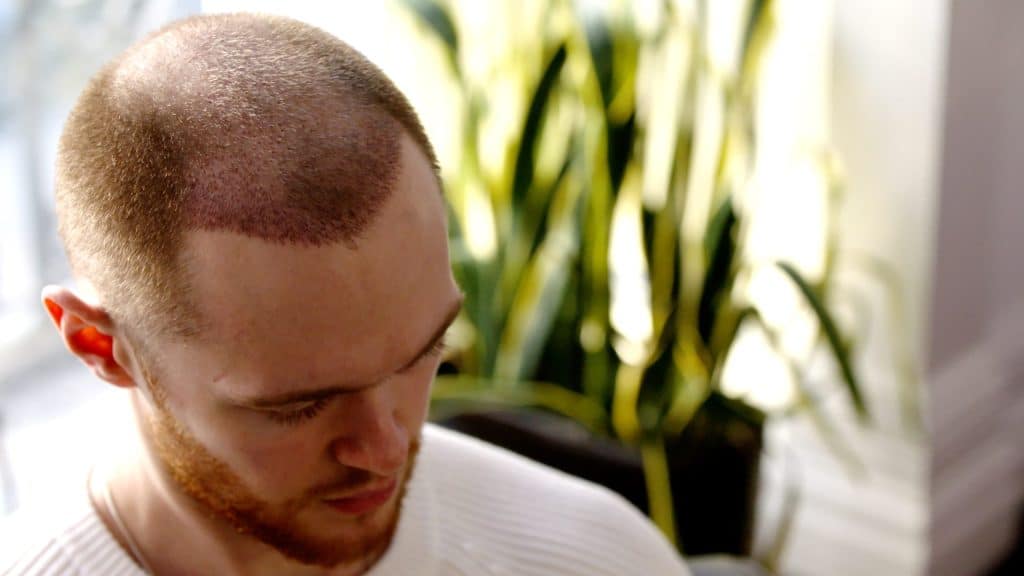
The first fortnight is the visible part of recovery. The treated area scabs and looks red, some swelling can move down across the forehead in the first few days, and the donor area shows small marks that fade within a week or two. Most people take around two weeks away from work, longer if the job is physical, and normal routines resume soon after with the surgeon’s guidance on washing and activity.
Then the result takes its time. The transplanted hairs shed within the first weeks, a stage called shock loss that looks worrying and is entirely normal. Regrowth starts at around three to four months and thickens steadily, with roughly half the result visible by six months and the full picture arriving at about twelve.
| Timeframe | What is happening |
| First 2 weeks | Scabbing, redness, and swelling settle, donor marks fade |
| Weeks 2 to 8 | Shock loss, transplanted hairs shed before regrowth |
| Months 3 to 6 | New growth appears and thickens, about half the result shows |
| Months 6 to 12 | Density fills in to the final result |
The transplanted hairs are permanent, since they come from the loss-resistant donor zone. The native hair around them can still thin over the years, which is the reason surgery and long-term hair loss treatment usually work best together.
Our guide on seasonal hair loss is a useful read on telling temporary shedding apart from ongoing loss while you wait for growth.
The Bottom Line
This guide has covered what matters most in weighing up a 2,000 graft procedure, from what it restores to your progress and results. If you want to understand more about hair transplant, or find out if 2,000 grafts fits your pattern, booking a consultation is the right next step. Our GMC-registered surgeons will assess your scalp and donor supply and give you a straight answer.
Frequently Asked Questions
How many hairs is 2,000 grafts?
Around 4,000 to 6,000. Each graft is a follicular unit of one to four hairs, most often two to three, so your exact total depends on your natural grouping.
What will 2,000 grafts cover?
A full frontal hairline and the mid-scalp behind it on a moderate pattern, or a moderate crown on its own. It is not enough to cover the whole top of an advanced, fully balding scalp.
How much does a 2,000 graft hair transplant cost in the UK?
It falls into the upper four figures at reputable UK clinics, with the exact figure depending on your case, the clinic, and the surgeon. An assessment gives the dependable number, and you can contact us for a quote.
Is 2,000 grafts a lot?
It is the most commonly performed session size and counts as a full restoration for moderate loss. It is substantial, but it still uses only a portion of a healthy donor supply.
How long does a 2,000 graft procedure take?
Usually five to six hours in a single day, under local anaesthetic, with breaks.
When will I see the final result?
Growth starts at three to four months, about half shows by six months, and the full result arrives at around twelve.
Will 2,000 grafts use up my donor hair?
No. It draws a meaningful share but leaves most of a healthy donor reserve intact, which is why conservative extraction in the first session matters for any future work.
Can 2,000 grafts cover a crown?
A moderate crown, yes, treated on its own. A large bald crown combined with frontal loss needs a higher count.
Does the procedure leave a scar?
Not with FUE. Extraction uses tiny punches that heal as small, barely visible marks, with no linear scar.
Is a 2,000 graft transplant available on the NHS?
No. The NHS treats hair transplants for pattern baldness as cosmetic surgery and does not fund them, so treatment is private.
Related Posts
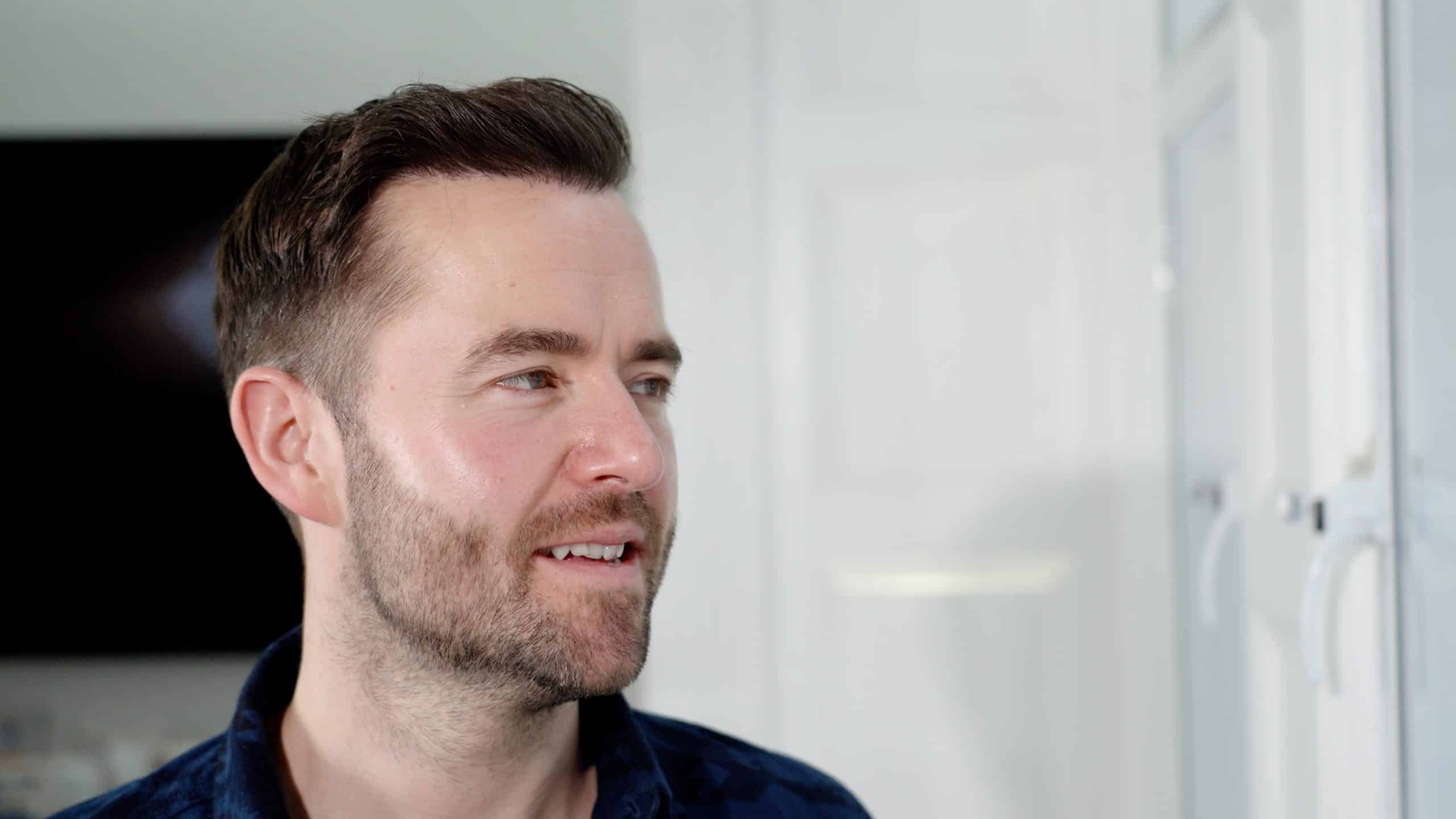
Hair Transplant After 1 Month: Shock Loss Explained
Shedding at its peak? Here is why hair transplant after 1 month looks thinner than before, what shock loss means, and when new growth truly begins.
Hair Transplant After 2 Weeks: Healing, Shedding & Care
Scabs gone, grafts secure, shedding starting. Here’s what a hair transplant after 2 weeks looks like, plus what you can and cannot do just yet.