
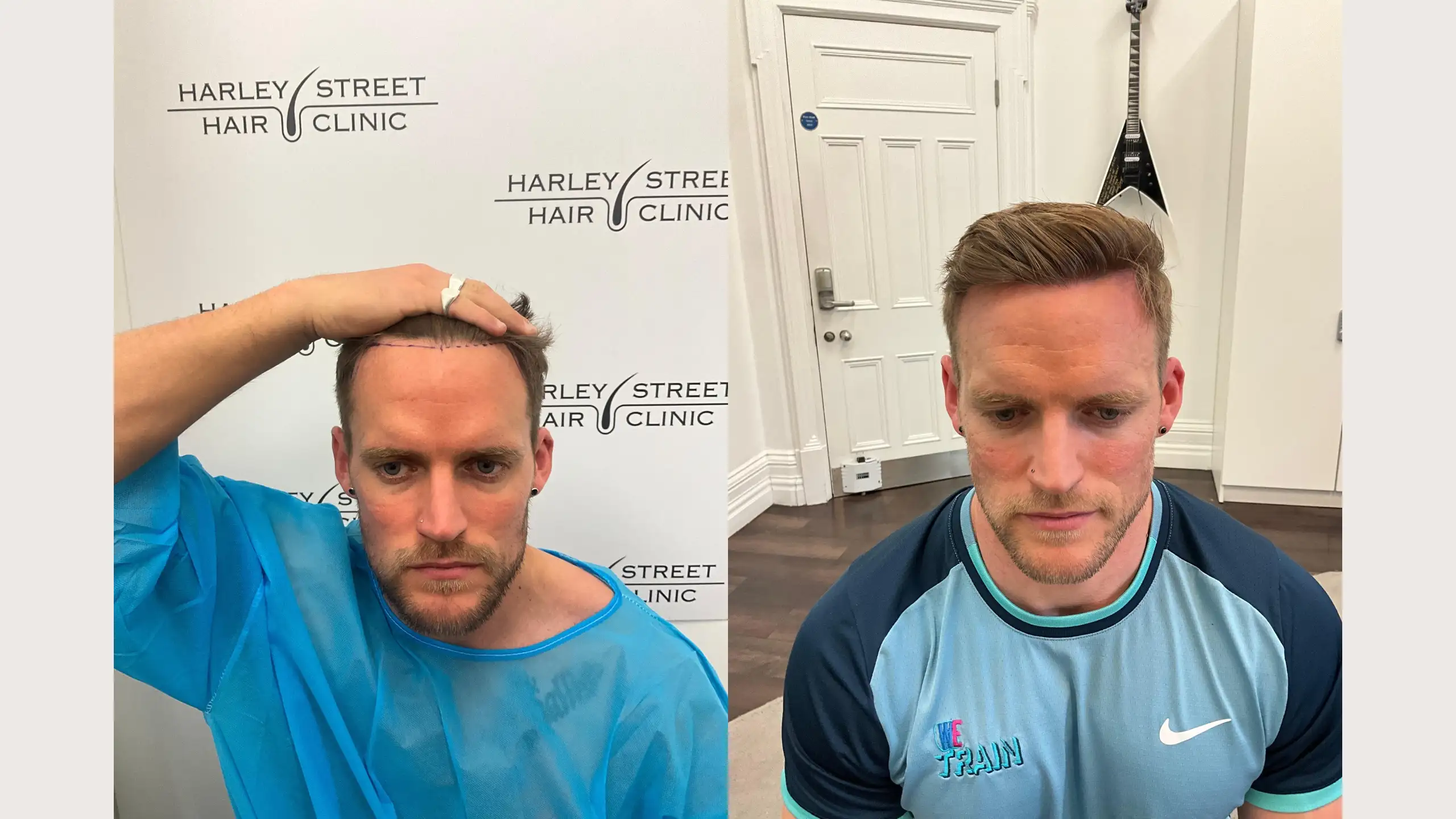
A 1,500 graft hair transplant is where the procedure crosses a threshold. Up to around 1,000 grafts, a transplant refines or rebuilds a single feature. At 1,500, there are enough grafts to treat more than one zone, cover a whole crown, or build a connected front, and with that scope comes a longer session, a heavier draw on your donor area, and a noticeably larger price. It is the point where a hair transplant stops being a small, contained job and starts being a serious one.
This guide covers what 1,500 grafts realistically cover, where the number is suitable, what it costs in the UK, and how the results develop.
What 1,500 Grafts Can Cover
At roughly two to two and a half hairs per follicular unit, 1,500 grafts amount to somewhere around 3,000 to 3,750 individual hairs, since a follicular unit is a natural bundle of one to four hairs.
The scalp divides into three zones, and each behaves differently. Medical literature describes the frontal, mid-scalp, and vertex or crown, with the crown being the hardest to treat because its hair grows in a spiral whorl. What changes at 1,500 grafts is allocation. Where 500 or 1,000 grafts are usually committed to one zone, 1,500 gives the surgeon enough to cover a larger single zone or to work across two, with surgeons planning a recipient area at a target of around 30 follicular units per square centimetre.
- A full frontal hairline plus some mid-scalp behind it, building a connected, natural gradient from front to crown.
- The mid-scalp on its own, where mild to moderate thinning sits between the hairline and the crown.
- A balding crown, where 1,500 grafts can cover a moderate vertex area, since the whorl diffuses light and reads as full at a lower density.
The trade-off is that spreading 1,500 grafts across too much scalp thins the density everywhere. Splitting the count between the hairline and mid-scalp in one session works only when both zones are modest. Ask it to cover a large frontal area and a large crown at once, and neither ends up dense enough to convince.
When 1,500 Grafts Are The Right Choice
On the Norwood scale, 1,500 grafts most often suits men at stage 3, where the hairline has receded into a defined M shape or the crown has begun to thin, but the loss has not spread across the whole top of the scalp. For women, it typically maps to Ludwig stage 2, moderate diffuse thinning with a visibly widening parting, and is often used to add density through the midline or across the crown.
It is also the volume commonly chosen to lower a high hairline or reduce the appearance of a large forehead, since that work needs a full, even front rather than a small patch.
The common factor is a moderate, defined area and a stable donor supply. A 1,500 graft plan works when the loss is meaningful but not advanced. Once balding extends across the frontal third and into a full crown together, the area outgrows what 1,500 grafts can cover well, and a higher count becomes the honest recommendation.
If you are unsure where you stand, our guide on what makes a good candidate for a hair transplant sets out what surgeons look for.
A Quick Word On Numbers
To place 1,500 in the sequence, it helps to see the steps side by side.
| Graft count | Typically suits | Broad coverage |
| 500 | Norwood 2, very early loss | Hairline refinement, one small zone |
| 1,000 | Norwood 2 to 3 | A rebuilt hairline or both temples |
| 1,500 | Norwood 3, Ludwig 2 | Two modest zones, or a full crown |
The jump from 1,000 to 1,500 is not just 500 more grafts. It is the difference between treating one feature and treating a region, which is why it carries more planning, more chair time, and more cost.
What A 1,500 Graft Hair Transplant Costs In The UK
Across UK clinics, a 1,500 graft procedure is where prices climb into serious territory. Reputable clinics commonly charge in the region of £5,000 to £6,000, and London clinics can sit higher still. The general UK cost per graft runs from around £3 to £7, and because a 1,500 graft session is longer and more demanding than a smaller one, it sits well above the lower-volume procedures.
To place it in the wider market, the table below shows indicative UK price bands by graft count. These are broad market ranges rather than any single clinic’s prices.
| Graft count | Indicative UK price band |
| 500 grafts | £2,000 to £3,000 |
| 1,000 grafts | £2,000 to £3,500 |
| 1,500 grafts | £3,300 to £6,000 |
| 2,000+ grafts | £4,500 and up |
Because 1,500 grafts covers such different cases, from a single crown fill to a combined hairline and mid-scalp rebuild, the price for your own situation is best confirmed directly.
You can see the full breakdown on our hair transplant cost page, or contact us for a detailed quote based on your case.
What Drives The Price
- The area treated. A single modest zone costs less than splitting the grafts across two, which takes more planning and time.
- Case complexity. Scar tissue, repair work, or an awkward pattern adds to the effort.
- Hair type. Curly or coarse hair behaves differently under the punch and can affect how long placement takes.
- Who performs the surgery. A surgeon carrying out the full procedure costs more than a technician-led one, and it is the difference that most affects your result.
If you are comparing providers at this price level, our guide to the best hair transplant clinics in the UK is a useful reference for what separates the leading options.
How The Procedure Works
If the idea of surgery makes you uneasy, it helps to know how straightforward the day usually is. A 1,500 graft transplant happens in a single visit, under local anaesthetic, so you are awake and comfortable throughout rather than put to sleep. It takes a good part of the day, since there are more grafts to place than in a smaller session and, when two zones are being treated, more careful planning behind each one. Even so, it stays minimally invasive from start to finish.
We work with FUE, which takes each follicular unit individually from the back and sides of your head using a fine punch, then places it where it is needed. There is no strip of skin removed and no linear scar, and most people are surprised by how quickly the small marks settle.
If you would like the technical side explained in full, our guide to FUE hair transplants walks through exactly how it works.
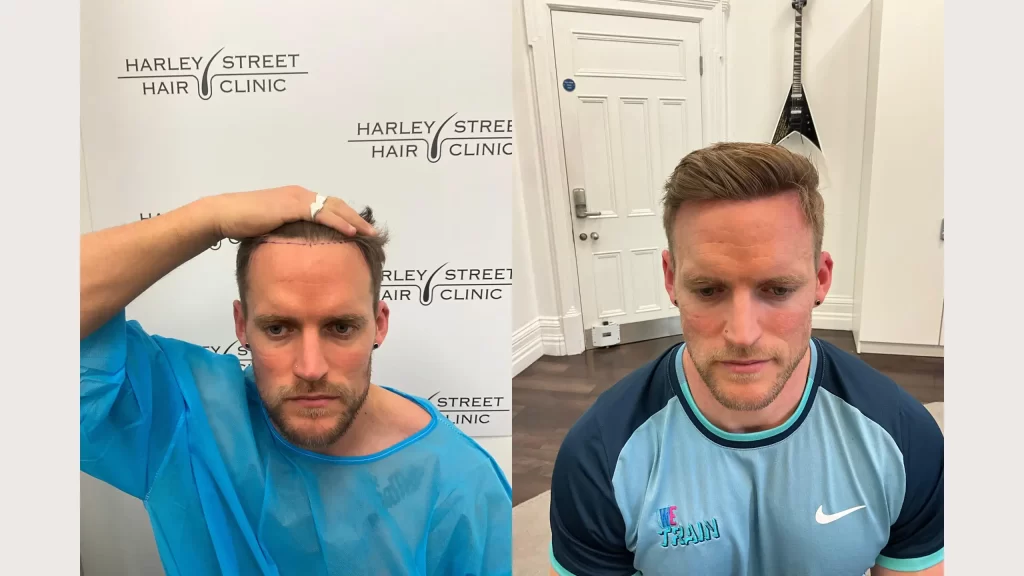
What matters most for your result is not the number itself but the care behind it. Every graft has to be handled gently to survive, and at 1,500 the surgeon also has to judge how to spread them so no area is left looking thin and enough donor hair is kept in reserve for the future. That judgement is why the person doing the work counts for more than any figure on a page.
Every procedure here is carried out by a GMC-registered surgeon, and you can visit our hair transplant page to see how we approach it.
Recovery And Results
Recovery from a 1,500 graft session is straightforward, if slightly more involved than a smaller one because more of the scalp has been treated. The first days bring scabbing over the treated area, along with possible redness or short-lived swelling that can settle down toward the forehead. Most of this clears within a week or two, and a break from work of one to two weeks is usual, longer for physically demanding jobs.
How you look after the grafts in this early window matters, and our guide on how to maintain an FUE transplant covers the aftercare that protects your result.
The transplanted hairs commonly shed in the first weeks, a normal phase called shock loss that is not a sign of failure. New growth begins within the first three months, thickens through the middle of the year, and reaches its full picture at around 12 months.
| Timeframe | What is happening |
| First 2 weeks | Scabbing, redness, and swelling settle, grafts secure |
| Weeks 2 to 8 | Shock loss, transplanted hairs shed before regrowth |
| Months 3 to 6 | New growth emerges and thickens |
| Around 12 months | Full, mature result |
Because 1,500 grafts covers a larger area than a small session, the change once growth matures can be substantial. The transplanted hairs are permanent, taken from zones that resist pattern loss, though the native hair around them can still thin over time.
Protecting Your Result
A transplant treats the area you have now, but it does not stop the pattern loss that caused the thinning. Pairing surgery with medical treatment protects the native hair around the transplant, so the result sits within fuller surroundings rather than an area that keeps receding.
Finasteride, for men, lowers the DHT that drives pattern loss and helps hold onto existing hair. Minoxidil, for men and women, supports growth and maintains native density. Platelet-rich plasma and low-level laser therapy are further options that can encourage follicle activity. Which of these fits you is a clinical decision.
For a fuller breakdown, our rundown of the top hair loss treatments sets out the leading options.
The Bottom Line
A 1,500 graft hair transplant is a serious procedure for moderate, defined hair loss. It has the scope to treat two modest zones or a full crown, which makes it more versatile than a smaller session, but that scope brings a longer surgery, a heavier draw on the donor area, and a step up in cost. It is well suited to Norwood 3 and Ludwig 2 patterns, and it is not designed for advanced loss across the whole scalp.
The number that suits your pattern comes down to the size of the area and your donor supply, which only an assessment can settle. Our GMC-registered surgeons will measure your scalp, weigh your donor reserve, and give you an honest graft estimate. Visit our hair transplant page for more information or to get started.
Frequently Asked Questions
How many hairs is 1,500 grafts?
Around 3,000 to 3,750. Each graft is a follicular unit holding one to four hairs, most often two to three, so the exact total depends on your natural grouping.
What area does a 1,500 graft transplant cover?
Enough for two modest zones, such as a hairline plus some mid-scalp, or a full moderate crown. It is not enough to cover the entire top of the scalp in advanced loss.
How much does a 1,500 graft hair transplant cost in the UK?
At HS Hair Clinic it typically costs between £5,000 and £8,000, covering the consultation, procedure, and aftercare. The range reflects how much cases at this size can vary in complexity.
Is 1,500 grafts a lot?
It is a mid-range volume. More than a hairline touch-up, less than a full-scalp restoration. It marks the point where a transplant can treat a region rather than a single feature.
How long until I see results from 1,500 grafts?
Growth starts within the first three months and reaches its full picture at around 12 months.
Can 1,500 grafts cover a crown?
Yes, a moderate crown. The crown’s spiral pattern reads as full at a lower density, so 1,500 grafts can cover a mild to moderate vertex, though a large bald crown needs more.
Will I need a second session?
Not usually for the area treated, since the transplanted hair is permanent. If your native hair keeps thinning, further work may be discussed later, which is why stabilising treatment matters.
Does a 1,500 graft transplant leave a scar?
Not with FUE. Extraction uses tiny punches that heal as small, barely noticeable marks, with no linear scar.
Is a hair transplant available on the NHS?
No. The NHS treats hair transplants for pattern baldness as cosmetic surgery and does not fund them, so treatment is private.
Related Posts
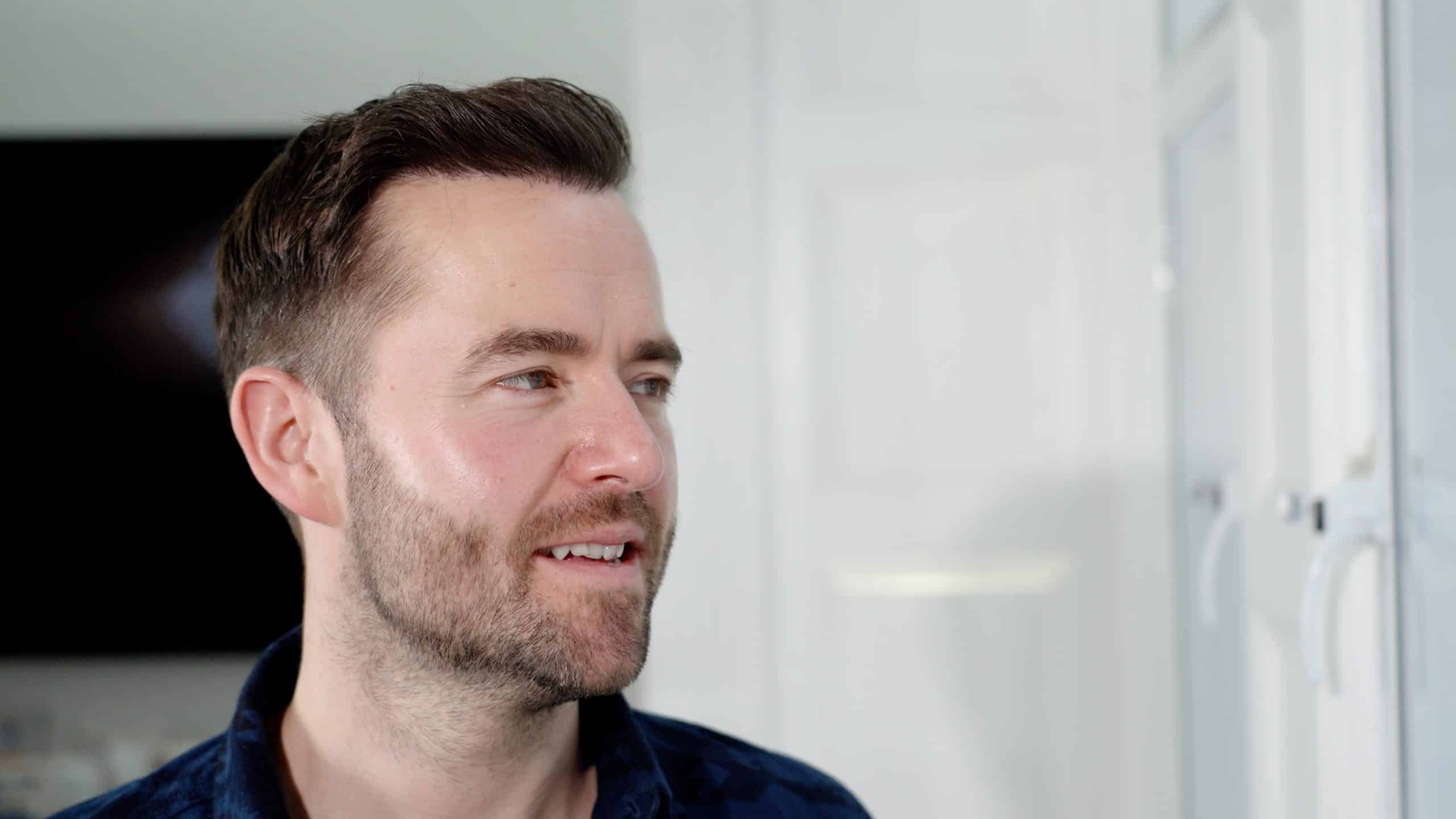
Hair Transplant After 1 Month: Shock Loss Explained
Shedding at its peak? Here is why hair transplant after 1 month looks thinner than before, what shock loss means, and when new growth truly begins.
Hair Transplant After 2 Weeks: Healing, Shedding & Care
Scabs gone, grafts secure, shedding starting. Here’s what a hair transplant after 2 weeks looks like, plus what you can and cannot do just yet.