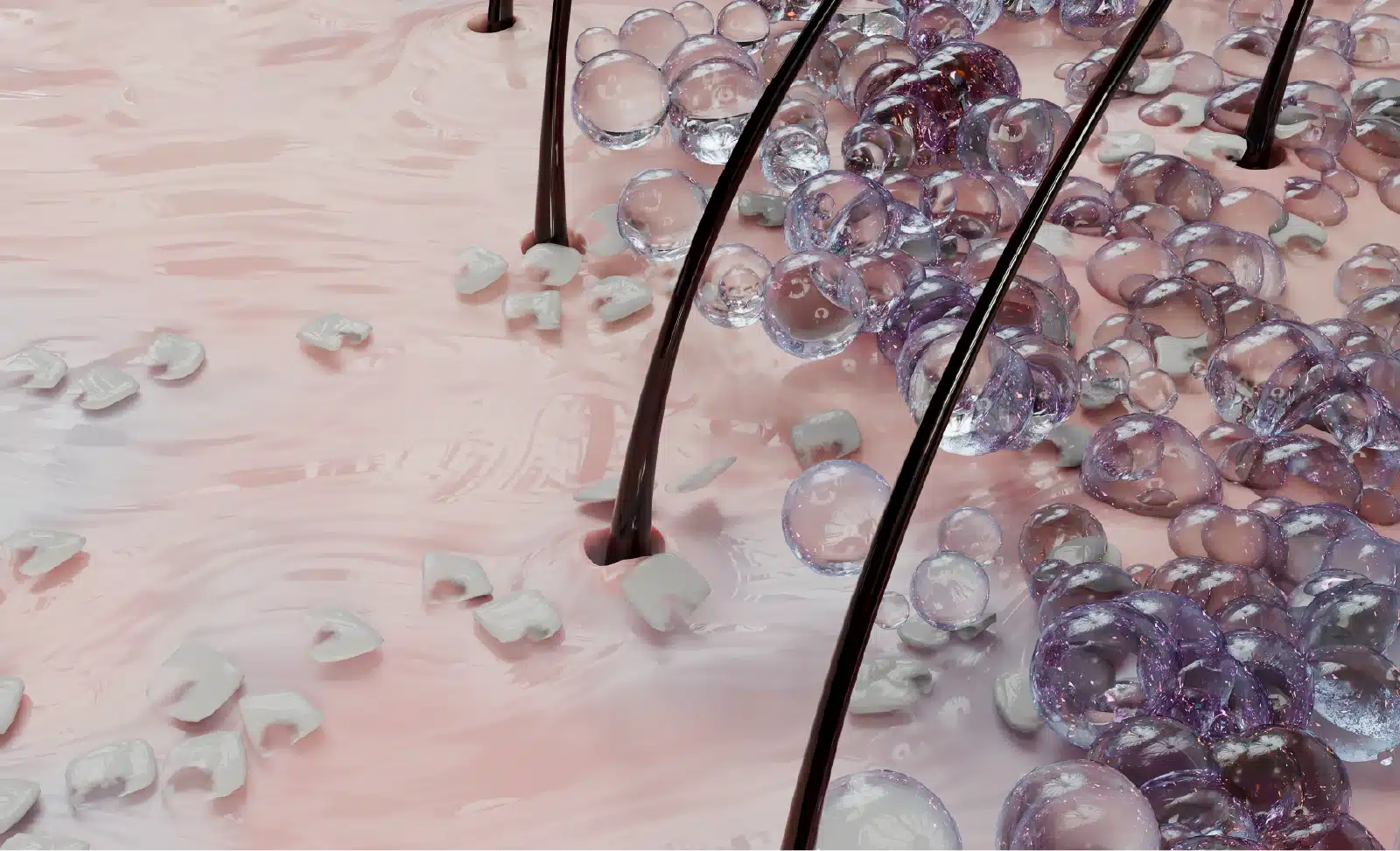
We spend our days looking at scalps, and one of the conditions we come across most often is not hair loss at all but a flaky, itchy, sometimes red and greasy scalp that turns out to be seborrheic dermatitis. It is enormously common, it is harmless, and it is very manageable, yet it worries people far more than it needs to, partly because it looks and feels unpleasant and partly because good, calm information about it is surprisingly hard to find. So we wanted to talk about it plainly.
If you have a persistently flaky, itchy scalp, this guide is here to reassure you and to help. We will explain what seborrheic dermatitis scalp trouble really is, why it happens, and exactly what you can do about it, from the shampoo you buy at the pharmacy to when it is worth seeing a professional. There is no need to panic about it, but there is plenty you can do to bring it under control.
What Seborrheic Dermatitis Is
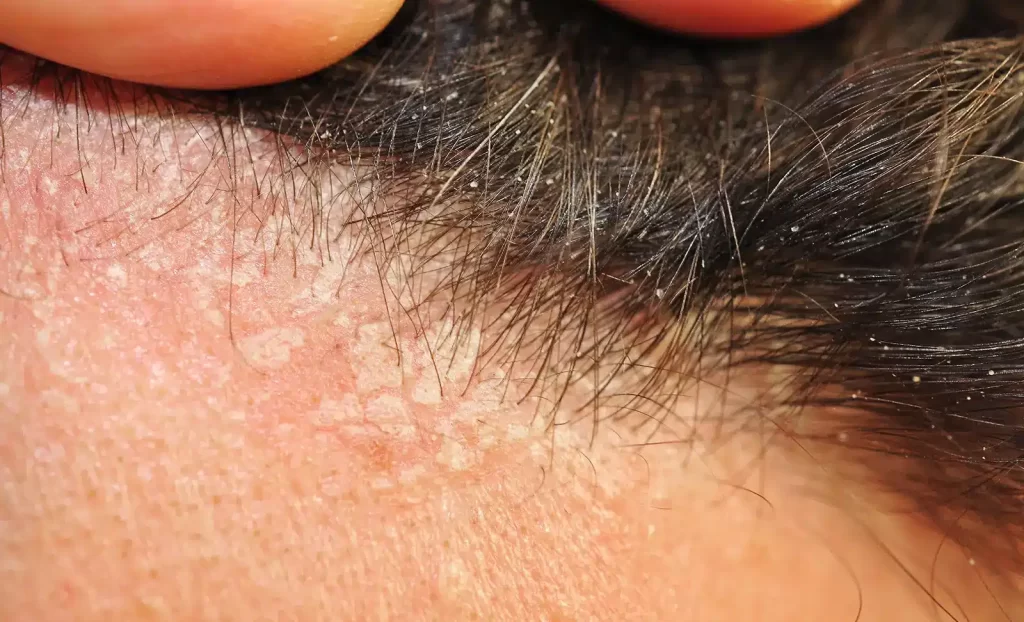
Seborrheic dermatitis is a common, long-term inflammatory skin condition that affects the oily, or sebum-rich, areas of the body, and the scalp is the most common site of all. On the scalp it shows up as flaking and scaling, often greasy rather than dry, sometimes with redness underneath, and usually with an itch that ranges from mild to properly annoying. In its mildest form it is simply dandruff. When it becomes more inflamed and red, we call it seborrheic dermatitis, but they sit on the same spectrum.
Let us clear up the worries straight away, because they are almost always the first thing patients raise. It is not contagious, so you cannot catch it or pass it on. It is not caused by poor hygiene, and washing more aggressively often makes it worse rather than better. And it is not a sign of anything sinister. It is a manageable skin condition, extremely common, and nothing to be frightened of.
What Causes It
The main driver is a yeast that lives on everyone’s skin already, called Malassezia. This yeast is a completely normal part of your skin’s flora and does no harm to most people. In those who develop seborrheic dermatitis, though, the skin reacts to it, or to the byproducts it makes as it breaks down the oils on your scalp, and that reaction sets off the inflammation, flaking, and itch. In other words, it is not an infection you have picked up, but your own skin being sensitive to something that is normally there.
Because that sensitivity does not go away, the condition tends to come and go over time, and certain things reliably make it flare. The common triggers we hear about from patients are stress, cold and dry weather, which is why so many people notice it worsening in winter, tiredness or being run down, hormonal changes, and sometimes harsh hair products that irritate the scalp. Knowing your own triggers is a useful part of keeping it quiet.
How To Treat It: What Really Helps
Here is the practical part, and the reassuring news is that most cases respond well to treatments you can buy yourself without a prescription. The goal is not to cure it once and for all, because it is a recurring condition, but to get it under control and keep it there.
Medicated Shampoos, Your First And Best Move
For a flaky, itchy scalp, a medicated antifungal shampoo is the mainstay of treatment and the first thing to reach for. The active ingredient that has the strongest evidence behind it, and the one most often recommended, is ketoconazole, sold over the counter as Nizoral, which works by reducing the yeast on your scalp. Other effective ingredients to look for on the label are selenium sulphide and zinc pyrithione, both found in common anti-dandruff brands, and coal tar shampoos, which help with the flaking and scaling.
A few tips on using them, because how you use them matters as much as which you choose. Use the shampoo two or three times a week rather than daily, massage it into the scalp, and, crucially, leave it on for five to ten minutes before rinsing so the active ingredient has time to work, rather than washing it straight out. It is also worth rotating between two different types, for example alternating a ketoconazole shampoo with a coal tar one, since this tends to work better than relying on a single product. Give it a couple of weeks before judging how well it is helping.

Calming The Inflammation And Scaling
If your scalp is quite red and inflamed, a short course of a mild topical corticosteroid, in a scalp-friendly lotion or foam, can settle the inflammation quickly. These are best used briefly to bring a flare under control, then stopped, going back to the antifungal shampoo for maintenance. If thick scale has built up, a product containing salicylic acid helps lift and soften it so the medicated shampoo can reach the skin underneath. For more stubborn or widespread cases, a doctor may prescribe a stronger antifungal or a combined steroid and salicylic acid scalp application, or, less commonly, an oral antifungal treatment.
Keeping It Away
Because seborrheic dermatitis is a recurring condition, the trick is not to stop treating it the moment it clears. Most people do best by keeping a medicated shampoo in regular, if less frequent, use as maintenance, perhaps once a week, even when the scalp looks fine. That ongoing, gentle anti-yeast routine is what keeps flares from creeping back, and it is far easier than repeatedly clearing a bad episode from scratch.
When To See A Professional
Most seborrheic dermatitis can be handled at home with the steps above, and if that is working for you, there is truly no need to do anything more. That said, it is worth getting it looked at by your GP, a pharmacist, or a dermatologist if the over-the-counter shampoos are not helping after a few weeks, if the scalp is very inflamed, weeping, or painful, if it is spreading or getting rapidly worse, or if the itch and flaking are affecting your sleep or confidence. A professional can prescribe stronger options and confirm that what you are dealing with is in fact seborrheic dermatitis and not something else that mimics it.
That last point is where our own interest comes in. Because a flaky, inflamed scalp can occasionally look like, or sit alongside, other scalp and hair conditions, having it properly assessed is sometimes worthwhile in its own right. If you are noticing scalp trouble together with any hair thinning or shedding, that is a combination worth having a professional eye on rather than guessing at.
You are always welcome to have your scalp looked at by our team if you would like clarity on what is going on.
Frequently Asked Questions
What is seborrheic dermatitis of the scalp?
It is a common, long-term inflammatory skin condition affecting the oily areas of the body, most often the scalp, where it causes greasy flaking, scaling, redness, and itching. In its mildest form it is simply dandruff, and it sits on the same spectrum.
What causes seborrheic dermatitis on the scalp?
It is caused by the skin reacting to a yeast called Malassezia that normally lives on everyone’s skin, which triggers inflammation, flaking, and itch. It is not an infection or a hygiene problem, and triggers like stress, cold weather, and being run down can make it flare.
Is seborrheic dermatitis contagious?
No. It is not contagious and cannot be caught or passed on, because it is your own skin’s sensitivity to a normal skin yeast rather than an infection. It is also not caused by poor hygiene.
What is the best shampoo for seborrheic dermatitis?
Medicated antifungal shampoos are the mainstay, with ketoconazole, sold over the counter as Nizoral, having the strongest evidence. Shampoos containing selenium sulphide, zinc pyrithione, or coal tar also help. Leave the shampoo on for several minutes before rinsing, and use it two or three times a week.
Does seborrheic dermatitis go away?
It can be controlled very effectively, but it is a recurring condition rather than one that is cured for good. Ongoing maintenance with a medicated shampoo, even when the scalp looks clear, is the best way to keep flares from returning.
When should I see a doctor about my scalp?
See a GP, pharmacist, or dermatologist if over-the-counter shampoos are not helping after a few weeks, if the scalp is very inflamed, weeping, or painful, if it is spreading quickly, or if it is affecting your sleep or confidence. It is also worth checking if it comes alongside hair thinning or shedding.
Can seborrheic dermatitis cause hair loss?
It does not directly destroy hair follicles, but the associated itching and scratching, or severe inflammation, can cause some temporary shedding. Controlling the condition usually resolves this, and any hair lost this way generally grows back.
Related Posts
Alopecia Areata: Causes, Diagnosis & Treatment
Sudden round bald patches? Learn what causes alopecia areata, how it is diagnosed with trichoscopy, and which treatments help hair grow back.
Types of Alopecia: Causes, Symptoms & Treatments
Pattern baldness, alopecia areata or telogen effluvium? Learn the main types of alopecia, which ones regrow, and when a hair transplant can help.