
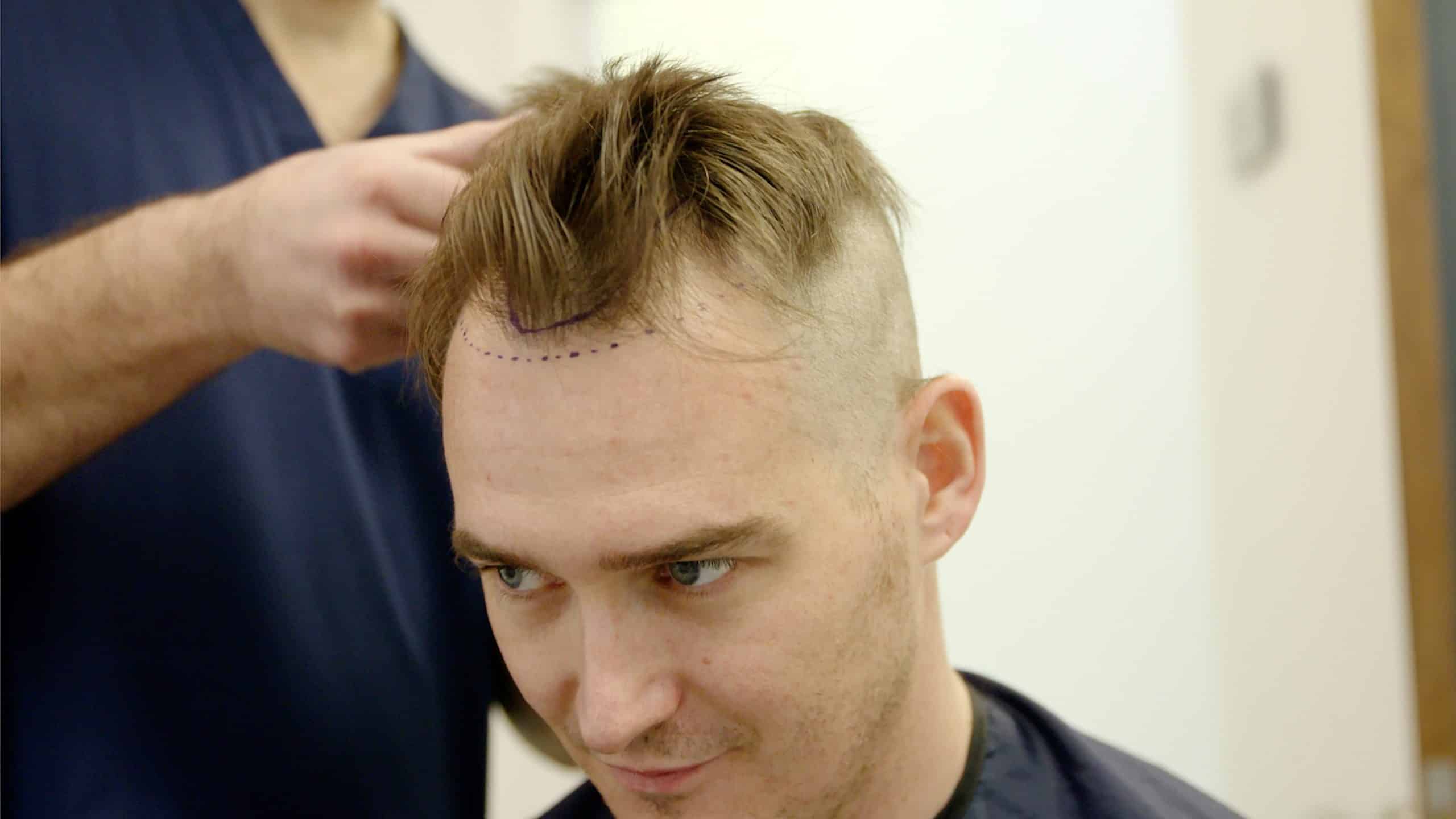
For a lot of people, 1,000 grafts is the number where a hair transplant stops being a touch-up and becomes a real change to how you look in the mirror. It is enough to rebuild a receding frontal hairline, frame the face again, and restore the feature that hair loss tends to erode first. It is also a number that is easy to misjudge, because the same 1,000 grafts can be generous or barely enough depending entirely on how much scalp you are asking it to cover.
Below, we break down what 1,000 grafts can realistically build and what the procedure costs in the UK, along with the answers to many of the valid questions you are likely asking before you commit.
What 1,000 Grafts Can Realistically Cover
Graft numbers only make sense once you understand two figures that surgeons work with: the size of the area being treated, measured in square centimetres, and the density of grafts placed into it, measured in grafts per square centimetre.
Surgeons typically rebuild a recipient area at a target density of around 30 follicular units per square centimetre, placing single-hair units along the hairline itself and denser multi-hair units behind it to build the impression of fullness. The frontal hairline zone is usually somewhere around 10 to 30 square centimetres. Run those numbers and you can see why 1,000 grafts is so well matched to hairline work: it is close to the amount needed to cover that zone properly, at a density that reads as genuinely full rather than sparse.
Push the same 1,000 grafts across a larger area, and the density has to drop. Spread thin, grafts stop reading as fullness and start reading as thinning. This is the single most important thing to understand before choosing a graft count. A thousand grafts concentrated on the hairline can look excellent. The same thousand smeared across the hairline, mid-scalp, and crown will disappoint.
Each graft, incidentally, is a follicular unit that naturally contains one to four hairs, most often one to three, so 1,000 grafts usually means somewhere around 2,000 to 2,500 individual hairs going into the scalp.
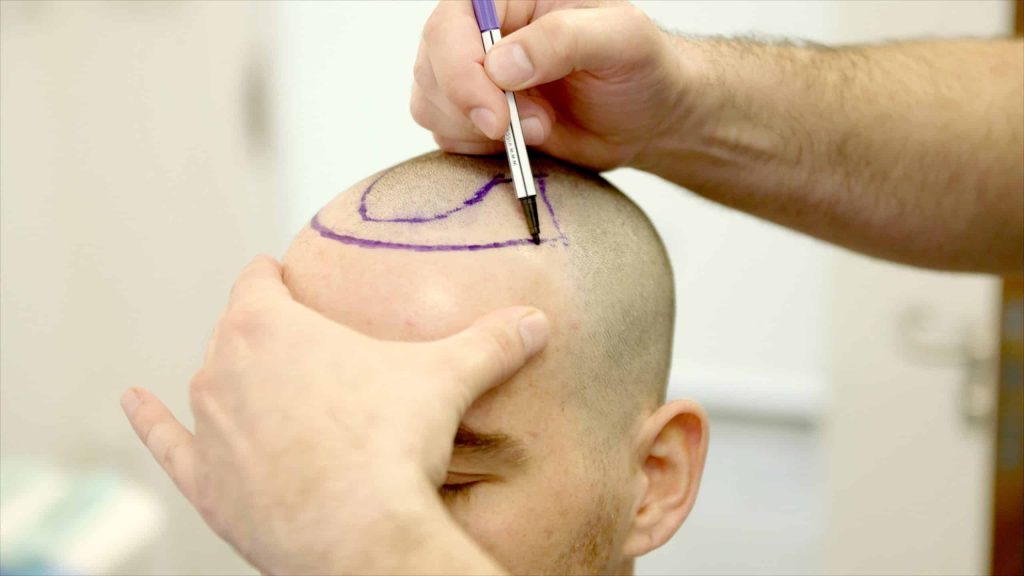
Where 1,000 Grafts Make The Biggest Difference
Play to its strengths and a 1,000 graft procedure delivers a result that far outweighs its modest size. It is at its best when the grafts are concentrated, not scattered.
- Rebuilding a receding frontal hairline. This is the flagship use. For a man in the earlier stages of recession, 1,000 grafts can re-establish the hairline and restore the facial frame that thinning takes away.
- Restoring both temples. Retreating temple corners are one of the earliest and most noticeable signs of loss, and 1,000 grafts can address both together.
- Adding density to a parting. For women with early to moderate thinning along the part line, this volume can meaningfully thicken the visible scalp.
- Focused repair. A scar, a small patch, or a targeted density boost just behind the hairline all sit comfortably within this range.
The common thread is a defined, contained area. The moment the goal widens to full mid-scalp coverage or the crown, 1,000 grafts stops being the right tool, which is worth being honest about upfront.
Where They Fall Short
The crown is the clearest example of a mismatch. It is a large surface with a spiral growth pattern, and it swallows grafts. Placing 1,000 grafts into a balding crown tends to blend the thinning rather than fill it, producing a subtle change at best. Advanced or diffuse loss across the top of the scalp is similarly beyond what this volume can cover convincingly in one session.
There is a deeper reason this matters, and it is about your future rather than just your present. Donor hair is finite. Every graft taken from the back and sides is one you cannot use later, and pattern hair loss usually keeps progressing. Spend 1,000 grafts chasing coverage the number cannot deliver, and you may find yourself with a thinly-spread result now and less donor supply to fix it later. A conservative, well-placed 1,000 graft plan protects both your appearance today and your options tomorrow.
This is exactly the kind of judgement that a proper consultation exists to provide, and where an honest surgeon will sometimes tell you to wait, treat medically first, or plan a staged approach.
If you are weighing up the timing of surgery, our guide on when it is too early for a hair transplant is a useful next read.
How To Know If You Are A Candidate?
On the Norwood scale, which charts male pattern loss from stage 1 through to stage 7, a 1,000 graft transplant generally fits men at stage 2 to 3, where a receding hairline or temple thinning has become defined but the loss has not yet marched across the mid-scalp. Women with early to moderate thinning, around Ludwig stage 1 to 2, may also be suitable when the aim is to reinforce a parting.
If you have been weighing up a smaller session, the distinction is straightforward once you frame it as area and ambition rather than a fixed rule.
| Your situation | Likely direction |
| Refining an intact hairline or one small corner | A smaller session may be enough |
| Rebuilding a full receding hairline | Around 1,000 grafts |
| Treating both temples together | Around 1,000 grafts |
| Frontal loss plus noticeable mid-scalp thinning | Likely more than 1,000 grafts |
| Crown or widespread loss | A significantly higher graft count |
Because these judgements turn on measurements of your actual scalp, donor density, and hair characteristics, they cannot be made reliably from a photograph or a self-assessment. A graft calculator gives a useful ballpark, but the dependable answer comes from an in-person or video assessment.
If you would like a professional read on your stage and the right number for it, you can book a consultation with our clinical team.
What A 1,000 Graft Hair Transplant Costs In The UK
Priced across UK clinics, a 1,000 graft procedure generally lands between £2,000 and £3,500, with London clinics tending toward the upper end and sometimes above it. Most clinics work out to somewhere between £3 and £7 per graft, and because a 1,000 graft session takes meaningfully longer in the chair than a smaller one, it costs more, while still sitting in accessible, lower-volume territory.
| Graft count | Indicative UK price band |
| 500 grafts | £2,000 to £3,000 |
| 1,000 grafts | £2,000 to £3,500 |
| 1,500 grafts | £3,300 to £6,000 |
| 2,000+ grafts | £4,500 and up |
What actually moves the price is less about the clinic’s postcode and more about these variables.
- Graft count and area. The primary driver. More grafts mean more surgical hours and more precision.
- Case complexity. Scar tissue, repair work, or awkward patterns add to the effort involved.
- Hair characteristics. Curly or coarse hair behaves differently under the punch and can affect timing.
- Who performs the surgery. A procedure carried out by a surgeon rather than delegated to a technician costs more, and that difference is one of the most meaningful you can pay for.
At HS Hair Clinic, a single-session 1,000 graft procedure costs between £3,500 and £4,500. That reflects consultant-led surgery on Harley Street, with the price covering your consultation, the procedure itself with pre-operative care and local anaesthetic, and aftercare with follow-up appointments. It is not the cheapest option on the market, and it is not meant to be, because the cost buys a GMC-registered surgeon performing the work from start to finish.
Reading A Quote Properly
A price is only as meaningful as what stands behind it. Before you compare two figures, make sure you are comparing the same thing.
- Suspiciously low prices usually signal something: technician-led surgery, very high patient throughput, or thin aftercare. A number well below the market range deserves scrutiny, not celebration.
- Delegation. Ask directly if a surgeon performs the extraction and placement, or if the work is handed to technicians once you are in the chair.
- Inclusions. Consultation, aftercare, and follow-up reviews should be inside the price. Confirm it before you commit rather than discovering add-ons later.
Inside The Procedure
A 1,000 graft transplant runs as a single-day procedure under local anaesthetic. You stay awake and comfortable throughout, and the session is longer than a smaller one simply because there are more grafts to harvest and place, but it remains minimally invasive.
Nearly all procedures of this size use FUE, or follicular unit extraction. The surgeon uses a fine punch, typically 0.7 to 1.25 mm across, to release each follicular unit individually from the donor area before placing it into the recipient site. There is no strip of skin removed and no linear scar, and healing is quick, which is what makes FUE the standard for hairline and frontal work. In 2018 the International Society of Hair Restoration Surgery renamed the technique follicular unit excision, acknowledging that each graft is taken with a small surgical incision rather than simply pulled, so both terms appear in circulation.
The strip-based alternative, FUT, can suit very large graft counts and is occasionally recommended for curly hair to protect grafts during extraction, but its linear scar and longer donor recovery make it an uncommon choice at this volume.
Whatever the technique, the outcome hinges on how the grafts are handled. Each follicular unit has to survive extraction, storage, and placement intact, and the artistry of hairline design, the angle and irregularity that separate a natural result from a row of obvious plugs, is what turns 1,000 grafts into a convincing hairline. Both come down to the surgeon, which is why the operator matters more than any single number on a price list.
[IMAGE PLACEHOLDER: Real clinic before-and-after of a frontal hairline rebuild in the 1,000 graft range from the patient gallery]
Healing And The Months That Follow
Recovery from a 1,000 graft session is quick and undramatic for most people. Because a slightly larger area is treated than in a smaller procedure, there is a little more to heal, but nothing that changes the shape of the recovery.
Expect some scabbing over the treated area in the first days, along with possible mild redness or short-lived swelling that can drift down toward the forehead before settling. Most of this clears within a week or two. A short break from work is usual, longer if your job is physically demanding, and the early aftercare window, following your clinic’s washing and activity guidance closely, is what gives the grafts the best chance to take.
Then comes the wait, which is the part people underestimate. Transplanted hairs commonly shed in the first weeks in a phase called shock loss. It looks like a setback and is not one. New growth generally starts within three months, thickens steadily through the middle of the year, and reaches its full picture at around 12 months.
| Timeframe | What is happening |
| First 2 weeks | Scabbing, redness, and swelling settle; grafts secure |
| Weeks 2 to 8 | Shock loss, transplanted hairs shed before regrowth |
| Months 3 to 6 | New growth emerges and begins to thicken |
| Around 12 months | Full, mature result |
The transplanted hairs are permanent, taken from zones that resist pattern balding. The native hair around them can still thin with time, which is the reason planning looks beyond the day of surgery.

Protecting The Result You Pay For
A transplant adds hair, but it does not switch off the process that caused your loss. For most patients the best outcomes come from pairing surgery with treatment that defends the hair you still have, so the transplant sits within fuller surroundings rather than an area that keeps thinning around it.
Finasteride, for men, lowers the DHT that drives pattern loss and can help hold onto existing hair. Minoxidil, used by men and women, supports growth and helps maintain native density. Platelet-rich plasma and low-level laser therapy are further options that some patients use to encourage follicle activity, the latter shown to increase density in androgenetic alopecia.
For a closer look at what works, our rundown of the best hair loss treatments for men breaks down the leading options in detail.
The Takeaway
A 1,000 graft hair transplant is, in the right hands and on the right candidate, one of the most rewarding procedures in hair restoration. Concentrated on a receding hairline or a pair of thinning temples, it rebuilds the feature that frames the face and does so while using only a fraction of your donor reserve. Misapplied to a large or advanced area, the same number underwhelms. The graft count is never the whole story. The area, the density, the surgeon, and your future loss all decide the result together.
The question of exactly how many grafts your pattern needs, 1,000 or something more or fewer, is one a proper assessment answers in minutes. Our GMC-registered surgeons will measure your scalp, weigh your donor supply, and give you a straight estimate.
Visit our hair transplant page for more information or to get started.
Frequently Asked Questions
How many hairs is 1,000 grafts?
Around 2,000 to 2,500. Each graft is a follicular unit holding one to four hairs, most often one to three, so your exact total depends on your natural grouping.
What can 1,000 grafts realistically cover?
Concentrated on one zone, they can rebuild a frontal hairline, treat both temples, or thicken a parting. They are not enough for full mid-scalp or crown coverage.
Is 1,000 grafts enough for me, or do I need more?
It depends on the size of the area you want treated and the density you want across it. A defined hairline or temple job suits 1,000 grafts, while frontal loss combined with mid-scalp or crown thinning needs more. A scalp assessment settles it.
How much does a 1,000 graft hair transplant cost in the UK?
At HS Hair Clinic it costs between £3,500 and £4,500, covering the consultation, procedure, and aftercare.
How long until I see the final result?
Growth typically starts within three months and reaches its full picture at around 12 months.
Will the transplanted hair fall out?
The transplanted hairs shed once in an early phase called shock loss, then regrow permanently. Your original native hair can still thin over time, which is why supportive treatment is often advised.
Does it leave a scar?
Not with FUE. Extraction uses tiny punches that heal as small, barely noticeable marks, with no linear scar.
Can 1,000 grafts treat a bald crown?
Generally no. The crown is large with a swirl pattern that needs far more grafts, so 1,000 tends to blend thinning rather than fill it.
Is a hair transplant available on the NHS?
No. The NHS treats hair transplants for pattern baldness as cosmetic surgery and does not fund them, so treatment is private.
Related Posts
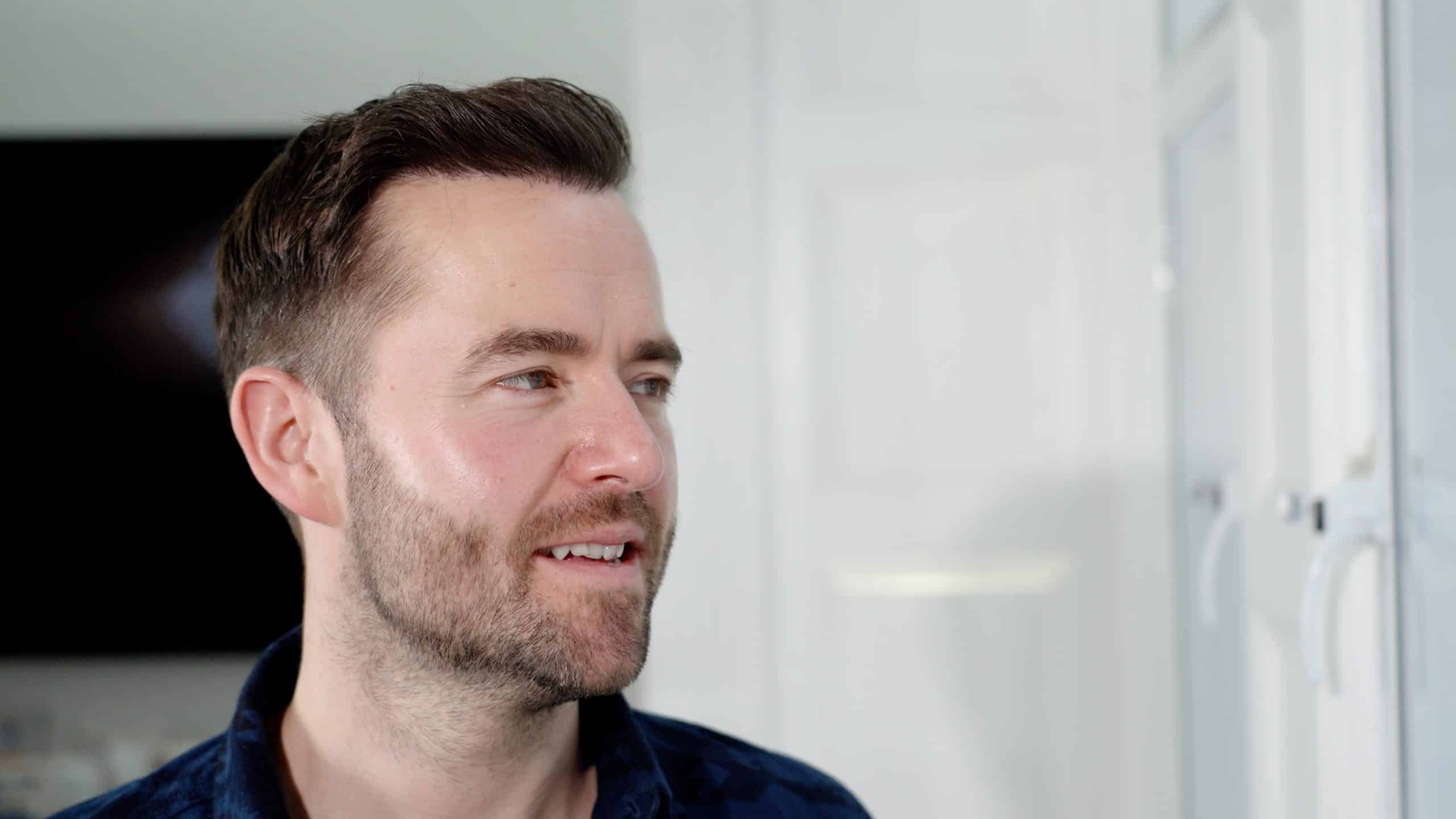
Hair Transplant After 1 Month: Shock Loss Explained
Shedding at its peak? Here is why hair transplant after 1 month looks thinner than before, what shock loss means, and when new growth truly begins.
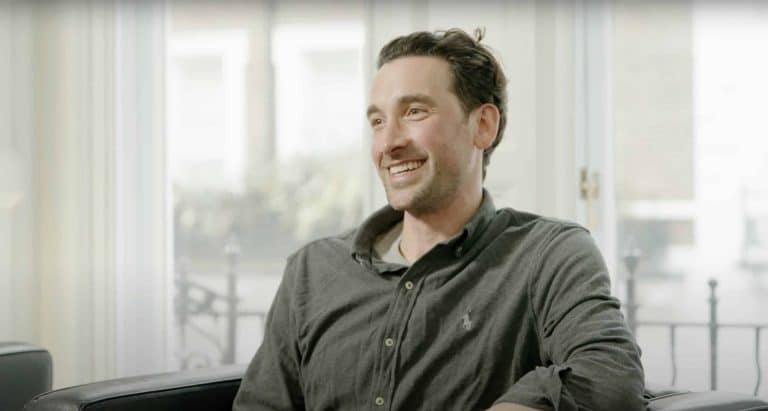
Hair Transplant After 2 Weeks: Healing, Shedding & Care
Scabs gone, grafts secure, shedding starting. Here’s what a hair transplant after 2 weeks looks like, plus what you can and cannot do just yet.