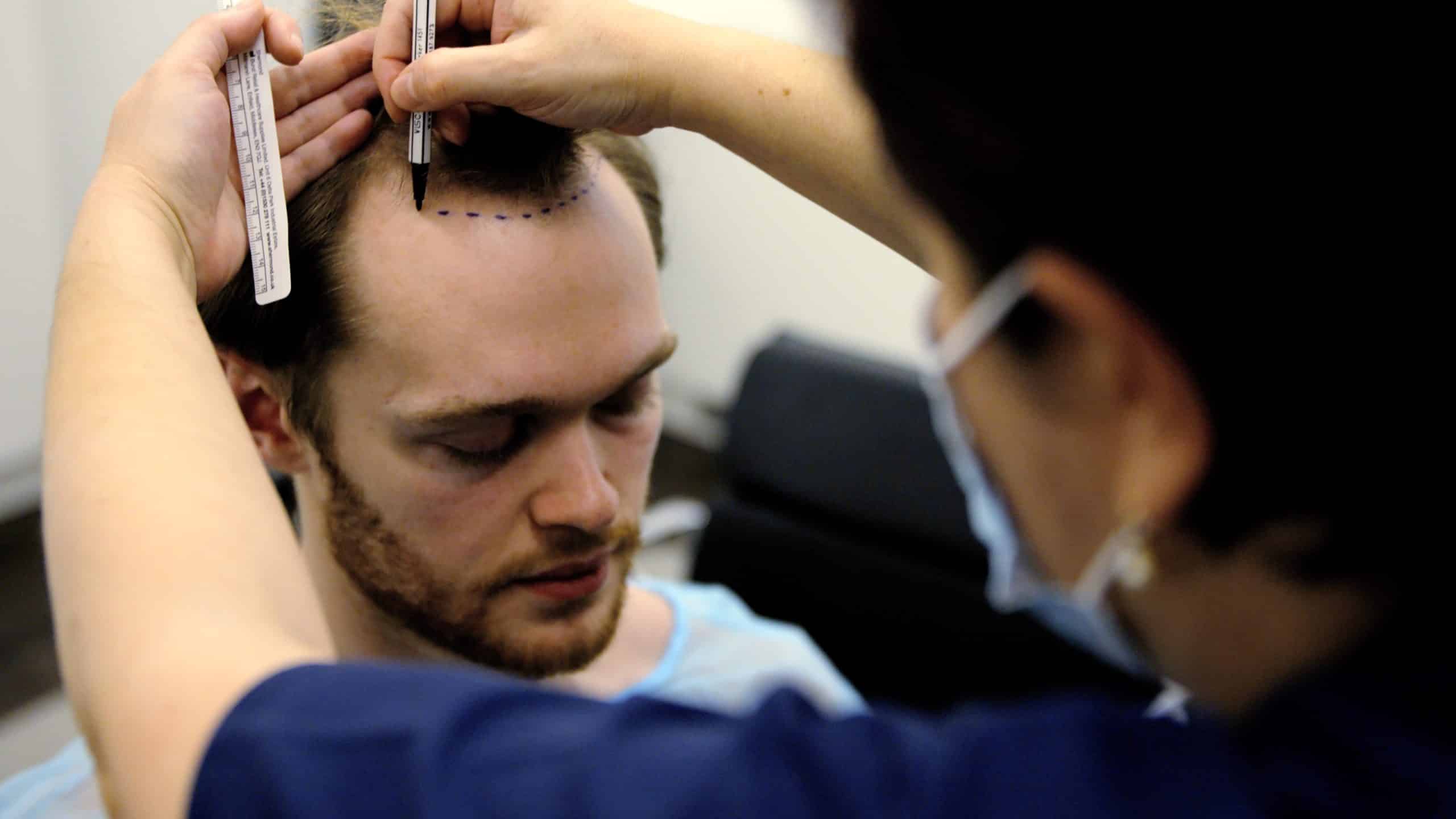
You can transplant every graft perfectly, place them at flawless density, and achieve full survival, and still end up with a result that announces itself as a hair transplant across a room, because the hairline was designed badly. More than graft counts and more than technique, hairline design is what decides if a restored head of hair looks natural or artificial, and it is the part of the procedure that separates competent surgery from true craft.
A natural look is the entire point of a hair transplant. Nobody undergoes surgery to end up with hair that is obviously transplanted, and the whole purpose of good design is that the result is invisible as a procedure. Done well, hairline design is quiet, and people simply see a man with his hair rather than a man who has had work done. This guide explains why the design matters so much, why no single template works for everyone, and how a surgeon decides the shape that will frame your face for the rest of your life.
Why The Design Matters More Than Anything
A hairline is the frame around the face, and the eye is remarkably good at spotting when it is wrong, even if the viewer cannot say why. The results that go wrong tend to share the same faults, a straight ruler-drawn line across the forehead, a dense front row that sits like a wall, or a hairline set too low on a man in his fifties. These are not failures of surgical skill in placing grafts, but failures of design, decisions made before a single incision.
The straight, sharply defined hairline is worth singling out, because it still turns up and it should not. That hard, clean-cut line was the look of an earlier era of hair restoration, and it reads as dated and obviously artificial today, since no real hairline has ever grown that way. A natural hairline is soft, irregular, and slightly imperfect, and recreating that is the whole job. No respectable clinic should be building flat, straight hairlines in modern practice, and a portfolio full of them is a reason to walk away.
This is also why we see so many men come to us not for a first procedure, but to repair one. They arrive having had the grafts placed, sometimes competently, into a hairline that was never going to look natural. Correcting that work is some of the most demanding we do, and it is entirely avoidable. The design is the procedure, and everything else is execution.
Why One Pattern Does Not Fit All
There is no universal hairline. The shape that looks right on one man would look absurd on another, because a hairline has to answer to the specific face beneath it. A design that ignores this, that applies the same template to everyone, is the single most common reason a transplant looks off.
Consider how much varies from one person to the next. Face shape, the height and width of the forehead, the position of the temples, the direction and calibre of the hair, the degree of contrast between hair and skin, ethnicity, age, and the likely path of future hair loss. Each of these pulls the ideal design in a different direction. Research into natural frontal hairline patterns has found that hairlines fall into several distinct shapes across a population, which is part of why a single template applied to every patient fails. A hairline that suits a long, narrow face would unbalance a round one. A shape that flatters a full head of thick dark hair might look stark against fine, light hair. The art is in reading all of these at once and designing for the individual, not the average.
Matching The Hairline To The Face
Face shape is one of the clearest illustrations of this. It is never a rigid formula, and a skilled surgeon adjusts for everything else about the individual, but the shape of the face gives a useful starting point for the direction a design should lean.
- Oval faces are the most balanced and the most flexible. Almost any well-executed shape works, so the design usually follows a soft, gently rounded hairline that preserves the natural harmony.
- Round faces benefit from a slightly higher hairline with soft, subtle peaks, which adds a sense of length and structure rather than reinforcing the roundness.
- Square faces carry a strong, angular jaw, so a rounded hairline with softened corners tends to balance the face, where a hard, sharp line would only exaggerate the angles.
- Oblong or long faces are best served by a lower, flatter hairline, which visually shortens the face and brings the proportions back into balance.
- Heart-shaped faces, wider at the forehead and narrower at the chin, are softened by gentle curves at the temples that balance the upper face.
What Goes Into A Well-Designed Hairline
When we sit down to design a hairline, we are weighing a set of principles that, taken together, produce a result the eye reads as real. These are the ones that matter most.
Facial proportion and position. The starting point is where the hairline should sit. Surgeons use the classical rule of thirds, dividing the face into equal parts, as a guide to a balanced forehead height, with the mid-frontal point generally falling somewhere around seven to nine centimetres above the brow. It is a guide, not a formula, and it is adjusted for each face rather than imposed. Ethnicity matters here too, since hairline shape, density, and hair characteristics differ across ethnic backgrounds, and a natural result respects those norms rather than applying one standard to everyone.
Irregularity, the enemy of the straight line. A natural hairline is never a clean edge. It is a soft, broken border of tiny peaks and valleys, what surgeons call micro and macro irregularity. Recreating that deliberate, controlled randomness is what stops a hairline looking drawn on, and it is painstaking work done by hand for each patient.
Depth and hair matching. A real hairline is not a flat line but a three-dimensional zone, with hairs at slightly different lengths and stages that give it softness and depth. A good design works with that, and it also matches the character of your surrounding hair, the calibre of each strand, the curl or wave, and the colour, so the restored area blends seamlessly rather than sitting apart from the hair around it.
The transition zone. The very front of the hairline is not a solid wall. It is a feathered zone built from fine single-hair grafts placed slightly sporadically, with two and three-hair units used only further back to build density. This graded density is what lets the hairline fade softly into the forehead rather than starting abruptly. The density needed at the frontal edge is carefully judged, since packing it too hard looks as unnatural as leaving it too sparse.
Angle and direction. Hair has to emerge at the right angle to lie naturally, and the correct angle changes across the scalp, shallow at the hairline itself and shifting around the temples. Grafts placed at the wrong angle look wrong no matter how good the design on paper.
The temples and frontotemporal angle. The recessed areas beside the frontal hairline must be respected, not filled in flat. Rebuilding them into a hard, rounded shape produces the unmistakable helmet look. Soft, preserved temporal peaks are essential to a natural frame.
Designing for the future. This is the principle that matters most. A responsible design anticipates further hair loss and places a mature, sustainable hairline rather than chasing the low line of a nineteen-year-old. It has to look right not just now, but in twenty years, and it must respect the donor supply that future work might need.
How We Design A Hairline In Practice
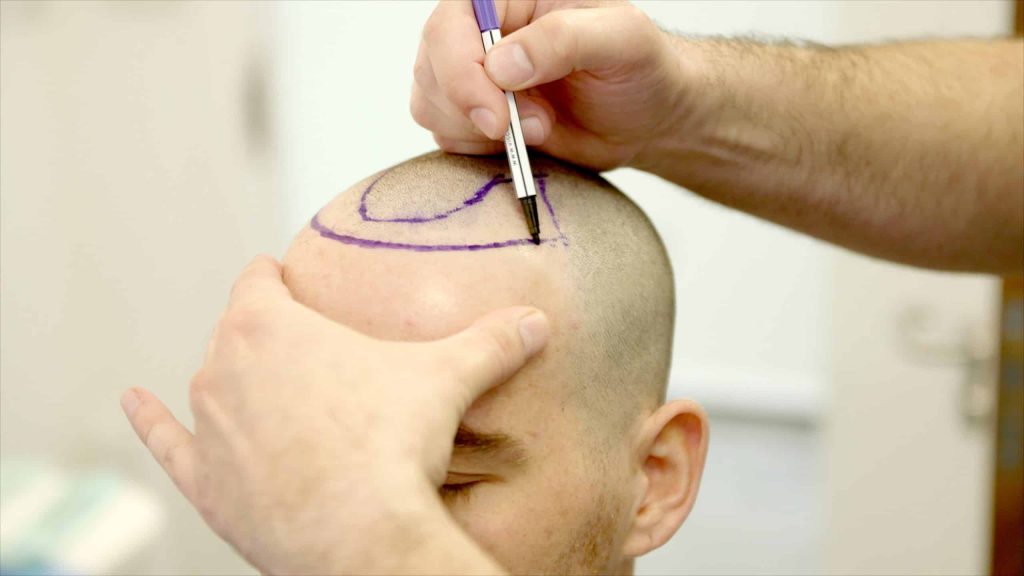
In our clinic, the hairline is drawn by hand, with the patient awake and sitting upright, because a hairline can only be judged on a living, expressive face, not a diagram. It is a collaboration. We listen to what the patient wants, then bring the anatomy and the long view to the conversation, and our AI and 3D consultation technology lets you preview a realistic result before anything is decided.
A common example is the man in his early thirties who arrives asking for the hairline he had at twenty, low and straight across. We explain that placing it that low would look natural now but increasingly odd as he ages and loses more hair behind it, and that it would spend donor grafts he will want later. What we design instead is a slightly higher, softly irregular hairline that suits his face today and will still suit it decades from now. Age is a real part of what makes someone a good candidate, and patients rarely arrive wanting a mature design, yet they almost always leave grateful for it.
Another is the patient with a strong, angular face who assumes a sharp hairline will match it. Here we often soften the design deliberately, using gentle peaks to balance the jaw rather than reinforce it. These are the judgements that do not show up in a graft count, and they are exactly where experience earns its place.
We will happily say that plenty of surgeons do this beautifully. Good hairline work is a craft with real masters, and we have deep respect for colleagues who take the time it demands. What frustrates us is the opposite, the high-volume operations that treat the hairline as an afterthought and leave men with results that take years and further surgery to put right.
The Signs Of A Well-Designed Hairline
If you are assessing a clinic, or your own result, these are the marks of a hairline designed properly.
- An irregular, feathered leading edge, with no hard straight line anywhere.
- A soft transition from sparse single hairs at the front to fuller density behind.
- Preserved, natural-looking temples rather than a filled-in, rounded front.
- A height and shape that suits the face and the patient’s age.
- A design that still makes sense as hair loss progresses.
The best way to see this is in healed results at twelve months or more. Ask any clinic to show you close-up photographs of frontal hairlines a year on, and look for these signs. Our own patient gallery shows real hairlines at one year and beyond, which is the honest test of a design. You can also read how the surgery itself is carried out in our guide to how FUE hair transplants work, since sound design and sound technique go hand in hand.
The Bottom Line
A hairline is the most visible, most scrutinised part of any hair transplant, and its design is where a natural result is won or lost. It cannot be reduced to a template or a number of grafts. It is a considered, individual piece of work that weighs your face, your hair, your age, and your future all at once, and it rewards the surgeon who gives it the time and artistry it deserves.
Done well, the payoff is considerable. A hairline designed with care looks youthful yet age-appropriate, restores a great deal of confidence, and, because FUE leaves only tiny, well-hidden marks rather than a linear scar, comes with minimal scarring. Best of all, the hair grows naturally and can be cut, styled, and worn exactly like your own, because it is your own.
If you are considering a procedure and want to understand how your own hairline would be approached, our FUE hair transplant service begins with exactly that conversation. The right design is the difference between hair that looks transplanted and hair that simply looks like yours.
Frequently Asked Questions
What is hairline design in a hair transplant?
It is the process of planning the shape, position, and density of the new hairline before surgery. It covers where the hairline sits, its irregularity, the angle of the hairs, and how it suits the face and age, and it is the single biggest factor in how natural the result looks.
Why do some hair transplants look fake?
Usually because of poor design rather than poor surgery. A straight, ruler-like line, an over-dense front row, filled-in temples, or a hairline set too low for the patient’s age are all design failures that make a transplant obvious.
How does a surgeon decide where my hairline should go?
By assessing your facial proportions, forehead height, temple position, hair and skin characteristics, age, and likely future hair loss, then designing a shape that balances the face now and in the long term. It is drawn by hand and refined with you in the consultation.
Can I choose my own hairline?
It is a collaboration. Your preferences matter, but a good surgeon will guide you away from choices that look natural now but age badly, such as a very low hairline, and toward a design that suits you for decades.
Should my hairline be straight?
No. A natural hairline is never a straight line. It has subtle irregularity, a feathered leading edge, and preserved temples. A straight hairline is one of the clearest signs of an artificial-looking transplant.
Why is the front row of a hairline important?
The very front should use only fine single-hair grafts, placed irregularly, to create a soft transition into the forehead. Using thicker multi-hair grafts at the front produces a harsh, pluggy edge that looks unnatural.
Can a badly designed hairline be fixed?
Often it can be improved, though repair is more complex than getting it right the first time. It may involve removing or redistributing grafts and rebuilding the design, which is why careful design at the outset matters so much.
Will my hairline still look right as I get older?
It should, if it was designed with that in mind. A responsible design places a mature, sustainable hairline that accounts for future hair loss, so it continues to look natural as you age rather than becoming isolated or odd.
Related Posts

Louis Walsh Hair Transplant: A Look at Louis’ Hairline Transformation
When you look at people who frequently star on TV, you may wonder if they’ve…
What to Know About FUE Hair Transplant Scars
Any type of surgery is likely to leave some kind of scar, some more noticeable…