
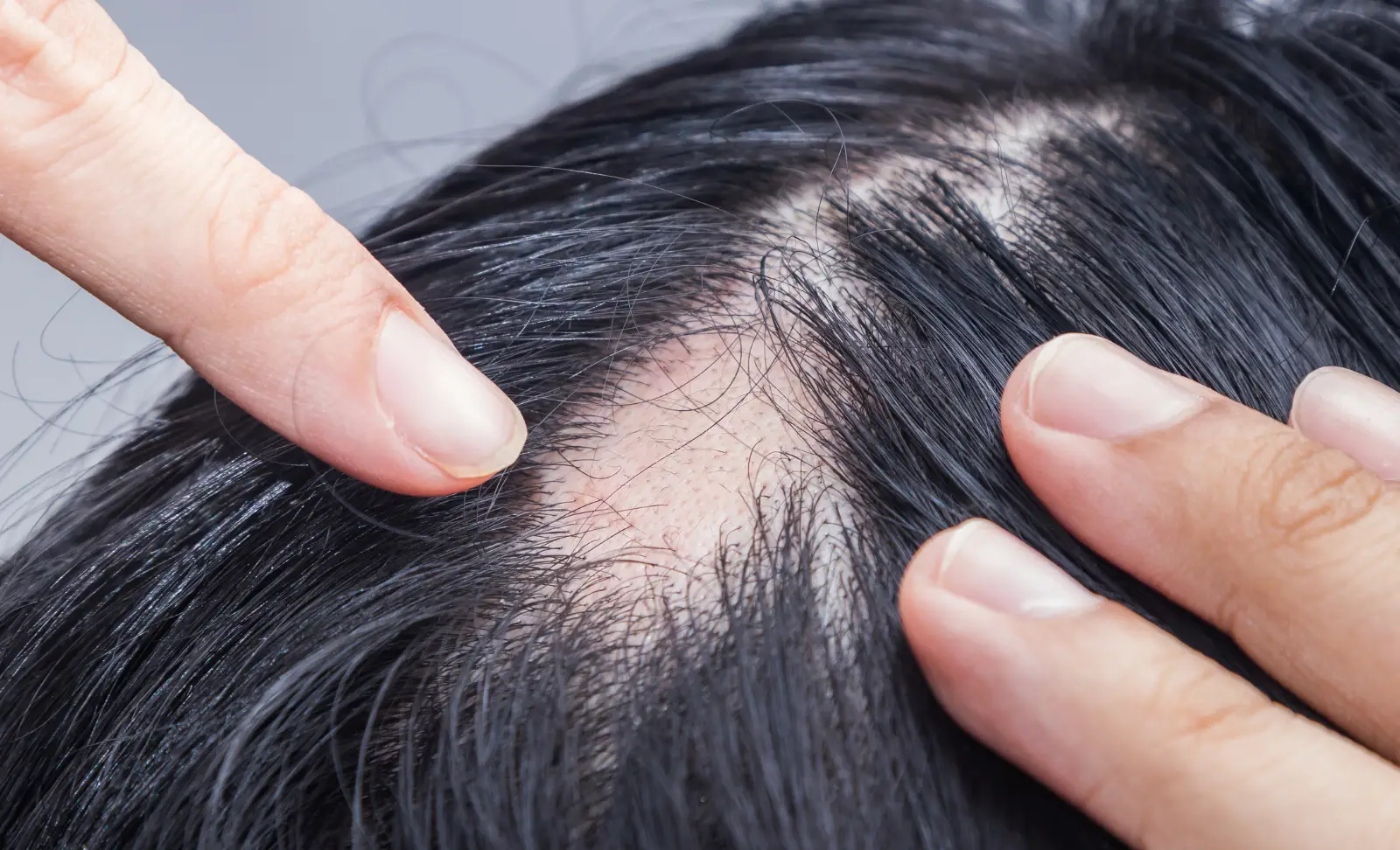
Hair loss is more commonly associated with men, but many women also go through hair loss, and it can greatly impact their self-confidence. Female hair loss is typically linked to genetics, hormonal shifts, or nutritional factors, and there are a variety of treatments to target those causes.
In this guide, we will rank each of the best hair loss treatments for women one at a time, looking specifically at effectiveness, evidence, and suitability.
Ranked: The Most Effective Female Hair Loss Treatments
There are many ways to treat female hair loss. The following ones have been ranked by experts based on clinical support, long-term outcomes, and suitability for women specifically.
1. FUE Hair Transplant (Most Effective Long-Term Solution)
At the top of the list is FUE (follicular unit extraction). This is a hair transplant surgery that works best for women with stable hereditary hair loss, also known as female pattern baldness. It works by extracting healthy hair follicles and then implanting them into the recipient area. The approach is slightly different for women; many women tend to prefer not to undergo a shaved area, and the process focuses more on female density preservation.
A FUE hair transplant is a permanent, effective solution that works for the majority of patients, leading to a significant boost in self-image and confidence. However, even though it’s at the top of the list, there are still limitations; for example, it’s not suitable for diffuse unpatterned hair loss.
2. DHI Hair Transplant
Another female hair transplant option is the DHI (direct hair implantation) hair transplant. This one involves a surgeon using a specialised tool for precise implantation, leading to refined density and hairline work. With better angle control, the surgeon can create the perfect result.
Generally, DHT is best for early to moderate thinning. Keep in mind that it is more expensive than FUE, so, for more advanced thinning, FUE is often the better option. Plus, this type of hair surgery requires careful candidacy assessment, as it’s specifically for women with hereditary hair loss.
3. Topical Minoxidil
Topical Minoxidil is widely recommended as the first-line medical therapy for female pattern hair loss, with many studies showing just how effective it can be at regrowing hair in thinning areas. It essentially works by extending the growth phase of the hair follicles by widening the blood vessels, which helps deliver more oxygen and nutrients to the scalp.
Minoxidil is best for women with early-stage thinning and crown density loss. There are some limitations; it may not be as effective for more advanced thinning. Plus, it requires ongoing use, with results often reversing if you stop taking the medication.
4. Anti-Androgen Medications (Where Prescribed)
Anti-androgen medications are typically only prescribed to men with male pattern baldness. However, there are certain times when they are also prescribed to women (with a prescription only). This is when the hair loss is caused by hormonal changes, which can occur during perimenopause or menopause.
It works by reducing androgen sensitivity in the hair follicles, which can help reverse any hormonal-induced hair loss. To use this type of medication, women need to be diagnosed with hormonal hair loss, and they should only ever be taken under medical supervision. Also, they are not suitable when women are pregnant (which can be a time of significant hormonal changes).
5. Platelet-Rich Plasma (PRP)
Platelet-rich plasma (PRP) therapy involves taking your blood, extracting platelets, and injecting them into the scalp. It’s an in-clinic treatment that works because of the concentrated growth factors in the blood, which can stimulate the hair follicles, leading to new growth. It works best for mild to moderate thinning, but keep in mind results may vary; it can work well for some women, but have little effect for others. Plus, multiple sessions are typically required for any real impact.
6. Low-Level Laser Therapy (LLLT)
LLLT is a non-invasive, pain-free light-based stimulation therapy that stimulates follicle metabolism via red light wavelengths. This treatment can be done either at a clinic or at home, making it a very convenient option. It’s best for very early thinning as a supportive therapy, as LLLT has not been proven to fully restore hair growth in women with a lot of advanced hair loss. Plus, keep in mind that LLLT requires consistent use long-term (which is why many women choose to purchase a LLLT device to use at home).
7. Nutritional & Iron Deficiency Correction
Many women experience hair restoration after correcting a nutritional deficiency. Specifically, when they have deficiencies in B vitamins, vitamin D, zinc, and iron (with iron being particularly common).
This works because it restores the essential nutrients required for hair cycle stability. When a woman has a nutritional deficiency, it can lead to shock hair loss. Taking a supplement (or adjusting a diet) can be enough to restore that hair loss.
Keep in mind that this only works for diagnosed deficiencies, so you’ll need to get your blood work done to see if this is a viable option for restoring your hair density. It’s not effective for genetic hair loss alone.
8. Scalp Micropigmentation
Not all hair loss treatments for women are about actively regrowing the hair; some involve cosmetic procedures that simply give the appearance of thicker, fuller hair. That includes scalp micropigmentation.
Scalp micropigmentation is a type of cosmetic density enhancement treatment for advanced thinning and involves applying pigment to the scalp to reduce scalp contrast. For example, around the crown of the head, where thinning is most obvious and visible. It works well for women seeking visual density improvement without surgery, but remember that it does not actually stimulate any regrowth, so it won’t affect the density of your locks.
Advanced tricho pigmentation is the best option for scalp micropigmentation, as it uses a more advanced technique with ultra-fine needles and organic pigment. It delivers wonderfully natural results, so the pigment looks exactly like short hair to the eye. It’s a fantastic way of filling in any gaps on the scalp where the scalp itself is visible, delivering subtle, natural results.
9. Lifestyle & Stress Management
Lifestyle and stress management may be enough to restore a woman’s hair growth. This is all about supporting the hair cycle through overall well-being, specifically addressing telogen effluvium, a type of temporary stress-related shedding. Telogen effluvium can be caused by lifestyle factors such as:
- Severe infections
- High levels of stress
- Thyroid disorders
- Rapid weight loss
- Childbirth
There are many different types of triggers. By addressing these triggers, the hair shedding should stop, and you should be able to regrow your hair back to its original density. Keep in mind, this only works for telogen effluvium; it’s not a standalone solution for genetic hair loss.
How to Choose the Best Hair Loss Treatment for Women
It’s all about getting a diagnosis first. By knowing the cause, you can then find the best treatment that directly targets that cause. For example, if the issue is hormonal changes, medications may help stabilise hormones and help regrow hair.
Another factor is the stage of hair loss. For more advanced female pattern baldness, women often opt for hair transplant surgery (such as FUE) for permanent results.
Results Timeline: What Women Can Expect
It is normal to want results straight away, but remember that some of the best hair loss treatments for females require some time for the hair to grow back through. Here’s a look at the timelines.
Surgical: First results after 3 months, full results after 12 months.
Medical: Hair starts to grow back through after 3 to 6 months.
Keep in mind that hair stabilisation tends to come before visible regrowth, so it’s important to be patient and trust that the process is working.
FAQs About Female Hair Loss Treatments
If you still have some burning questions about the best hair loss treatment for females, hopefully our FAQs can help shed some light on what might work for you.
What is the most effective hair loss treatment for women?
It depends on the cause of your hair loss. To get an effective treatment option, you first need to seek a diagnosis. For hormonal hair loss, androgen-blocking medications may work; for genetic hair loss, a female hair transplant is a great solution; for stress-induced hair loss, changing your lifestyle can be enough to see regrowth.
If you want patient-focused advice, our hair transplant clinic in London offers unbiased consultations to help you find a treatment that genuinely works for you and your hair goals.
Can female hair loss be reversed?
Yes, it is possible to reverse female hair loss. For non-genetic explanations, like hormonal shifts and nutritional deficiencies, addressing those factors can help restore the hair. For hereditary hair loss, you can choose options like topical Minoxidil or a female hair transplant, both of which have a lot of evidence to back up their effectiveness.
How long before results appear?
It depends on the treatment you have opted for. If you choose medical treatments, such as Minoxidil, expect results within 3 to 6 months. If you choose the surgical route of a female hair transplant, results will start to show through after 6 months, with full hair restored after 12 months.
Book a Consultation at HS Hair Clinic
Are you ready to regrow your hair and gain back your confidence? At Harley Street Hair Clinic, we offer personalised assessments and a tailored plan that suits your hair goals. So, book a consultation today to kickstart your hair restoration journey with experts who have your best interests in mind.
Related Posts

Does Finasteride Work? Evidence & Timeline
Finasteride is one of only two medications approved for male pattern hair loss, and the…
Hair Transplant Recovery: Full Timeline Day by Day
The surgery is the part everyone focuses on, but the result is made in the…