There is no week in the whole recovery that weighs on patients like the first one. It is when the scalp looks its most alarming, when every scab and every twinge invites worry, and when the questions come thickest. In our experience, this is the period our patients contact us about more than any other, and understandably so. You have made a significant decision, you cannot yet see the result, and what you can see does not look finished. This guide is here to steady that week for you.
Below is an honest account of what day 7 looks and feels like, what is completely normal, and, for each symptom, the specific point at which it stops being normal and becomes a reason to make a call. We will not sugar-coat the fact that this stage is hard. We will also tell you plainly that it passes, and that on the other side of it is the reason you started.
Where You Are At Day 7
One week in, the hardest and most fragile part is behind you. Around day 7 your grafts are beginning to anchor securely into the scalp, though they are not yet fully settled and still need protecting. The scalp is well into healing rather than at the start of it. Most of the acute swelling and soreness of the first few days has eased, and the picture starts to move in the right direction from here.
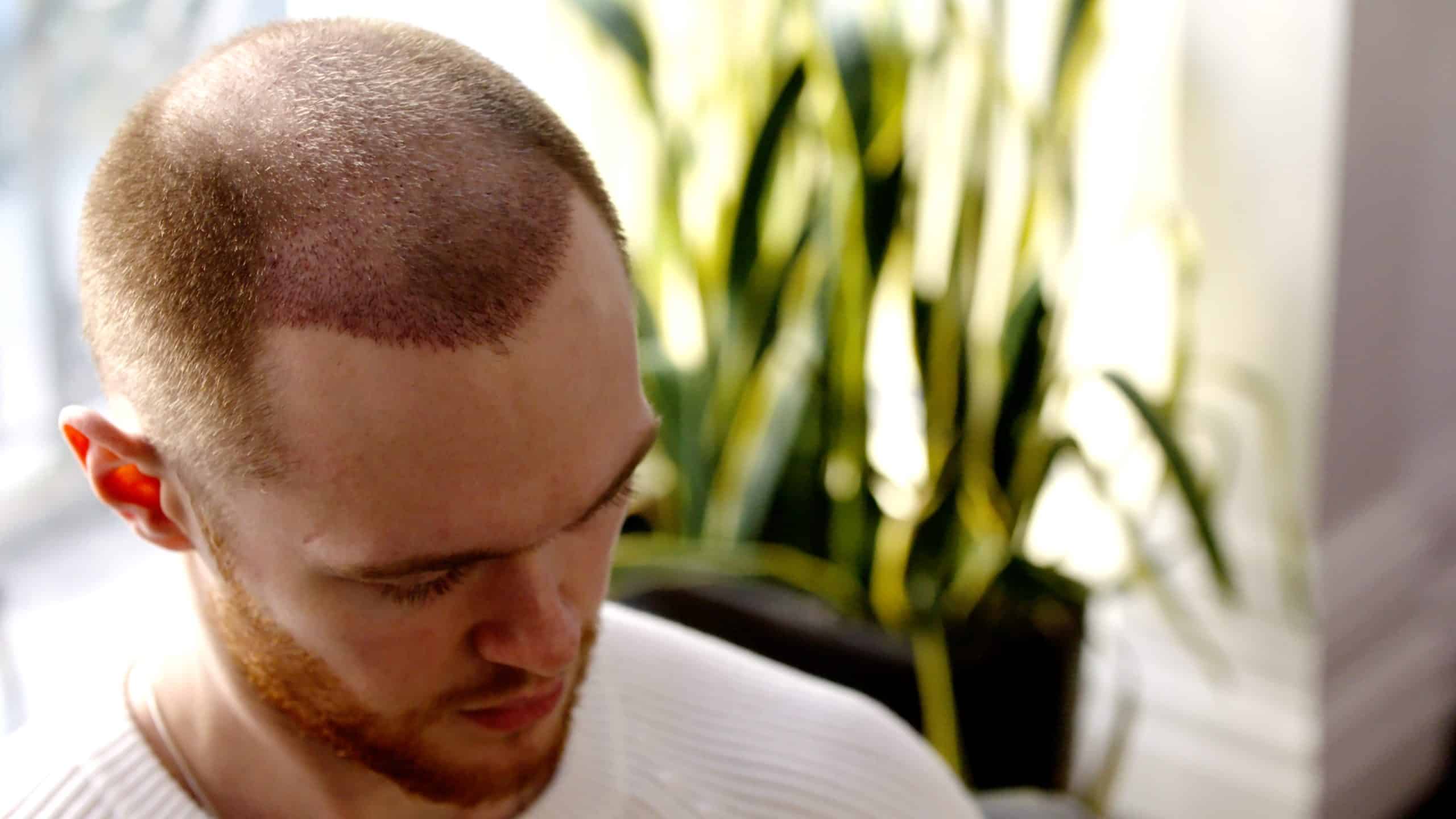
What you should not expect is a finished look. There is no new growth at this stage, and there will not be for months. What you will see is a scalp mid-repair, redness, scabbing, and the transplanted shafts sitting in a healing bed. That is exactly what week one is supposed to look like. The goal of this week was never appearance. It was anchoring the grafts, and that work is nearly done.
To show you exactly what this stage looks like, one of our own patients filmed his scalp at the seven-day mark:
What Is Normal At Day 7, And When It Is Not
Almost everything you notice this week is expected. The value in listing each symptom is knowing its ceiling, the point at which a normal part of healing turns into something worth a phone call. Read this section carefully, because the difference usually comes down to one thing: normal effects ease day by day, while the warning signs get worse instead of better.
Scabbing And Crusting
Small scabs formed around each graft in the first days, and by day 7 they are typically starting to loosen and shed, a process that continues through to around day 14. This is a good sign. The scalp’s rich blood supply means it heals quickly and infection rates are low, and gentle contact washing helps the crusts release in their own time.
When to be concerned: scabs that are still thick and firmly stuck well beyond day 14, or crusts that become inflamed, hot, or start to weep pus or fluid. Thickening, painful crusting can point to poor healing or infection and should be checked by your clinic.
Redness
The recipient area will look pink or red at day 7. This is normal, and it can take 10 to 14 days, sometimes longer for fair or sensitive skin, for the colour to settle back toward normal.
When to be concerned: redness that spreads, deepens, or is accompanied by heat and increasing tenderness rather than fading. Redness moving in the wrong direction is one of the clearest early signals of infection.
Swelling
Any swelling from the first few days, which can travel down to the forehead or around the eyes, has usually peaked and begun to subside by day 7. For most people it is largely gone by now.
When to be concerned: swelling that is worsening at this stage rather than settling, particularly if it is hot, painful, or spreading, or if it is severe enough to close an eye. Late, worsening swelling is not part of the normal curve.
Itching
As the skin heals, it itches. This is one of the most common and most testing symptoms of week one, precisely because the one thing you must not do is scratch.
When to be concerned: itching alongside spreading redness, pus, or a rash may indicate infection or a reaction, rather than simple healing. If it becomes unbearable, contact your clinic before reaching for any product or medication of your own.
Donor Area Tightness Or Numbness
The donor area at the back or sides can feel tight, tender, or numb at day 7. Numbness in particular can linger for a while as the nerves recover, and it is nothing to fear.
When to be concerned: increasing pain in the donor area, discharge, or a foul smell, which again point toward infection rather than routine healing.
The Symptoms That Mean Stop And Call
Set apart from the symptom-by-symptom detail above, there is a short list of signs that should always prompt you to contact your clinic without waiting. Infection after a hair transplant is uncommon, since the scalp is so well supplied with blood, with serious infections occurring in under one percent of cases, but catching it early is simple and leaving it is not. Contact your clinic promptly if you notice:
- Spreading or worsening redness, or the scalp feeling hot to the touch.
- Pus, discharge, or a foul smell from the grafts or donor area.
- A fever, or feeling unwell in yourself.
- Pain that is severe or not controlled by the pain relief you were given.
- Bleeding that does not stop with gentle pressure.
For anything that feels like an emergency, severe unrelenting pain, heavy bleeding that will not stop, or rapidly spreading swelling, do not wait for clinic opening hours. Seek medical care straight away through NHS 111, your GP, or A&E. Complications are rare when an FUE procedure is done well and cared for properly, but knowing the plan takes the fear out of the unlikely.
This is also where being able to reach your surgeon matters most. A question that can be answered in a five-minute phone call should never become a sleepless night, which is one of the real advantages of having your procedure somewhere close enough to return to. Our team is always here for you through this period, and you can put a name to the people looking after you on our staff page.
Your Aftercare Instructions Are Not Suggestions
Read this part twice. When you left us, you were given a set of aftercare instructions that were prepared with care and for good reason. They are not general guidelines or gentle recommendations. They are precise instructions, and they must be followed to the letter.
This matters more than anything else you will do this week. The single biggest influence on your final result, once the surgery itself is done, is how faithfully you follow the aftercare in these early days. Structured aftercare protects graft survival and reduces complications, and cutting corners, improvising, or deciding a step does not apply to you is the surest way to compromise the outcome you paid for. If any instruction is unclear, or you are unsure how to do something correctly, the answer is to ask us, never to guess. There is no such thing as a question too small in week one.
What You Must Not Do
Some things are not a matter of preference or comfort this week. They are firm rules, and each one exists to protect your grafts while they are still vulnerable. Through the first week, and in several cases well beyond it, you must not:
- Touch, scratch, or pick at the scalp. The grafts are still settling. Picking a scab can take the graft with it, and that follicle is then lost for good.
- Wash against your instructions. Only the gentle contact washing method you were shown, with no rubbing, scrubbing, or direct high-pressure water.
- Exercise, lift, or exert yourself. No gym, running, heavy lifting, or anything that raises your blood pressure or brings on a sweat, since sweat on the healing scalp raises the risk of infection.
- Expose the scalp to sun, saunas, steam rooms, or swimming. Direct sun in particular can damage grafts that are still establishing.
- Drink alcohol or smoke. Both work against the blood supply your grafts depend on to survive.
- Wear a hat, helmet, or anything that presses or rubs the scalp, unless your surgeon has specifically approved it.
Follow these without exception. The restrictions are temporary, the consequences of ignoring them are not.
It Is Hard Now, But This Is The Turning Point
We will be honest with you, because pretending otherwise does not help. Week one is uncomfortable, it is anxious, and looking in the mirror can be disheartening when the scalp is red and crusted and there is no visible reward yet. Many patients find this the mentally hardest part of the whole journey.
Hold on to this. What you are seeing is not the result. It is the healing. Every scab that loosens, every day the redness fades, is your scalp doing precisely what it should. The transplanted follicles are anchoring, and in the months ahead they will begin to grow. The discomfort of this week is temporary, the grafts you are protecting are permanent, and the men who come through this period best are simply the ones who trusted the process and followed the care. When the hard part is behind you and the growth comes through, it is worth every careful day.
If you are reading this before your own procedure, still deciding what your hair loss would need, our hair loss graft calculator is a useful way to get a clearer picture of the scale of treatment involved.
Day 7 Is A Milestone, Not The Finish Line
It is tempting, once the worst of week one eases, to feel recovered and relax the care. Do not. Passing the seven-day mark is an important milestone, but recovery is far from over. The grafts are anchoring, not yet fully secure, and several of the restrictions above still apply for weeks yet. Your aftercare continues, your follow-up appointments matter, and the disciplined approach that carried you through week one is exactly what carries the result home over the months that follow.
If reading this has helped you understand the journey and you are weighing up your own procedure, you can explore the full range of hair loss treatment options we offer, and you can always get in touch to talk it through with our team.
Frequently Asked Questions
What should a hair transplant look like after 7 days?
Expect a scalp that is still pink or red, with small scabs around the grafts starting to loosen and shed. Swelling and soreness have usually eased by now. There is no new hair growth at this stage, and the transplanted shafts are simply sitting in a healing bed.
Is it normal to still have scabs after 7 days?
Yes. Scabs typically begin shedding between day 7 and day 14, helped along by gentle contact washing. What is not normal is thick, stuck, inflamed, or painful crusting, which should be checked by your clinic.
Can I wash my hair normally after 7 days?
Not normally, only the gentle contact washing method your clinic showed you. Normal washing generally resumes after the scabs have fully shed, usually around the end of the second week. Follow your specific instructions.
When can I go back to the gym after a hair transplant?
Not in the first week. Strenuous exercise, heavy lifting, and anything that makes you sweat should be avoided for at least the first two to three weeks, following your clinic’s guidance, since sweat raises the infection risk.
How do I know if my hair transplant is infected?
Normal healing eases day by day. Infection tends to worsen, with spreading redness, heat, pus, a foul smell, fever, or increasing pain. If your symptoms are getting worse rather than better, contact your clinic promptly.
Is the itching after a hair transplant normal?
Yes, itching is a common part of healing as the skin recovers. The key is not to scratch, as this can dislodge grafts. If it becomes unbearable, contact your clinic before using any product of your own.
Can I wear a hat after 7 days?
Usually not yet, as pressure and rubbing can disturb the grafts. Some clinics allow a loose cap after a week or two, but only with your surgeon’s specific approval. Check before wearing anything on your head.
Does day 7 mean my recovery is over?
No. It is an important milestone, but the grafts are still anchoring and many restrictions still apply. Recovery and careful aftercare continue for weeks, and the full result takes around twelve months.
Related Posts
Gender-Affirming Hair Restoration: An Integrated Surgical Approach
Rounding a masculine hairline takes careful design. Learn how gender-affirming hair restoration uses fine FUE grafts for a soft, natural result.
The Use of Body and Beard Hair in Hair Transplantation
When scalp donor runs short, body and beard hair in hair transplantation can add density. See how each source differs and who it suits best.